0sc521dbzxos5gqh5cvyflz1tyog2.37 MBLove Time Can’t Erase
By Michele Evans New York City, New York 6/4/2026
Category: Court / Criminal Justice / Rikers Island / Advocacy
New York City, New York - There are records you request because you are looking for proof.
Then there are records that come back and remind you that proof can have a heartbeat.
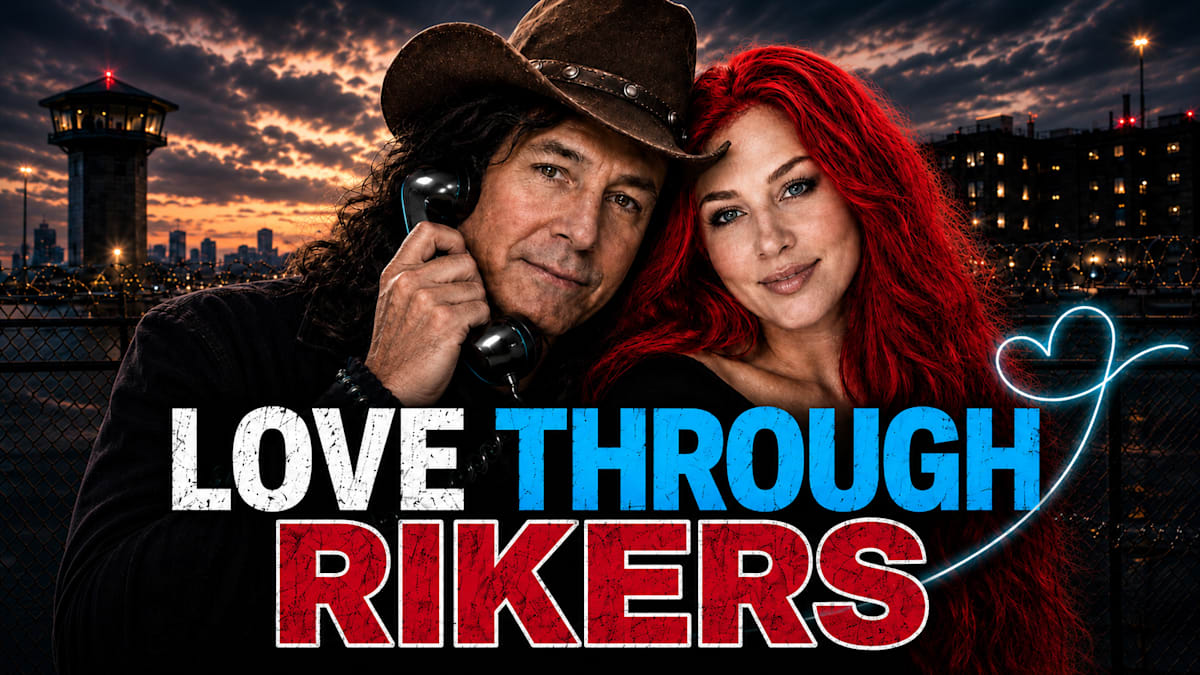
This week, I received a Department of Correction call-log report from my time at Rikers Island. I expected dates. I expected numbers. I expected the sterile machinery of incarceration: start time, end time, call type, cost, status.
What I did not expect was to feel my chest crack open.
The report lists thousands of calls. Not dozens. Not a few scattered check-ins. Thousands. Calls made from inside a New York City jail system where every connection to the outside world had to pass through a monitored phone, a clock, a charge, a rule, a queue, a fear.
And there he was.
Again and again.
Mikey.
The person who picked up when the world had narrowed to concrete, steel, fluorescent lights, institutional noise, and the terrible loneliness of waiting for your name to be called, your case to move, your body to survive, your mind to hold.
People love to talk about jail like it pauses your life.
It does not.
Jail distorts your life. It stretches time. It turns minutes into weather systems. It makes a phone call feel like oxygen. It makes an unanswered call feel like abandonment. It makes one familiar voice feel like a door opening in a wall.
I already knew we talked a lot.
I lived it.
But seeing it in the record is different.
There is something strange about having the government hand you a document that quietly confirms what your nervous system already knew: I was reaching for him. He was there. We built a lifeline out of phone calls.
Some of those calls were late. Some were early. Some were frantic. Some were ordinary. Some were probably me trying to sound stronger than I was. Some were probably me laughing because the alternative was falling apart.
And some were at hours that hit differently now.
A 6 a.m. call from New York was 3 a.m. in Los Angeles.
He was in LA.
That means when I called from Rikers at dawn, it was still the middle of the night for him. That means the connection had to cross not only a jail phone system, but a continent and a time zone. That means some of those calls were not convenient. They were not neat. They were not simple.
They were love.
Not the greeting-card version. Not the filtered version. Not the kind that exists only when everyone looks good and life is easy.
This was love at its highest level.
This was love with a charge attached to it. Love with a clock running. Love through a monitored line. Love against institutional noise. Love that had to survive dropped calls, bad connections, fear, exhaustion, and the brutal economics of staying connected to someone inside.
The report shows Mikey paid $523.38.
That number stopped me.
Because that was not spread across years of casual phone calls. My DOC call-log report begins on January 17, 2019. New York City jail calls became free in May 2019. That means this cost was concentrated in those early months before the city finally stopped allowing a private prison telecom company and the jail system to put a price on human connection.
Before that change, Securus was a predator with a phone contract.
People inside were not just incarcerated. They were charged for contact. Families were charged for love. Friends were charged for reassurance. Survival had a meter on it.
That $523.38 was not abstract money.
That was access.
That was connection.
That was sanity.
That was him paying to talk to me.
That was him paying so I could talk to my family.
That was him paying to keep me tethered to the world when Rikers was trying to cut every tether I had.
He paid to hear my voice.
He paid so I could hear his.
He paid so I could stay human.
And then, finally, Mayor Bill de Blasio’s administration implemented free jail calls in New York City.
Whatever else people want to say about city politics, that policy changed lives. It changed life inside the walls. It changed life for families outside them. It changed the emotional math of incarceration for every person who had ever stared at a jail phone and understood that love should not require a balance.
Because there is nothing more romantic than what he did for me.
The $523.38 was only the phone cost.
It did not include everything else it took to support me inside. It did not include commissary money for the small things that become enormous in jail: snacks when the food was not enough, coffee, soap, shampoo, conditioner, deodorant, lotion, stamps, envelopes, and whatever else helped me feel even a little bit human.
People think romance is candlelight, flowers, perfect timing, soft music, a beautiful room, a perfect dress, a scene written for the screen.
But romance, real romance, can be a man in Los Angeles answering a call from a woman at Rikers Island at three in the morning his time.
Romance can be money put on a jail phone account.
Romance can be staying on the line when the person you love is scared.
Romance can be listening to the same fear more than once.
Romance can be saying “I love you” through a system designed to make love feel impossible.
And those “I love yous” sent me over the moon.
Inside a jail, love does not land softly. It lands like rescue. It lands like proof that you have not vanished. It lands like someone reaching through the wall and saying: I still know you. I still hear you. I still choose you.
One time, after being brutally bullied, I called him nearly forty times when he did not answer.
Later, he told me he had left his phone at home for the weekend by accident, or so he said.
We laughed about it. I told him I had really needed him in that moment.
He said, “You’ve always been persistent.”
That sentence stayed with me because he did not say it like an insult.
He did not call me crazy. He did not call me too much. He did not make my need ugly.
Persistent.
That was his word.
And maybe that is what incarceration reveals about people. Not in the clean way. Not in the inspirational-poster way. In the brutal way. It shows who can handle your persistence when persistence is the only thing keeping you alive.
I was persistent because I had to be.
Persistent about surviving. Persistent about being heard. Persistent about not disappearing inside a place designed to make people disappear. Persistent about reminding the outside world that I was still a person.
And he, for the long stretch of the nightmare, was part of the outside world who answered back.
That is why Securus is featured in this story too.
Because the company was not just part of the cost of staying connected then. It remains part of the larger jail-communications surveillance problem now. Today, the concern is not only what families are charged, but what gets recorded, analyzed, monitored, and fed into new systems.
I have written separately about Securus, AI monitoring, and the way jail phone systems can turn love, grief, fear, and family contact into data. [Link]
But this piece is about what those calls meant before the policy changed.
They meant he paid to keep love alive.
They meant he paid so I could survive the day.
They meant the most romantic thing anyone ever did for me came through a monitored jail phone line.
The call log is not a love letter. It is a bureaucratic report. It was generated by a jail system, not by memory, not by longing, not by nostalgia. It does not know what any of those calls meant. It does not know which calls made me laugh. It does not know which ones saved me for another hour. It does not know which ones ended with me feeling less alone.
But I know.
I know what it meant to hear his voice.
I know what it meant to have someone in Los Angeles answer a call from Rikers Island.
I know what it meant to be remembered by someone while I was locked inside a place built on forgetting people.
That is the strange thing about records.
Sometimes they prove the harm.
Sometimes they prove the timeline.
Sometimes they prove the contradiction.
And sometimes, unexpectedly, they prove the love.
Not just storybook love.
Full-force, box-office, Academy Award-winning love.
The kind of love that does not need a perfect setting because it shows up in the worst one.
The kind of love that does not need a script because every call is already a scene.
The kind of love that does not need an audience because it was performed in private, through a jail phone, across a country, in the hours when nobody else could see.
The kind of love time can’t erase.
The kind a record can accidentally preserve.
The kind that says: he was there.
And I will never forget it 🙏❤️🩹
*Michele Evansis an independent journalist, author, and former ESPN technical producer whose work has appeared in The New York Times.
Michele got her start in 2001 covering the NBA and NFL.
She now covers New York City courts, criminal-justice procedure, NYPD, FDNY, domestic-violence systems, media accountability, public safety, advocacy efforts, and New York civic life through courthouse observation, public records, legal analysis, and lived-experience reporting.