When Pain Has to Ask Permission: What a Migraine Feels Like Inside Rikers
When Pain Has to Ask Permission: What a Migraine Feels Like Inside Rikers
By Michele Evans
New York City, New York
5/27/2026
New York City, New York - This morning, I woke up with a massive migraine.
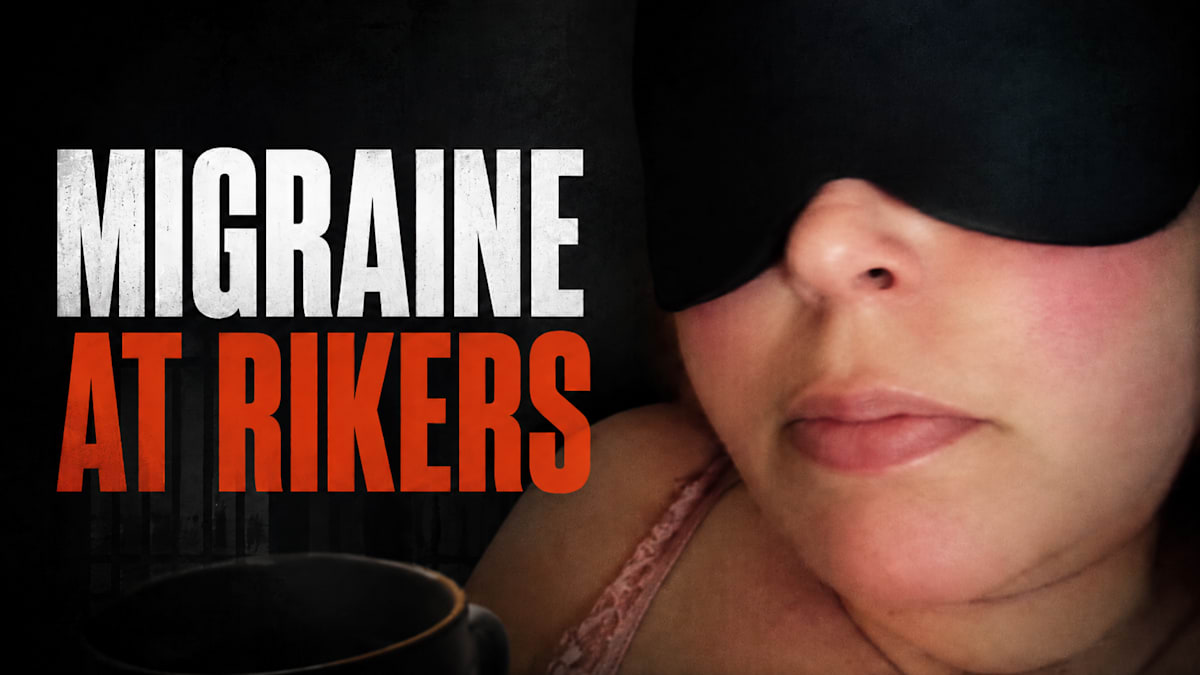
I took sumatriptan. I made coffee. I tried to eat a croissant. I put on a black eye mask and tried to make the room as dark and quiet as possible until the medication could do its job.
That sequence sounds ordinary.
Medicine. Coffee. Food. Darkness. Quiet.
But you only understand how precious ordinary relief is after you have lived in a place where pain no longer belongs to you. Inside Rikers, even a migraine becomes something you have to negotiate with a system that was not built to comfort you, respond to you, or believe your suffering matters.
A migraine in custody is not just a headache.
It is light you cannot turn off.
It is noise you cannot escape.
It is fifty people packed into a dorm, closely bunched together, everyone moving, talking, coughing, arguing, laughing, crying, sleeping, waking, surviving. It is fluorescent light pressing into your skull. It is metal, concrete, voices, announcements, doors, guards, bodies, tension.
And if your head is splitting open, the best you can usually hope for is a scratchy dark gray blanket pulled over your face.
That is the migraine treatment plan: disappear under a jail blanket and hope the pain gives up before you do.
If you are lucky, you might get down to medical. If you are luckier, someone might eventually give you ibuprofen.
Not migraine medication. Not the medication you may actually need. Not a quiet place to lie down. Not darkness. Not meaningful relief.
Ibuprofen.
And getting that ibuprofen can mean waiting hours.
The clinic wait could literally take four hours. Four hours sitting on cold, hard benches with nothing to do but stare at the inoperable TV mounted on the wall. Not watch it. Stare at it. Because it did not even work.
That detail has always stayed with me because it captures the absurdity of the place.
How hard is it to fix a TV?
You can buy a new one for a hundred dollars. For the cost of one basic television, people waiting for medical care could have had something to focus on besides pain, fear, boredom, withdrawal, anxiety, or whatever emergency brought them there in the first place.
But inside Rikers, even small mercies become evidence of institutional neglect.
A working TV in a medical waiting area should not feel like a luxury. A dark room for someone with a migraine should not feel impossible. A timely response to pain should not depend on whether the system happens to move that day.
And yet people adapt because people always adapt.
Some inmates even figured out how to turn medical waiting into something else entirely. Men and women from different dorms, girlfriends and boyfriends inside the facility, would arrange to go to medical on the same day so they could see each other in the waiting room.
They would sit there for hours together because nobody could really separate them once they were both waiting to be seen.
Ingenious, really.
That is what people do inside systems that deny them normal human contact. They find the cracks. They find the loopholes. They turn a four-hour medical delay into a visit. They turn neglect into opportunity because that is what survival sometimes looks like.
But the fact that people can be resourceful does not make the system less cruel.
It only shows how much human life still exists inside a place designed to grind it down.
When people talk about Rikers, they often talk in policy language: reform, oversight, receivership, closure plans, staffing, compliance, violence statistics, detainee deaths. All of that matters. But before any policy debate, there is the body.
The body under fluorescent lights.
The body waiting on a hard bench.
The body trying not to vomit.
The body with a migraine and no darkness.
The body asking for help and receiving ibuprofen.
The body under a scratchy gray blanket, trying to create one square foot of privacy in a dorm full of people.
That is what custody does. It takes ordinary needs and turns them into requests. It takes pain and makes it wait in line. It takes medical vulnerability and places it under fluorescent light, on a cold bench, beneath a broken television nobody bothered to fix.
This morning, I could take medication. I could make coffee. I could put on an eye mask. I could sit in my own room and try to make the migraine go away.
Inside Rikers, even that would have been too much to ask.
And that is the point.
A jail does not have to beat you to harm you. Sometimes it only has to keep the lights on, keep the noise going, keep the benches cold, keep the TV broken, keep the medical line long, and make pain ask permission before anyone responds.
*Michele Evans is an independent journalist, author, and former ESPN technical producer whose work has appeared in The New York Times.
Michele got her start in 2001 covering the NBA and NFL.
She now covers New York City courts, criminal-justice procedure, NYPD, FDNY, domestic-violence systems, media accountability, public safety, advocacy efforts, and New York civic life through courthouse observation, public records, legal analysis, and lived-experience reporting.
Read more independent journalism by Michele Evans.
Follow Michele Evans on Facebook and Substack for new reporting, analysis, and updates.