Two More People Died on Rikers. The Investigation Must Start Before the Moment They Were Found Unresponsive.
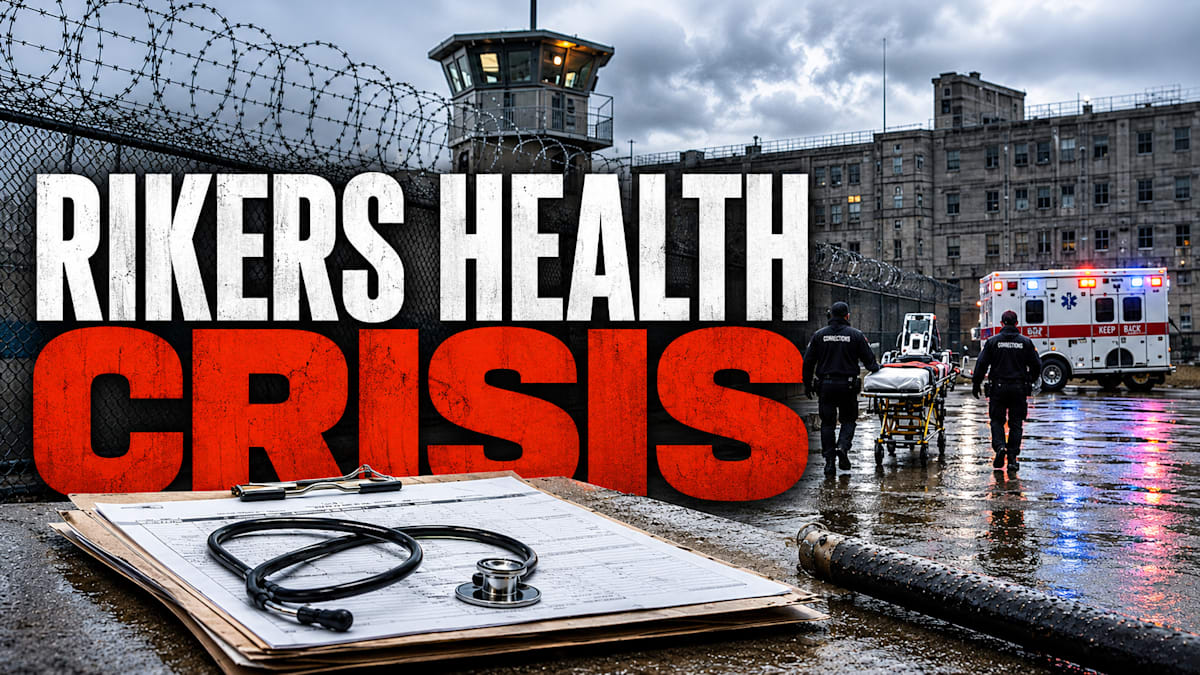
Two More People Died on Rikers. The Investigation Must Start Before the Moment They Were Found Unresponsive
By Michele Evans
New York City, New York
5/19/2026
Category: Courts / Criminal Justice / Advocacy
Bronx, New York - Two more people have died on Rikers Island.
Rajpattie Ramkellawan, 41, died Monday after what officials described as a medical emergency at the Rose M. Singer Center. The next morning, Umais Khan, 40, was found unresponsive at the Eric M. Taylor Center and later pronounced dead after resuscitation efforts failed. The deaths occurred within roughly 24 hours of each other.
That is the breaking-news fact.
But the larger story did not begin this week.
Rikers Island is already under extraordinary federal scrutiny. In 2025, U.S. District Judge Laura Taylor Swain ordered the appointment of an independent remediation manager after years of failed reforms, violence, staff misconduct, and in-custody deaths.
So when two people die inside city custody in two days, New York cannot treat it as an isolated tragedy.
It has to be treated as evidence.
Evidence of a jail system where the final moment may be visible, but the danger often begins much earlier: during intake, medical screening, housing placement, sick call, medication distribution, mental-health review, withdrawal monitoring, emergency response, and the daily decision of whether a person in custody is treated as a patient, a problem, or a body to be managed.
That is why the investigation into these deaths must include medical staff.
Not just correction officers.
Not just cell checks.
Not just the last few minutes.
The whole chain.
The details emerging about Umais Khan make that point impossible to ignore.
Khan was not serving a life sentence. He was not supposed to vanish into a jail system and emerge as a death notice. According to the New York Post, Khan was from Queens and had most recently been accused of stealing packages from a SoHo building.
Whatever the allegation, the city had custody of his body.
That means the city controlled where he slept. It controlled whether he could access care. It controlled whether he was checked, whether his symptoms were noticed, whether he could reach medical staff, whether medication was provided, whether withdrawal risks were monitored, and whether an emergency was recognized in time.
A theft allegation should not become a death sentence.
A missed court date should not become a death sentence.
Being poor, sick, addicted, mentally ill, unstable, unhoused, or simply trapped inside a jail should not become a death sentence.
And yet that is the question every Rikers death raises: was this person dying suddenly, or had the system already been warned?
That question is not speculation. It is history.
I was on Rikers Island when Layleen Polanco died.
I was there in 2019, inside the Rose M. Singer Center, when her death moved through the jail like a shockwave. People outside heard a headline. People inside felt something different: fear, silence, confusion, and the terrifying understanding that when something goes wrong behind those walls, the truth can disappear unless someone forces it into the open.
Polanco’s death should have changed the way every Rikers death is investigated.
The New York City Board of Correction reported that Layleen Xtravaganza Cubilette-Polanco died on June 7, 2019, in a cell in the Restrictive Housing Unit at the Rose M. Singer Center. The Board’s report included findings and recommendations directed to both the Department of Correction and Correctional Health Services.
That matters.
Because Polanco’s death was not only about whether officers looked into a cell. It was about medical history. Housing placement. Clearance decisions. Monitoring. Communication between jail staff and medical staff. The institutional failure to treat a known vulnerability as a life-or-death fact.
That is exactly the lens New York needs now.
When a person in custody dies after an alleged medical emergency, investigators must ask:
Who evaluated that person medically?
What symptoms were documented?
Were there sick-call requests?
Were medications prescribed, missed, refused, delayed, or discontinued?
Were there known physical-health, mental-health, substance-use, seizure, cardiac, withdrawal, infection, pregnancy, disability, or psychiatric risks?
Was the person housed appropriately for those risks?
Did Correctional Health Services escalate concerns?
Did Department of Correction staff delay or block care?
Did medical staff fail to act?
Did anyone treat warning signs as discipline, inconvenience, manipulation, or noise?
And most importantly:
Was this death preventable?
Those questions are not anti-staff. They are pro-truth.
Correctional Health Services is not an outside observer. NYC Health + Hospitals describes Correctional Health Services as the entity providing health care to people in city custody, with a mission that includes meeting patient needs and mitigating the adverse health effects of incarceration.
If that is the mission, then every in-custody death involving a possible medical crisis has to include a hard look at whether that mission was carried out.
Because “medical emergency” cannot become a shield.
It cannot be the phrase that ends public inquiry.
It has to be the phrase that begins it.
New York has oversight tools for exactly this reason. The State Commission of Correction’s Correction Medical Review Board is required to review the cause and circumstances of deaths in custody and make recommendations to prevent future deaths.
Use it.
Use all of it.
The deaths of Rajpattie Ramkellawan and Umais Khan should trigger a full independent investigation into the complete medical chain inside Rikers, including Correctional Health Services staff, Department of Correction staff, supervisors, emergency-response timelines, housing-placement decisions, medication records, sick-call records, mental-health flags, medical contraindications, missed checks, ignored complaints, and communication failures between correction officers and medical providers.
Not just the last person who touched the body.
Not just the person who called it in.
Not just the officer assigned to the post.
The whole system.
Because Rikers has already shown the public what happens when warning signs are missed. The Associated Press reported in 2024 that a Board of Correction investigation found Rikers staff repeatedly blocked medical workers from treating Charizma Jones, a 23-year-old woman who later died after severe illness and delayed care.
That case matters here because it shows the danger is not always a single dramatic act.
Sometimes the danger is delay.
Sometimes it is indifference.
Sometimes it is a security excuse.
Sometimes it is a medical complaint no one treats as urgent.
Sometimes it is another incarcerated person realizing something is wrong before the system does.
And sometimes, by the time the public hears the words “found unresponsive,” the real story has already been unfolding for hours, days, or weeks.
That is why these investigations cannot be narrow.
A proper investigation must answer:
When was Ramkellawan last medically evaluated?
What was known about her health before the alleged emergency?
What unit was she housed in, and why?
Were there prior complaints of pain, distress, withdrawal, psychiatric symptoms, or medical instability?
When was Khan last seen alive?
Who saw him?
Was he checked by staff or first noticed by another incarcerated person?
Did he have medical or mental-health alerts?
Was he on medication?
Was he detoxing?
Had he requested care?
Were there missed opportunities to intervene?
The public should not have to wait months for a vague cause-of-death line while the systems that controlled these people’s lives continue operating without scrutiny.
In custody, the government controls everything.
It controls movement.
It controls access to doctors.
It controls access to medication.
It controls whether a person can call for help.
It controls whether symptoms are treated as medical emergencies or behavioral problems.
It controls whether someone is placed in a unit where they can survive.
And when the government controls that much, the burden of explanation is not on the dead.
It is on the system.
Rajpattie Ramkellawan and Umais Khan were human beings in city custody. Their families deserve more than condolences. They deserve records. Timelines. Medical answers. Housing answers. Staffing answers. Emergency-response answers. They deserve to know whether their loved ones died suddenly, or whether the warning signs were there and ignored.
Layleen Polanco should have forced New York to learn that lesson.
I was there when she died.
I remember what it felt like when the jail kept moving afterward.
And I am tired of watching New York treat another Rikers death as shocking only until the next headline replaces it.
Two more people are dead.
The investigation must not stop at the cell door.
*Michele Evans is an independent journalist, author, and former ESPN technical producer whose work has appeared in The New York Times.
Michele got her start in 2001 covering the NBA and NFL.
She now covers New York City courts, criminal-justice procedure, NYPD, FDNY, domestic-violence systems, media accountability, public safety, advocacy efforts, and New York civic life through courthouse observation, public records, legal analysis, and lived-experience reporting.
Read more independent journalism by Michele Evans.
Follow Michele Evans on Facebook and Substack for new reporting, analysis, and updates.