TWO MONTHS FROM 18. FIVE YEARS OF CONTROL?
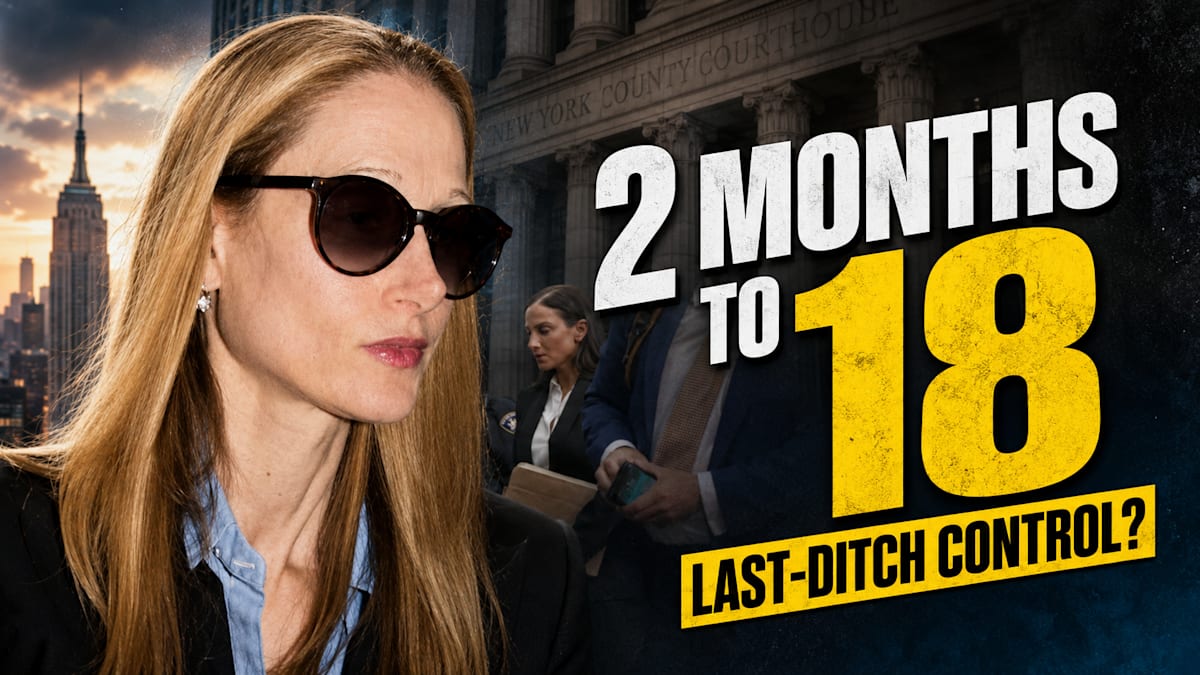
TWO MONTHS FROM 18. FIVE YEARS OF CONTROL?
By Michele Evans
New York City, New York
5/28/2026
Category: Courts / Criminal Justice / Advocacy
New York City, New York - A last-ditch protective order request raises a disturbing question: when does “protection” become control?
Dr. Pamela Buchbinder’s name has been trapped inside a headline for years.
To the public, she is the psychiatrist from the sensational case covered by television, podcasts, and true-crime media. She is the woman reduced to a few explosive words: psychiatrist, sledgehammer, custody battle, guilty plea, prison sentence.
That is the version most people know.
But I know Pamela Buchbinder as more than a headline.
I was sworn in as a witness in her case. I know the woman behind the public narrative. I know pieces of the story that never fit neatly into the television version. And I know enough to say this: what is happening now deserves public attention.
Pamela’s former partner, Dr. Michael Weiss, is seeking a five-year protective order involving their son, a child with whom Pamela had a loving relationship before her incarceration.
Their son turns 18 in approximately two months.
That timing matters.
Because once he turns 18, he is no longer a child whose relationships can be managed through the same machinery of parental gatekeeping. He becomes a legal adult. He gains the right to decide for himself whether he wants contact with his mother, whether he wants answers, whether he wants repair, whether he wants to understand the woman behind the headlines.
And now, just before that legal threshold arrives, a five-year protective order is being pursued.
That is not a small detail.
That is the story.
The Final Gate Before Adulthood
A five-year protective order at this stage would not merely regulate contact. It would stretch far beyond the final weeks of childhood. It would reach into adulthood. It would follow this young man past his eighteenth birthday and into the years when he should be free to make his own decisions about his mother.
That is what makes this so troubling.
If the concern were truly about protecting a child during childhood, why seek a five-year order when the child is two months away from becoming a legal adult?
Why now?
Why this close to the moment when the son’s own voice should begin to matter most?
This is where the case stops looking like protection and starts looking like a last-ditch effort to preserve control.
In my view, this is a deplorable abuse of process.
It uses the language of safety to extend separation. It uses Pamela’s incarceration as a weapon. It uses a coerced plea and a sensationalized public record to try to freeze a mother-child relationship in the most damaging chapter of her life, rather than allowing the child, soon to be an adult, to decide what the relationship means to him.
That is not justice.
That is control wearing a legal mask.
Two Psychiatrists, One Public Narrative
One of the most important facts about this case is also one of the most overlooked.
Pamela Buchbinder and Michael Weiss are both psychiatrists.
That matters.
This is not a case involving people with no professional understanding of trauma, attachment, coercion, psychological leverage, emotional dependency, family rupture, or the long-term effects of enforced separation.
A psychiatrist understands what it means to sever a parent from a child.
A psychiatrist understands the psychological power of isolation.
A psychiatrist understands how attachment works.
A psychiatrist understands how language can transform a relationship into a risk narrative.
A psychiatrist understands how court process can be used not only to protect, but to dominate.
That professional knowledge gives the public a window into what is happening here.
When someone with that level of psychological training uses a mother’s incarceration, plea deal, and public stigma to seek a five-year order just before the child becomes an adult, the question is not merely legal.
It is psychological.
It is relational.
It is about power.
It is about timing.
It is about whether the legal system is being asked to protect someone, or to preserve one person’s control over the story, the child, and the future.
The Weaponization of a Plea
Pamela Buchbinder pleaded guilty in a case that had already been shaped by years of media coverage, public condemnation, and criminal prosecution. To the outside world, that plea became the end of the story.
But a plea is not a full biography.
A plea does not tell you who someone was as a mother before incarceration.
A plea does not tell you what happened behind closed doors.
A plea does not tell you what pressure a defendant was under.
A plea does not tell you whether the public narrative captured the whole truth.
And a plea should not become a permanent weapon used to erase a mother from her child’s life.
This is one of the most dangerous things about criminalized motherhood: once a woman is incarcerated, every part of her life becomes easier to weaponize.
Her absence is used against her.
Her silence is used against her.
Her lack of access is used against her.
Her conviction is used as shorthand for her entire identity.
Her child’s distance from her, created or deepened by incarceration, is then used as proof that the relationship should remain severed.
It becomes a closed loop.
The system removes the mother.
The separation grows.
The separation is then used to justify more separation.
And the person who benefits from that separation gets to call it protection.
That is the machinery this case exposes.
The Woman Behind the True-Crime Frame
The true-crime version of Pamela’s story is easy to consume because it is simple.
It gives the public a villain.
It gives the public a shocking plot.
It gives the public two psychiatrists and a custody battle.
It gives the public a headline that feels complete.
But real cases are not headlines.
Real women are not headlines.
Real mothers are not headlines.
Pamela had a loving relationship with her son before incarceration. That matters. It should matter legally. It should matter morally. It should matter publicly.
A child does not stop having a mother because the media found a more sensational story.
A mother does not stop being human because the state obtained a plea.
And a young man who is two months away from adulthood should not have his future relationship with his mother locked down for five years because the parent who already controlled access now wants the court to extend that control.
This is not about ignoring the criminal case.
It is about refusing to let the criminal case become a blank check for lifelong erasure.
When Control Senses It Is Losing Its Grip
Coercive control does not always look like what people expect.
Sometimes it looks like surveillance.
Sometimes it looks like isolation.
Sometimes it looks like financial control.
Sometimes it looks like public humiliation.
Sometimes it looks like a court filing.
And sometimes, when the controlled person is already incarcerated, the control shifts to the last remaining bond: the child.
That is why the timing here is so alarming.
A son is about to become an adult.
A mother is still trying to be seen as a human being.
The public narrative has already done enormous damage.
And now, at the edge of adulthood, a five-year protective order would attempt to keep the door closed.
That is not a neutral legal move.
That is a power move.
It says: before this child becomes old enough to choose, let the court impose another barrier.
Before he can ask his own questions, let the record answer for him.
Before he can decide whether he wants contact, let a legal order decide for him.
Before Pamela can ever be seen outside the frame of the prosecution, freeze her there.
That is the grip.
And this looks like the last attempt to keep it from loosening.
The Public Should Look Again
Pamela Buchbinder’s case has been extensively covered, but coverage is not the same as understanding.
Television can tell a story.
Podcasts can retell it.
Prosecutors can frame it.
Headlines can harden it.
But none of that means the public has seen the whole woman.
I have.
And that is why I believe this moment matters.
This is not just a story about one mother, one father, and one son. It is a story about how the legal system can be used after a criminal case to continue punishment through family separation. It is a story about how incarceration can become a weapon in the hands of someone with something to gain. It is a story about how professional status, media narratives, and court process can combine to make control look respectable.
It is also a story about timing.
Two months before adulthood.
Five years of requested separation.
A mother already punished.
A son nearly old enough to decide for himself.
A father seeking to keep control through the court before that moment arrives.
That is the pressure point.
The Headline Was Never the Whole Story
The public has been told Pamela Buchbinder’s case as spectacle.
But spectacle is not truth.
Spectacle is not context.
Spectacle is not justice.
And spectacle should not be used to justify cutting a mother off from her son just as he reaches adulthood.
Pamela has already been prosecuted. She has already been incarcerated. She has already been turned into a national headline.
The question now is whether the system will allow that headline to become a weapon for five more years.
Because if a protective order is being used not to protect a child, but to prevent a nearly grown son from reconnecting with his mother as an adult, then the public should call that what it is.
Not protection.
Control.
And at this late stage, a last-ditch attempt to keep the grip from breaking.
*Michele Evans is an independent journalist, author, and former ESPN technical producer whose work has appeared in The New York Times.
Michele got her start in 2001 covering the NBA and NFL.
She now covers New York City courts, criminal-justice procedure, NYPD, FDNY, domestic-violence systems, media accountability, public safety, advocacy efforts, and New York civic life through courthouse observation, public records, legal analysis, and lived-experience reporting.
Read more independent journalism by Michele Evans.
Follow Michele Evans on Facebook and Substack for new reporting, analysis, and updates.