Trapped in the Belly of the Beast: How a Manhattan Court Elevator Broke an Inmate - and Why the City Paid For It
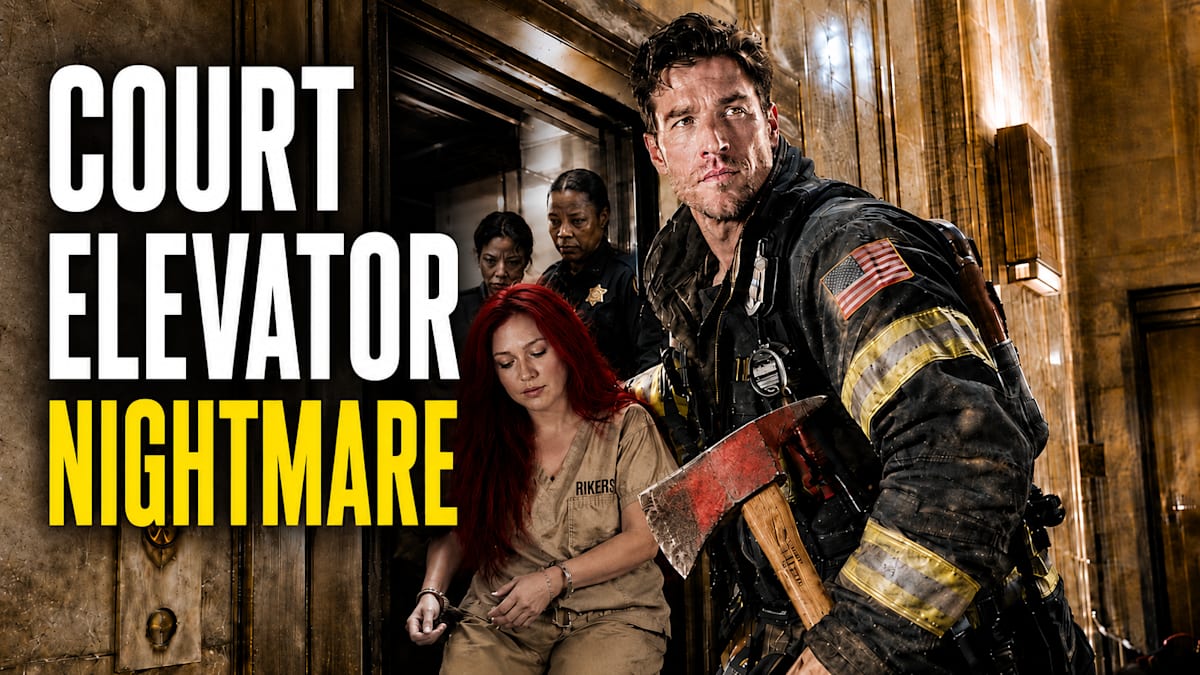
Trapped in the Belly of the Beast: How a Manhattan Court Elevator Broke an Inmate - and Why the City Paid For It
By Michele Evans
New York City, New York
5/22/2026
Category: Courts / Criminal Justice / Advocacy
New York City, New York - To look at the Manhattan Supreme Court building at 100 Centre Street from the sidewalk is to gaze upon a monolithic, Art Deco fortress. Built in the late 1930s, its towering stone facade projects absolute majesty, authority, and bureaucratic permanence. It is a place designed to make you feel small, powerless, and entirely subject to the machinery of the law.
I knew that powerlessness intimately. I wasn’t there with a press badge or a notebook. I was an inmate, being escorted to court in the custody of the city.
When you are in the system, your body is no longer your own. You go where you are told, you move when you are ordered, and you trust that the architecture holding you captive will at least keep you alive. But on that day, the very fortress of justice proved to be rotting from the inside out, transforming a routine court production into a claustrophobic nightmare that would cost me my dignity, send me into a long and grueling course of physical therapy, and force the City of New York to write a check for its own negligence.
The Spine-Compressing Drop
The Vera Institute of Justice has formally documented the misery of the elevator banks at 100 Centre Street. They are notoriously slow, decrepit, and force an incredibly tense mixing of defense attorneys, stressed families, heavily armed court officers, and inmates.
We were crammed into the heavy metal box, suffocatingly close. Exhausted and locked in custody, I was sitting on the elevator floor when the machine suddenly groaned.
Without warning, the elevator lurched. It dropped violently down the shaft, a terrifying freefall that ended with a sickening, sudden, metallic clunk as the emergency brakes slammed on. Because I was on the floor, the sheer, violent force of that sudden stop shot straight up my body, compressing my spine in a flash of blinding agony.
The lights flickered, leaving us trapped in a dim, stagnant twilight midway between floors.
In a courthouse, a stuck elevator is a psychological pressure cooker. For an inmate with a newly injured back, it is a horror movie. You cannot walk away. You are locked inside a box, inside a cage, inside a system that moves at a glacial pace. As the minutes seemed to bleed into hours, the air grew thick, hot, and thin. The hierarchy of the court began to dissolve into pure, claustrophobic survival instinct.
The Price of Dignity
The city loves to treat infrastructure failures as minor statistical blips. But infrastructure failure has a visceral human cost.
As the time dragged on with no sign of release, my body went into full-blown, primal fight-or-flight panic. Trapped by the city’s neglected machinery, unable to escape or help myself, I lost control of my bladder.
There is an acute, devastating indignity to experiencing that kind of physical crisis while entirely at the mercy of a broken municipal system.
But the indignity did not end when the elevator doors were finally forced open.
I had been on my way to court. After the elevator dropped, after my back was injured, after I had been trapped, panicked, and forced to urinate on myself, the system still kept moving me through its machinery.
I was taken to court and left for hours in an old, tiny holding cell that felt less like a place of justice than a forgotten cage buried inside the courthouse. I sat there in my soiled pants, injured and humiliated, waiting for someone to treat me like a person.
I asked for a change of clothes.
I was not given one.
That meant I had to remain in those same soiled pants through court, through the holding cell, through the transport process, and all the way back to Rikers later that night.
The physical pain was terrible. But the loss of humanity was something else entirely. It was not only that the elevator failed. It was that after the failure, every person and institution responsible for me still had the opportunity to restore a small measure of dignity, and they did not.
It wasn’t a temporary embarrassment. It was an ordeal that inflicted deep, lasting trauma. I was under the city’s care and custody, and they fundamentally failed to protect my body, my safety, and my basic human dignity.
Enter the Cavalry
Looking back at the wreckage of that day, the physical rescue stands out as the lone burst of light. Long before I was thrown into that holding cell, back when the despair inside the shaft was at its absolute thickest, the sound of heavy metal grinding against metal finally echoed down the darkness. The outer doors were pried back, and a beam of brilliant, glorious light cut through the dust.
Standing there, tools in hand, was the FDNY.
After being double-incarcerated in a hot, dark box for what felt like an eternity, the arrival of New York’s Bravest was a sight for sore eyes on every single level imaginable.
And let’s be completely honest: they were ridiculously good-looking.
Seeing a squad of heroic, peak-physique firefighters in full turnout gear reaching to pull us out was the ultimate cinematic relief. The sheer competence and warmth of those men, contrasted against the cold failure of the court system, brought an immediate, necessary burst of humanity back into my world.
But even rescue did not mean restoration. It meant extraction. The machinery kept moving. The court date still mattered more than the person who had just been injured and humiliated inside the courthouse walls.
Medical Gaslighting and the Golden Ticket
They hauled us out of the shaft, but my nightmare was far from over.
The injury did not end when the elevator doors opened. It followed me back to Rikers, into medical appointments, into daily pain, and into a long, grueling course of physical therapy that stretched on far beyond the day of the accident.
Physical therapy inside that world was not gentle recovery. It was institutional recovery — rigid, exhausting, repetitive, and humiliating in its own way. I had to keep showing up, keep bending, stretching, bracing, and rebuilding a body that had been damaged while I was entirely under the city’s control. Every session was another reminder that the elevator had not merely scared me. It had hurt me.
But the city’s legal apparatus decided to add insult to injury.
How dare they try to claim my pain wasn’t from their elevator?
In a calculated move to undercut my payout, the city’s doctors took X-rays of my back and claimed they showed a “preexisting condition.” It was a classic institutional tactic designed to dodge accountability. To verify their claim, they routed me out of the jail system’s regular orbit and sent me directly to the secure Elmhurst Hospital Prison Ward in Queens to undergo an advanced bone scan, fully expecting it to confirm their narrative.
But the scan came back clean. It proved definitively that I did not have the condition they tried to blame.
The city’s legal strategy relied on keeping me in the dark. They expected the results to be buried in a bureaucratic black hole where I’d never see them. What they didn’t know was that I already knew exactly how they operated. I knew I would need physical proof to survive their incoming legal onslaught.
Working quietly behind the scenes, my medical counselor printed out the official bone scan results and handed them directly to me.
From that moment on, I held onto that piece of paper like it was pure gold. It was my shield, my weapon, and my proof. When it came time to settle, the city tried to play dirty and slash my compensation. But the moment I produced those undeniable, hard-copy bone scan results, their entire defense crumbled. They were cornered by the very evidence they had demanded.
They had to pay.
Out of the Frying Pan, Into the Epicenter
I won that battle, but the universe was about to rewrite the rules of the entire world.
The morning after I finally awoke aching but vindicated, I turned on the news. The headlines were apocalyptic. The initial whispers of a strange new respiratory illness had suddenly erupted into a full-scale lockdown. The COVID-19 outbreak had arrived, paralyzing New York City overnight.
The lockdown was absolute.
Suddenly, I was barred from going to my regular institutional work assignment or seeing my favorite coworkers. The world had slammed its doors shut.
But the final, chilling irony would not hit until days later. That very facility - Elmhurst Hospital - where I had just been sent to prove my injury, where I sat breathing the stagnant indoor air while waiting for my bone scan, was about to dominate international news networks. It became widely known as ground zero, the terrifying “epicenter of the epicenter” of the American pandemic.
I cannot prove that Elmhurst is where I caught COVID. But the timing was chilling. The city sent me there in an effort to challenge my injury just as that hospital was about to become one of the most infamous viral hot zones in the country.
I had escaped the mechanical trap of 100 Centre Street, only to be funneled directly into another institutional danger.
The Final Verdict
The City of New York operates on the assumption that it holds all the cards, especially when it comes to the people it locks away. It expects inmates to quietly absorb the collateral damage of its structural rot, assuming they have no voice, no recourse, and no wits to fight back.
They were wrong.
I held the city accountable in the very legal apparatus where they hand out judgments, and I beat them using their own medical evidence.
The settlement they paid was not just compensation. It was a financial consequence for a failure they could no longer brush aside.
100 Centre Street still stands, an imposing fortress on the outside. But let my story be a reminder of the truth: no matter what side of the law you are on, the system is fragile, the infrastructure is failing, and sometimes, the only way to get justice is to hold onto your receipts, watch your back, and make the machine pay.
*Michele Evans is an independent journalist, author, and former ESPN technical producer whose work has appeared in The New York Times.
Michele got her start in 2001 covering the NBA and NFL.
She now covers New York City courts, criminal-justice procedure, NYPD, FDNY, domestic-violence systems, media accountability, public safety, advocacy efforts, and New York civic life through courthouse observation, public records, legal analysis, and lived-experience reporting.
Read more independent journalism by Michele Evans.
Follow Michele Evans on Facebook and Substack for new reporting, analysis, and updates.