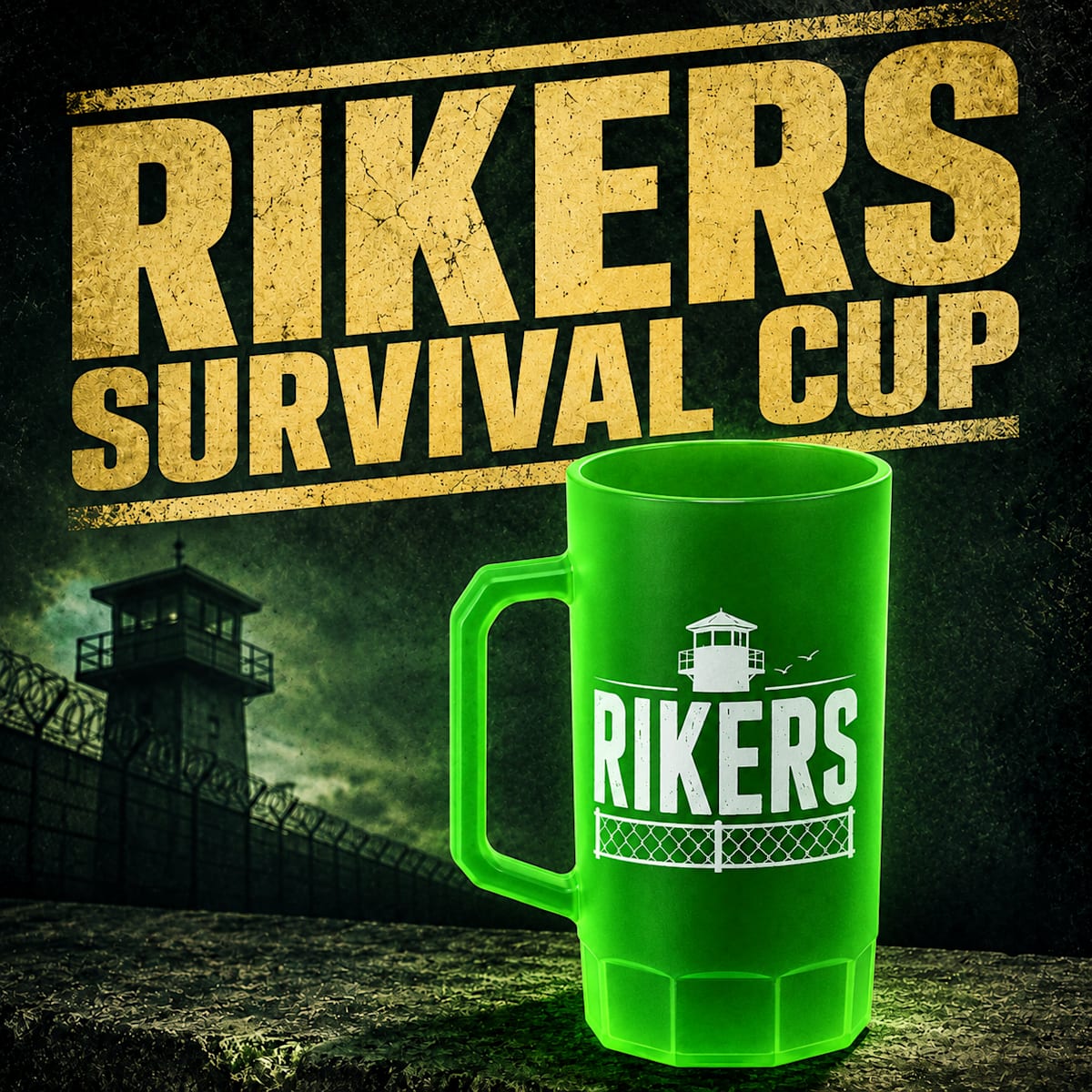
The Rikers Survival Cup: How One Green Mug Became Everything Inside
w8aar8q0os8nxzvxdhehxcpd5wfp2.73 MBThe Rikers Survival Cup: How One Green Mug Became Everything Inside
By Michele Evans New York City, New York 6/2/2026
Category: Courts / Criminal Justice / Advocacy / Rikers Island
New York City, New York - Inside Rikers Island, the green cup was not just a cup.
That is the first thing people on the outside need to understand.
It was your coffee mug. Your tea cup. Your soup bowl. Your ramen cooker. Your commissary dish. Your personal property marker. Your comfort object. Your bargaining chip. Your daily survival tool.
It was also something that could disappear at any moment.
And if it did, you were in trouble.
The green cup was one of those ordinary institutional objects that became extraordinary only because of where it existed. On the outside, it would look like a cheap plastic mug. Maybe something you would toss in a camping bin, a break room, or a dollar store pile.
On Rikers Island, it was everything.
People personalized them however they could. Any sticker, any scrap, any decoration that could be stuck to the outside became a statement: this one is mine. People would mark them, dress them up, claim them, protect them. A sticker was not just a sticker. It was a property deed.
Because if someone took your cup, they did not just take a piece of plastic.
They took your morning.
They took your coffee.
They took your noodles.
They took your ability to function like a human being in a place designed to strip ordinary life down to the bare minimum.
The cup carried coffee runs and tea. It held hot water. It became a bowl for noodles, the kind you had to let sit and soften after pouring in water from the dorm hot pot. You could not rush jail noodles. You had to let them bloom, steam, swell, and pretend to become a meal.
It also became the bowl for whatever food you managed to get off commissary. Chips, noodles, tuna, spreads, whatever mix people were making that day. The green cup did the work.
At one point, there had apparently been brown malleable rubber bowls available through commissary. By the time I was there, those bowls had long been discontinued. That meant if you wanted one, you had to acquire it from an old timer when she left.
That was how valuable basic objects became.
A bowl was not just a bowl. It was inherited property.
Eventually, I got one of those brown bowls. It felt like an upgrade. A luxury. A small correction in a world where almost everything was inconvenient by design.
Then I got quarantined for COVID.
When I came back, the bowl was gone.
Stolen.
Just like that, I was back to the green cup.
And honestly, the green cup never left the center of the story anyway.
It was the thing everybody used, everybody needed, everybody guarded, and everybody understood. It was also part of the dorm’s delicate balance of peace, routine, irritation, and occasional chaos.
Because the cup depended on one sacred source: hot water.
The hot pot was the heart of the dorm.
Without hot water, the green cup lost half its power. Coffee became impossible. Tea disappeared. Noodles stayed crunchy. Commissary meals collapsed. Morale dropped. People got cranky. The whole rhythm of the dorm shifted.
And hot water was not just comfort. It was also danger.
The same green cup that held coffee or noodles could be used to throw hot water on an unsuspecting enemy. One day, a girl got burned badly. After that, a directive came down: the old hot pots were to be replaced with new ones that had regulators and did not get as hot.
In theory, that probably sounded like safety.
In practice, it was a disaster.
The new hot pots made lukewarm water.
Lukewarm coffee.
Noodles that would not cook.
Tea that had no soul.
Coffee without that kick.
Inside Rikers, that was not a small downgrade. That was an institutional crisis.
So, naturally, a black market developed for the old hot pots.
The old ones became prized contraband. A down-low officer could procure one from storage, and suddenly that dorm became the place to be. People knew which dorms had the good hot water. The old hot pot dorms had status.
And yes, people would actually get in trouble on purpose hoping to be moved to one.
That is how much hot water mattered.
That is how much the green cup mattered.
In a place where people had almost no control, the smallest comforts became huge. A real cup of coffee could change your mood. Properly cooked noodles could feel like a meal. A working hot pot could make a dorm feel lucky.
I was lucky enough to be in one of the old hot pot dorms.
Until I almost ruined everything.
One day, I was filling the hot pot. Somehow, without realizing it, I got the cord wet. When I went to plug it in, there was a huge spark.
Then nothing.
The hot pot was dead.
The sacred source of hot water was gone.
Nobody was in the day room when it happened, so nobody saw me do it. I froze, probably looking exactly like someone who had just committed a dorm-level felony.
Word spread fast.
The hot pot was broken.
The dorm was up in arms.
No working hot water meant no proper coffee, no cooked noodles, no tea, no green cup magic. It was a travesty.
For reasons I still do not fully understand, people started blaming Barbara.
Barbara had a certain aura of not paying attention. She moved through the world with the energy of someone who might accidentally unplug society and then wander away. So, when the hot pot died, Barbara somehow became the natural suspect.
But because Barbara was Barbara, people did not really get mad at her.
They just started joking, “Keep Barbara away from the hot pot.”
I said nothing.
Absolutely nothing.
Because if they had known it was me, I would not have gotten the Barbara pass. There would have been no gentle comedy. No affectionate dorm mythology. No “that’s just Michele” energy.
There would have been a rumble.
And I was not ready for the Rocky Horror Picture Show.
Eventually, a new hot pot came. The dorm recovered. The green cups went back to work. Coffee returned. Noodles softened. Order was restored.
But the lesson stayed with me.
Inside Rikers, survival was not only about the big things. It was also about the little things people on the outside would never think about.
A cup.
A bowl.
A hot pot.
A sticker.
A spoon.
A commissary item.
A place to put your noodles.
A way to make coffee that actually tasted like coffee.
The green cup was part of the invisible architecture of daily life inside. It held food, comfort, routine, conflict, status, scarcity, and memory. It was communal and personal at the same time. Everyone had one, but yours had to be yours.
That is why people marked them.
That is why people guarded them.
That is why losing one felt like being knocked down a level in the survival game.
Because inside Rikers, the green cup was not just a cup.
It was the kitchen.
It was the coffee shop.
It was the dining room.
It was the pantry.
It was the warning sign.
It was the comfort object.
It was the thing you reached for when the day was cold, when the food was bad, when the dorm was loud, when commissary came, when coffee was possible, when noodles needed cooking, when you needed one tiny object to make life feel manageable.
It was ugly.
It was plastic.
It was everywhere.
And somehow, it was precious.
The Rikers survival cup was not designed to mean anything.
But inside those walls, it meant everything.
*Michele Evansis an independent journalist, author, and former ESPN technical producer whose work has appeared in The New York Times.
Michele got her start in 2001 covering the NBA and NFL.
She now covers New York City courts, criminal-justice procedure, NYPD, FDNY, domestic-violence systems, media accountability, public safety, advocacy efforts, and New York civic life through courthouse observation, public records, legal analysis, and lived-experience reporting.