The Courthouse Is Crumbling - and So Is New York’s Promise of Justice
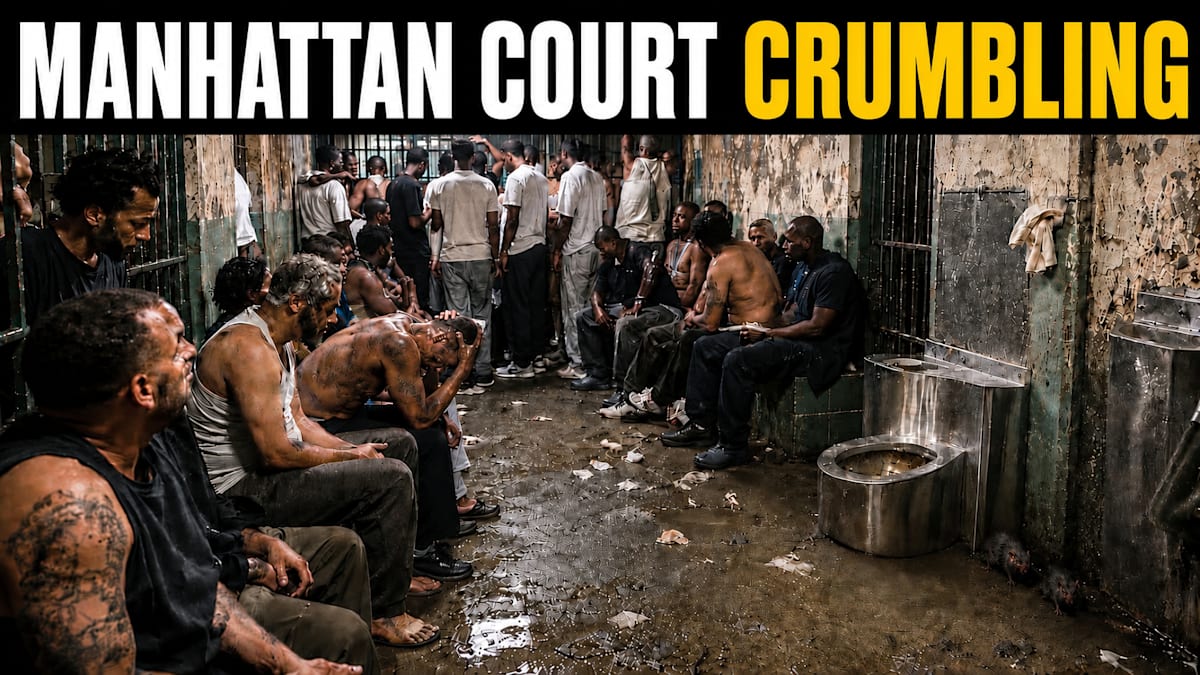
The Courthouse Is Crumbling - and So Is New York’s Promise of Justice
By Michele Evans
New York City, New York
5/22/2026
Category: Courts / Criminal Justice / Advocacy
New York City, New York - New York likes to tell itself a story about justice.
We imagine our courthouses as temples of order—marble, brass, and authority—where the rule of law stands firm no matter the chaos outside. But anyone who has ever been processed through the belly of these buildings knows the truth: the system is literally falling apart. And when the infrastructure collapses, people do too.
I learned this the hard way when a Manhattan Supreme Court elevator malfunctioned beneath me, dropped, trapped me, and left me injured and humiliated.
My experience is not an isolated incident. It is a symptom of a deeper structural failure that New York has refused to confront.
A Justice System Held Together With Tape and Denial
The Vera Institute of Justice has repeatedly documented that New York’s court system is “overburdened, under‑maintained, and structurally incapable of meeting the needs of the people it serves.” Their 2023 analysis of NYC courts found chronic delays, unsafe conditions, and “infrastructure that has not been modernized in decades.”
They’re not exaggerating.
The NYC Comptroller’s Office has issued multiple audits showing that courthouse elevators, HVAC systems, and holding areas routinely fail safety inspections. In 2022, the Comptroller found that over 40% of courthouse elevators citywide had unresolved maintenance violations, some dating back years.
The Department of Investigation’s Office of the Inspector General (DOI/OIG) has warned that court facilities, especially the areas used for people in custody, are “dangerously outdated,” with broken surveillance systems, malfunctioning doors, and inadequate emergency protocols.
And the New York City Bar Association has described the city’s court buildings as “decrepit, unsafe, and unfit for the administration of justice.”
This is not a metaphor. It is the literal condition of the buildings where New York claims justice is delivered.
The Hidden Human Cost of Court Neglect
Infrastructure failure doesn’t show up in court statistics. It shows up in bodies.
The Center for Court Innovation has documented that people in court custody routinely endure hours in overcrowded, poorly ventilated holding cells, often without access to bathrooms or medical care. Their 2021 report found that over 60% of people held in NYC court pens experienced unsafe or unsanitary conditions, including broken toilets, extreme temperatures, and lack of drinking water.
The State Commission of Correction has repeatedly cited court holding areas for violations that “pose immediate risk to health and safety.”
These harms rarely make headlines. They rarely make reports. But they accumulate, case by case, body by body, until the system’s violence becomes invisible through repetition.
A City That Pays Settlements Instead of Fixing the Problem
New York City quietly pays out millions every year for injuries and abuses that occur inside its courts and jails. According to the NYC Comptroller’s Annual Claims Report, the city paid over $300 million in correction‑related claims in 2023 alone, including injuries sustained in court facilities and during court transport.
But settlements are treated as the cost of doing business - not as evidence of a system in crisis.
It is cheaper, politically and financially, to deny, delay, and litigate than to repair the infrastructure that keeps people safe.
But justice cannot exist in a building that is physically unsafe.
Justice cannot exist in a system that treats human injury as a line item.
Justice cannot exist when the city’s first instinct is to discredit the harmed rather than fix the harm.
What New York Must Do Now
This is not a mystery. The solutions are known, achievable, and overdue:
Independent infrastructure audits of all NYC courthouses, with public reporting
Mandatory safety standards for elevators, holding cells, and transport areas
Real accountability mechanisms when people are harmed in custody
Medical independence so injuries cannot be dismissed as “preexisting”
Legislative oversight hearings on court conditions and custody safety
These are not luxuries. They are the minimum requirements of a functioning justice system.
The Story New York Must Stop Telling Itself
We cannot keep pretending that justice is delivered simply because a judge takes the bench. Justice is also delivered-or denied-in the elevators, the hallways, the holding cells, and the unseen machinery that moves human beings through the system.
A courthouse is not a symbol. It is a workplace, a detention center, a medical environment, and a public institution. When it fails, people get hurt. When it fails repeatedly, the city loses its moral authority to claim it is administering justice at all.
New York must stop hiding behind marble façades and confront the truth:
A system that cannot keep people safe cannot claim to keep people just.
*Michele Evans is an independent journalist, author, and former ESPN technical producer whose work has appeared in The New York Times.
Michele got her start in 2001 covering the NBA and NFL.
She now covers New York City courts, criminal-justice procedure, NYPD, FDNY, domestic-violence systems, media accountability, public safety, advocacy efforts, and New York civic life through courthouse observation, public records, legal analysis, and lived-experience reporting.
Read more independent journalism by Michele Evans.
Follow Michele Evans on Facebook and Substack for new reporting, analysis, and updates.