The Bed After the Cell
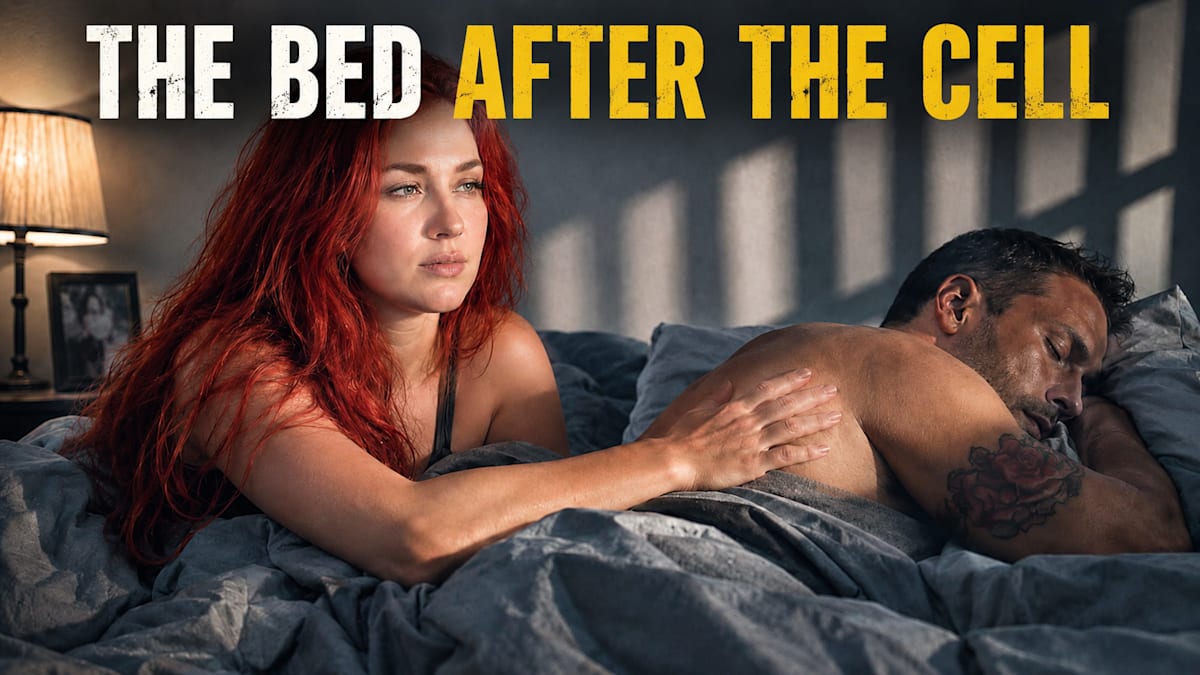
The Bed After the Cell
By Michele Evans
New York City, New York
5/22/2026
Category: Courts / Criminal Justice / Advocacy
New York City, New York - After prison, the first time I shared a bed with a man in five years, I did not know what to do with my body.
He was not a stranger. He was not someone I feared. He was not a man I had to convince myself to tolerate. He was someone I love deeply. Someone I have loved for decades. Someone whose body had once been familiar to mine. Someone I had wanted before, touched before, laughed with before, lost myself with before.
Years ago, desire between us did not need explanation.
But that night, all I could bring myself to do was rub his back until he fell asleep.
No sex. No seduction. No rush of old hunger coming back to claim what time had interrupted. No movie-scene reunion where love and longing burned through the years and made everything simple again.
Just my hand moving gently across his back while my own body stayed somewhere else entirely.
He fell asleep.
I stayed awake.
I lay beside a man I still love, in a real bed, in a room without bars, without officers, without fluorescent lights, without count, without screaming, without metal doors slamming shut - and still, some part of me could not cross the distance.
That is one of the things incarceration took from me.
People talk about jail and prison as if the punishment ends when the door opens. They talk about release dates, case dispositions, reentry, records, employment, housing, supervision, survival. They talk about the visible damage. They talk about what can be counted.
They do not talk enough about what incarceration does to a woman’s body.
They do not talk about what happens when privacy is stripped from you so completely that softness starts to feel unsafe. They do not talk about what it means to be watched, searched, ordered, degraded, threatened, exposed, and contained until your nervous system stops believing that your body belongs entirely to you.
They do not talk about the first bed after the cell.
They do not talk about lying beside a man you love and discovering that love is not enough to make your body feel free.
I was arrested in January 2019. Between Rikers and prison, I was engaged to another man. He lived in Dubai. Before the system finished swallowing my life, I still had the shape of a future. I had a fiancé. I had plans. I had someone I believed would be waiting for me when the courts, the jail, and the prison were finished taking pieces of me.
Our relationship was unusual enough, dramatic enough, and international enough that we were being considered for 90 Day Fiancé. Producers still reach out to me from time to time, as if the woman who once seemed like a natural fit for that kind of love story still exists somewhere.
Maybe she does.
But I do not know where she is.
There is a strange cruelty in still being recruited for a love story after the system has made love feel physically impossible.
Perhaps I could find another international lover. Perhaps I could turn my life back into something glamorous, dramatic, complicated, and watchable. Perhaps there is another man in another country who could become the next chapter.
But the thought turns my stomach.
Not because I no longer believe in love.
Because I know what it costs when love becomes another place where a woman can be abandoned.
While I was in prison, my fiancé got another woman pregnant and married her.
People need to understand what incarceration does beyond the walls.
Life continues outside while you are trapped inside. People move on. Lovers make choices. Families rearrange themselves. The world does not pause because your freedom has been taken. You are expected to survive the cage, then return to a life that has quietly replaced you.
Something in me went numb after that.
Not dead.
Numb.
There is a difference.
Dead means gone. Numb means buried under so much shock, betrayal, violence, grief, humiliation, and institutional control that the body stops sending messages it once sent freely.
I have suitors. That is not the problem. I have not avoided dating because no one wants me. I have avoided it because wanting and trusting are not the same thing.
A woman can be desired and still feel unreachable.
A woman can be complimented, pursued, admired, invited, and still feel like her body is standing behind glass.
A woman can still love a man deeply and still be unable to let her body believe that love is safe.
That is the part people do not understand.
Incarceration did not make me undesirable.
It made intimacy foreign.
The man in the bed was not my former fiancé. He was someone else. Someone older in my heart. Someone rooted in a different part of my life. Someone I had known before the arrest, before Rikers, before prison, before the long collapse of trust that followed.
He was not the man who married someone else while I was locked away.
He is a man I still love after all of it.
That should have made the room easier.
Instead, it made the silence louder.
Because if my body could not feel safe with him, with someone I loved so deeply, with someone whose touch should have remembered me, then what had incarceration done to me?
When he asked if we should have sex, I laughed.
Not because it was funny. Not because I did not love him. Not because I was not attracted to him. Not because there was no history between us.
I laughed because the question sounded like it belonged to a language I used to speak.
Sex had become theoretical.
Intimacy had become something I could offer only in fragments. A hand on his back. A quiet room. The willingness to stay beside him even while every alarm inside me remained awake.
I could give tenderness, but not surrender.
I could give care, but not abandon.
I could touch him, but I could not disappear into being touched.
That is not prudishness.
That is trauma.
That is captivity still living in the body after the jail has released the person.
The violence of men taught me danger. The abandonment of love during incarceration taught me absence. The institution taught me that my body was subject to inspection, command, and control. The legal system taught me that a woman’s pain can be processed, filed, argued, minimized, and made procedural.
By the time I came home, desire had nowhere safe to land.
People imagine intimacy as instinct. They think if you love someone, you simply reach for them. They think if the attraction is real, the body follows. They think old lovers can pick up where they left off if the feeling is still there.
But trauma interrupts instinct.
Incarceration interrupts womanhood.
Betrayal interrupts desire.
A cell does not only separate you from the world.
It separates you from yourself.
I have rebuilt many things since then. I rebuilt my voice. I rebuilt my work. I rebuilt my public identity. I wrote. I reported. I advocated. I forced my story into rooms where people might have preferred my silence. I turned pain into testimony, testimony into record, record into journalism.
From the outside, that can look like recovery.
But recovery is not proven by productivity.
A woman can publish, testify, investigate, survive, and still lie awake beside a man she loves because her body does not know how to come home.
That night was not a failure of love.
That is what hurts most.
If I had not loved him, it would have been easier to explain. If he had been a stranger, I could have called it caution. If I had no desire, no history, no tenderness, no ache, no memory, I could have called it simple disinterest.
But I did love him.
I do love him.
And still, I could not.
That is the wound.
Not that no one wanted me.
Not that I had forgotten how to love.
Not that the years erased the feeling.
The wound is that love was there, and my body still could not trust the room.
People need to understand this when they talk about incarceration. They need to understand that jail does not merely hold bodies. It changes their relationship to touch, privacy, sleep, safety, sex, silence, and love.
It teaches vigilance.
It teaches dissociation.
It teaches women to survive by leaving themselves.
Then one day, if they are lucky, they are released. Everyone expects gratitude. Everyone expects resilience. Everyone expects the story to turn toward redemption.
But some doors stay locked inside the body.
Some women come home and still cannot sleep.
Some women are held by men they love and still feel alone.
Some women can survive the institution but cannot yet survive being wanted.
I am one of those women.
I am not ashamed of that anymore.
I am angry.
I am angry because the public is allowed to debate incarceration in abstractions while the people who lived it carry consequences too intimate to fit into policy language. I am angry because people want survivors to be inspirational but not complicated. I am angry because no one tells you that after fighting so hard to get your freedom back, you may still have to fight for the return of your own body.
The bed after the cell should have felt like proof that I was free.
Instead, it showed me how much captivity remained.
I lay beside a man I love. I rubbed his back until he fell asleep. I listened to him breathing. I stayed awake in the dark, trying to understand how a room with no bars could still feel impossible to enter.
That is what incarceration did.
It did not just take my time.
It did not just take my privacy.
It did not just take my name and drag it through courtrooms, records, and cages.
It reached into the most private part of being human - the place where love becomes touch, where trust becomes rest, where a woman’s body says yes because it feels safe enough to open - and it left silence there.
I am still here.
I am still loving.
I am still trying.
But I want people to stop pretending release means restoration.
Freedom is not just walking out of a jail.
Sometimes freedom is lying beside the person you love and finally believing your own body belongs to you again.
I am not there yet.
But I am writing from the place where the truth begins.
*Michele Evans is an independent journalist, author, and former ESPN technical producer whose work has appeared in The New York Times.
Michele got her start in 2001 covering the NBA and NFL.
She now covers New York City courts, criminal-justice procedure, NYPD, FDNY, domestic-violence systems, media accountability, public safety, advocacy efforts, and New York civic life through courthouse observation, public records, legal analysis, and lived-experience reporting.
Read more independent journalism by Michele Evans.
Follow Michele Evans on Facebook and Substack for new reporting, analysis, and updates.