By Michele Evans New York City, New York 6/12/2026
Category: NYPD / Public Safety / Sports
New York City, New York - At Michele Evans News, we do not condone violence. We do, however, have questions.
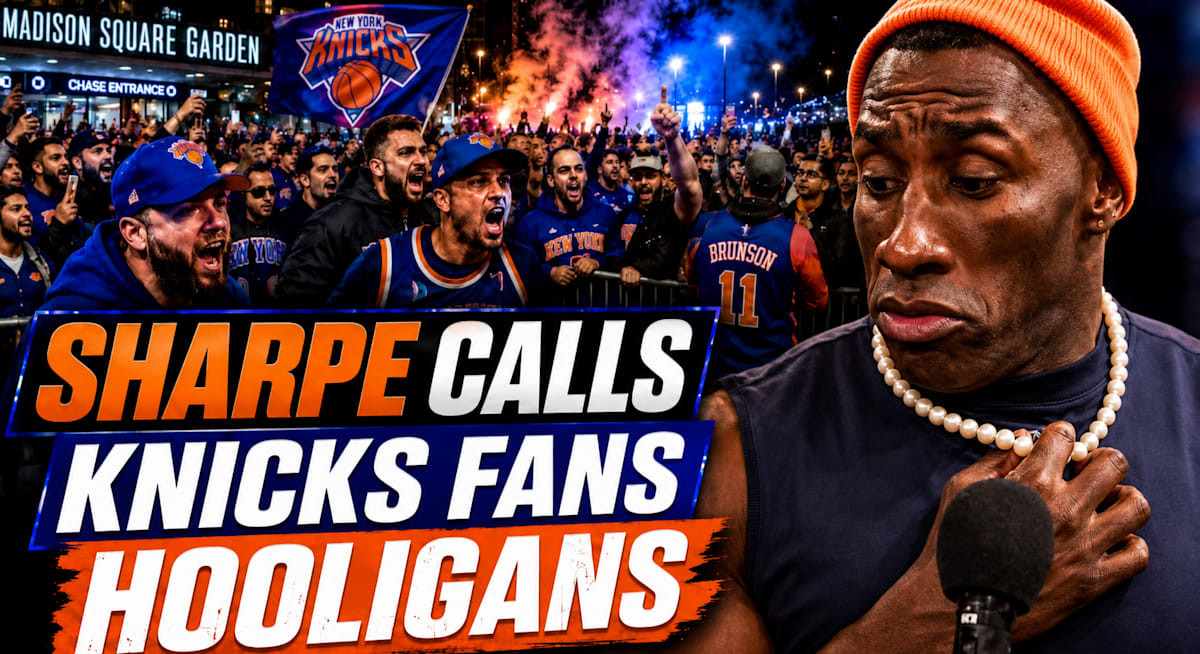
According to reports, Shannon Sharpe says Knicks fans are “hooligans,” which sounds very serious, very British, and possibly like something yelled from a horse-drawn carriage.
It sounds like it should come with cobblestones and a chimney sweep.
But what exactly is a hooligan? And who the hell are they?
Are they organized? Do they have jackets? Is there a membership card? Does one become a hooligan after three bad chants and one overturned trash can?
Merriam-Webster defines a hooligan as a rowdy or violent young man acting as part of a group or gang.
Even better, the word may come from a late-1800s Irish hoodlum in London named Patrick Hooligan, or possibly the Irish surname Houlihan. So apparently Knicks fans have now been promoted from “rowdy New Yorkers” to “Victorian British police-court defendants.”
But “hooligans”? Sir, this is Madison Square Garden, not a 19th-century London alley. Besides, don’t you rock orange and blue? 😜
New York City is in full Knicks fever, and apparently the national sports world has discovered that Madison Square Garden energy does not always come with indoor voices.
Again: no violence. No attacking opposing fans. No throwing things. Act right.
But also, calling Knicks fans “hooligans” during the NBA Finals is elite comedy. The city waited decades for this moment, and now everybody is clutching pearls because New York got a little too New York.
More than 100 people have been taken into custody by the NYPD during Knicks Finals watch-party and post game chaos.
*Michele Evansis an independent journalist, author, and former ESPN technical producer whose work has appeared in The New York Times.
Michele got her start in 2001 covering the NBA and NFL.
She now covers New York City courts, criminal-justice procedure, NYPD, FDNY, domestic-violence systems, media accountability, public safety, advocacy efforts, and New York civic life through courthouse observation, public records, legal analysis, and lived-experience reporting.