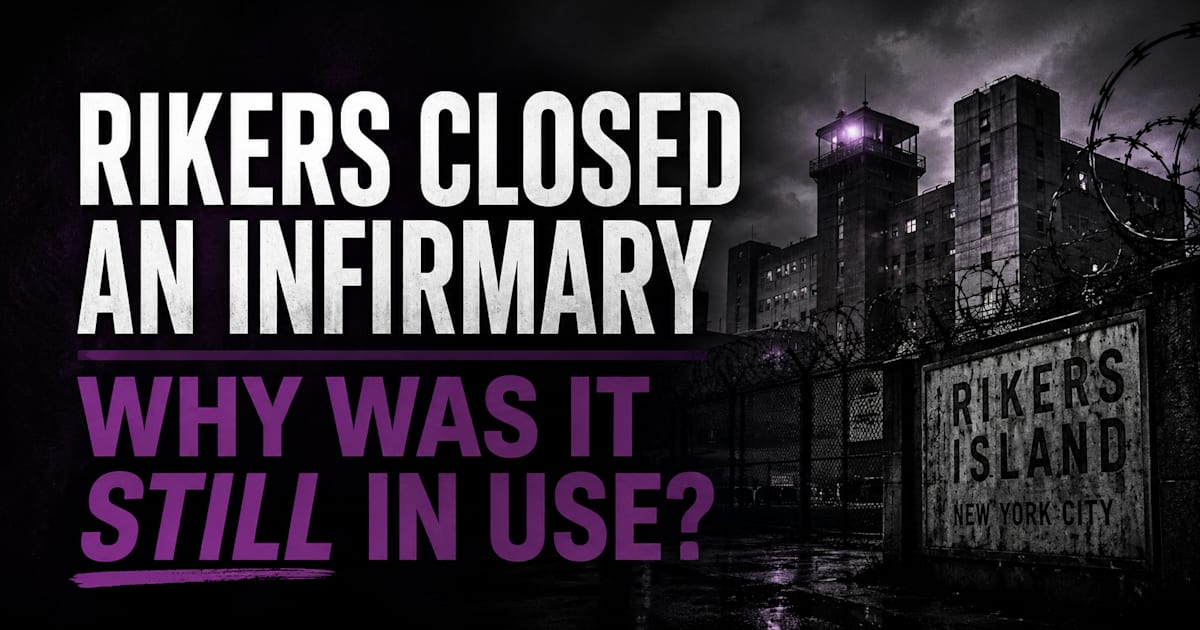
Rikers Is Closing an Infirmary. The Real Story Is Why New York Was Still Using It
j2zzbm42er8ht3xlsu4xrt6tq1ow2.07 MBRikers Is Closing an Infirmary. The Real Story Is Why New York Was Still Using It?
By Michele Evans New York City, New York 6/29/2026
Category: Courts / Criminal Justice / Public Interest
NEW YORK CITY, NY - New York City is celebrating the permanent closure of the North Infirmary Command on Rikers Island as a major step toward shutting down the jail complex.
It is progress.
It is also an admission.
The city described North Infirmary Command as a vacant jail facility that opened in 1932 and has now been transferred out of Department of Correction control. But buried inside the same announcement was the detail that should stop every New Yorker cold: the facility “most recently housed people in DOC custody with acute medical needs requiring infirmary-level care.”
So which is it?
Was North Infirmary Command abandoned, vacant, obsolete, or still part of the city’s jail medical system until very recently?
Because those are not the same story.
If the facility was vacant by the time officials announced its closure, that answers only one narrow question. It does not answer the larger one: how long was New York relying on a nearly century-old jail infirmary to hold medically vulnerable people before finally admitting it was time to shut the door?
That is the problem with Rikers announcements. They often arrive wrapped in the language of milestones, transformation, and progress. But people incarcerated on Rikers do not live inside future promises. They live inside the conditions the city permits today.
The North Infirmary Command was not just a building on a map. According to the city’s own statement, it most recently housed people with acute medical needs. Those individuals have since been moved to a treatment facility at Bellevue Hospital. That is not a small footnote. That is the human core of the story.
A facility can be vacant now and still raise serious questions about what it was used for before the lights went out.
The Bellevue move may be the right one. A hospital-based therapeutic housing unit with access to specialty medical care is exactly the kind of alternative New York should have been building years ago. But the existence of that better option only makes the delay more glaring. If medically complex detainees belonged in hospital-based care, why were they still being held in a Rikers infirmary that officials are now celebrating as closed?
That question matters even more because the city also acknowledged what many New Yorkers already suspected: Rikers will not meet its 2027 closure deadline. The same day officials announced the North Infirmary closure, the administration admitted the jail complex will not be ready to shut down on schedule.
That is the pattern.
New York announces a milestone and buries the failure beside it.
A facility closes, but the deadline slips. A medical unit opens, but only after people spent years inside a jail system repeatedly condemned for violence, neglect, and unsafe conditions. Officials speak about dignity while the timeline quietly moves further away.
Closing North Infirmary Command should not be dismissed. Every closed Rikers facility matters. Every person moved out of an aging jail medical unit matters. Every transfer away from the island matters.
But progress does not erase accountability.
The public deserves clear answers.
When was North Infirmary Command last used to house people in custody? How many people were held there in its final years? What were their medical needs? What were the conditions inside? When did the city determine that the facility was no longer appropriate? And why did it take until now to permanently close it?
Those are not anti-reform questions. They are reform questions.
Because if New York is going to claim victory for closing a jail infirmary, then New York must also account for the people who were held there before the victory lap began.
Rikers does not need more carefully staged announcements. It needs transparency, urgency, and an honest accounting of how many people were forced to live inside facilities the city now describes as relics of a system it claims to be leaving behind.
So yes, close North Infirmary Command.
Move medically vulnerable people into real medical settings.
Transfer every building necessary to move Rikers toward closure.
But do not ask the public to applaud without asking the obvious question:
If this facility was no longer fit for the future of New York City, why was it part of the present for so long?
*Michele Evansis an independent journalist, author, and former ESPN technical producer whose work has appeared in The New York Times.
Michele got her start in 2001 covering the NBA and NFL.
She now covers New York City courts, criminal-justice procedure, NYPD, FDNY, domestic-violence systems, media accountability, public safety, advocacy efforts, and New York civic life through courthouse observation, public records, legal analysis, and lived-experience reporting.