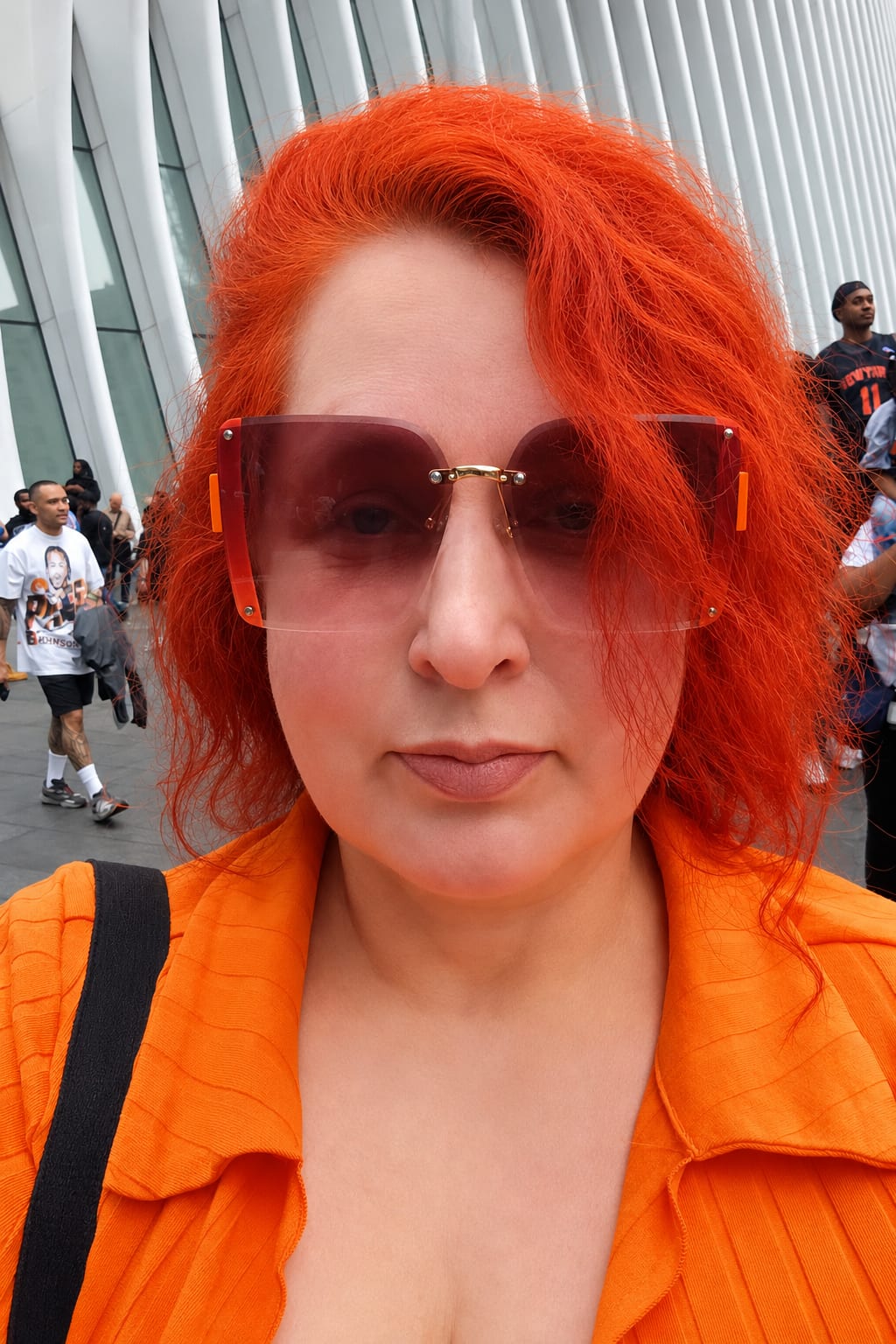
Knicks Forever: Two Million Parade Fans, Closed Gates, Fulton Street Lock-In, and the Most New York Escape Mission Imaginable
o3k28rwl3hmtth5zosm8m4j1on0o2.23 MBKnicks Forever: Two Million Parade Fans, Closed Gates, Fulton Street Lock-In, and the Most New York Escape Mission Imaginable
By Michele Evans New York City, New York 6/18/2026
Category: NYPD / Public Safety / Public Interest / Sports
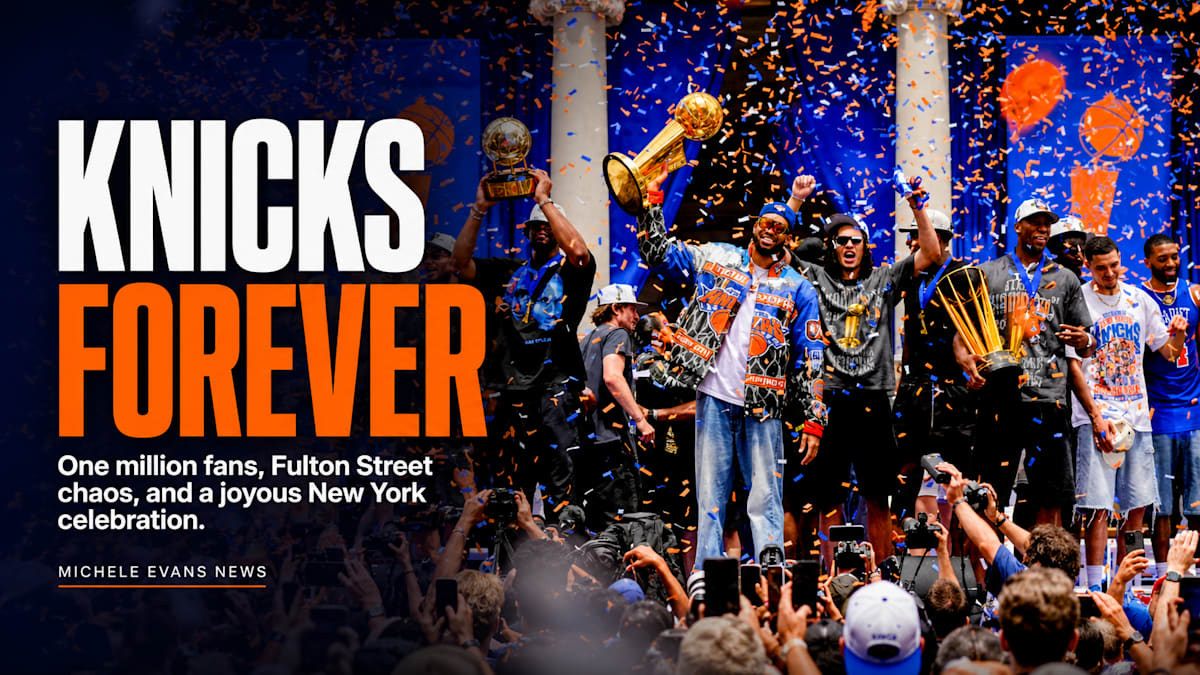
New York City, New York - Lower Manhattan turned orange and blue Thursday as New York City celebrated the Knicks’ first NBA championship in 53 years with a ticker-tape parade through the Canyon of Heroes, a Keys to the City ceremony, celebrities, chants, merch vendors, blocked streets, trapped fans, and the kind of chaos only New York can produce when joy, crowd control, and subway infrastructure collide.
The Knicks beat the San Antonio Spurs in Game 5 to capture their first title since 1973. The city responded by doing exactly what New York does when history finally shows up: it packed Lower Manhattan before breakfast, covered Broadway in orange and blue, sold championship merch on every available patch of sidewalk, and turned a parade into a civic endurance test.
The official celebration started near Battery Park and moved north along Broadway toward City Hall. Jalen Brunson, Karl-Anthony Towns, OG Anunoby, Mikal Bridges, Josh Hart, and the rest of the championship roster rode through the city as conquering heroes while fans screamed, filmed, chanted, cried, and tried to catch even one clean glimpse of the team.
At City Hall, Mayor Zohran Mamdani honored the Knicks with Keys to the City, because after 53 years of heartbreak, false starts, playoff collapses, bad luck, bad rosters, and eternal hope, this team did not just win a championship. They gave New York back one of its loudest civic identities.
This was not just a basketball parade.
This was a New York culture parade.
Spike Lee was there. Walt “Clyde” Frazier was there. Patrick Ewing, Carmelo Anthony, Chris Rock, Timothée Chalamet, Martha Stewart, Mariska Hargitay, Ben Stiller, Fat Joe, Mary J. Blige, Alicia Keys, Jay-Z, and Tracy Morgan were all part of the championship orbit. It felt like every famous New Yorker received the same emergency alert: Knicks won. Report downtown immediately.
Alicia Keys performed at the City Hall ceremony, because some choices are obvious and still perfect.
But the real stars were the fans.
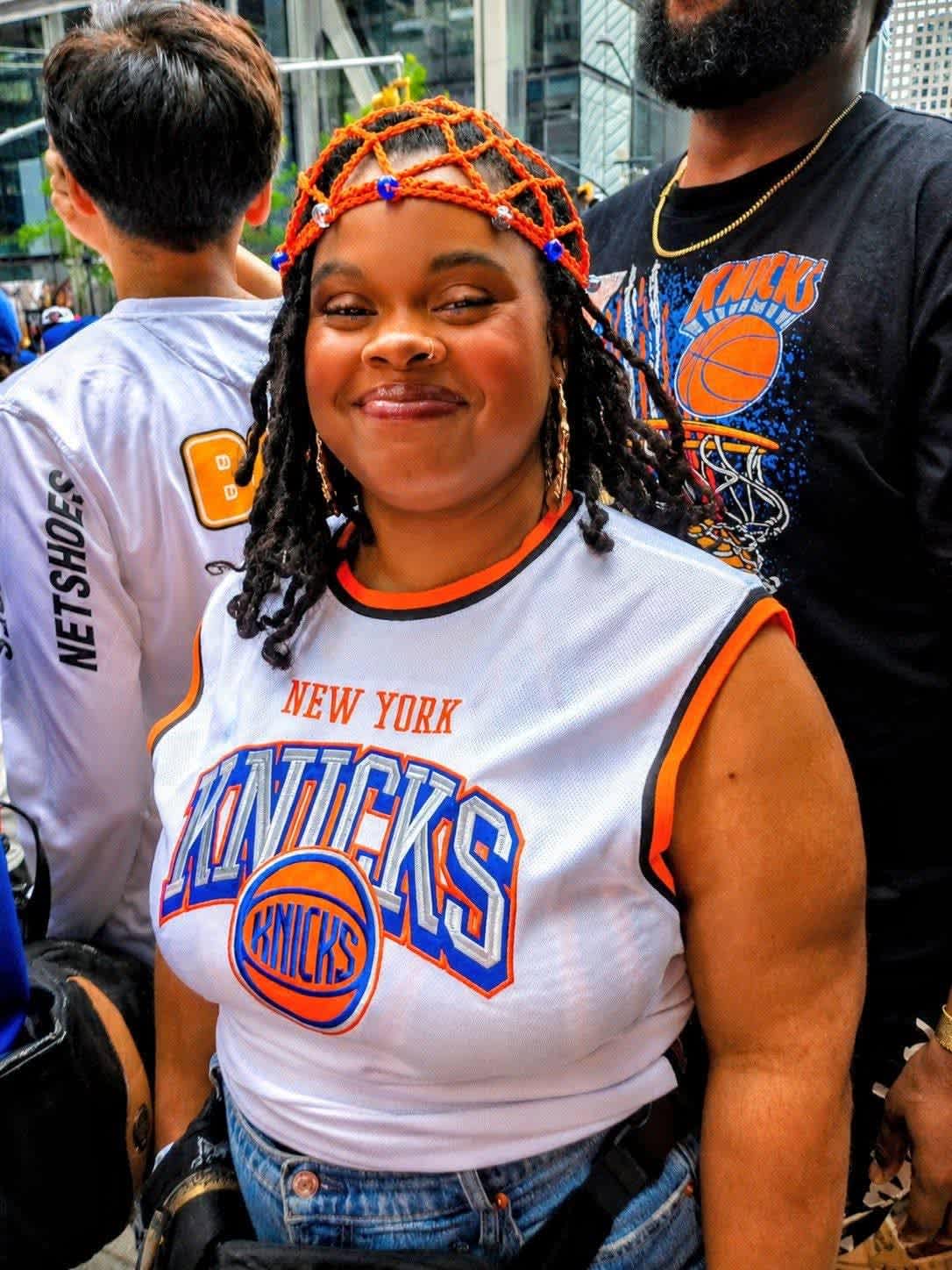
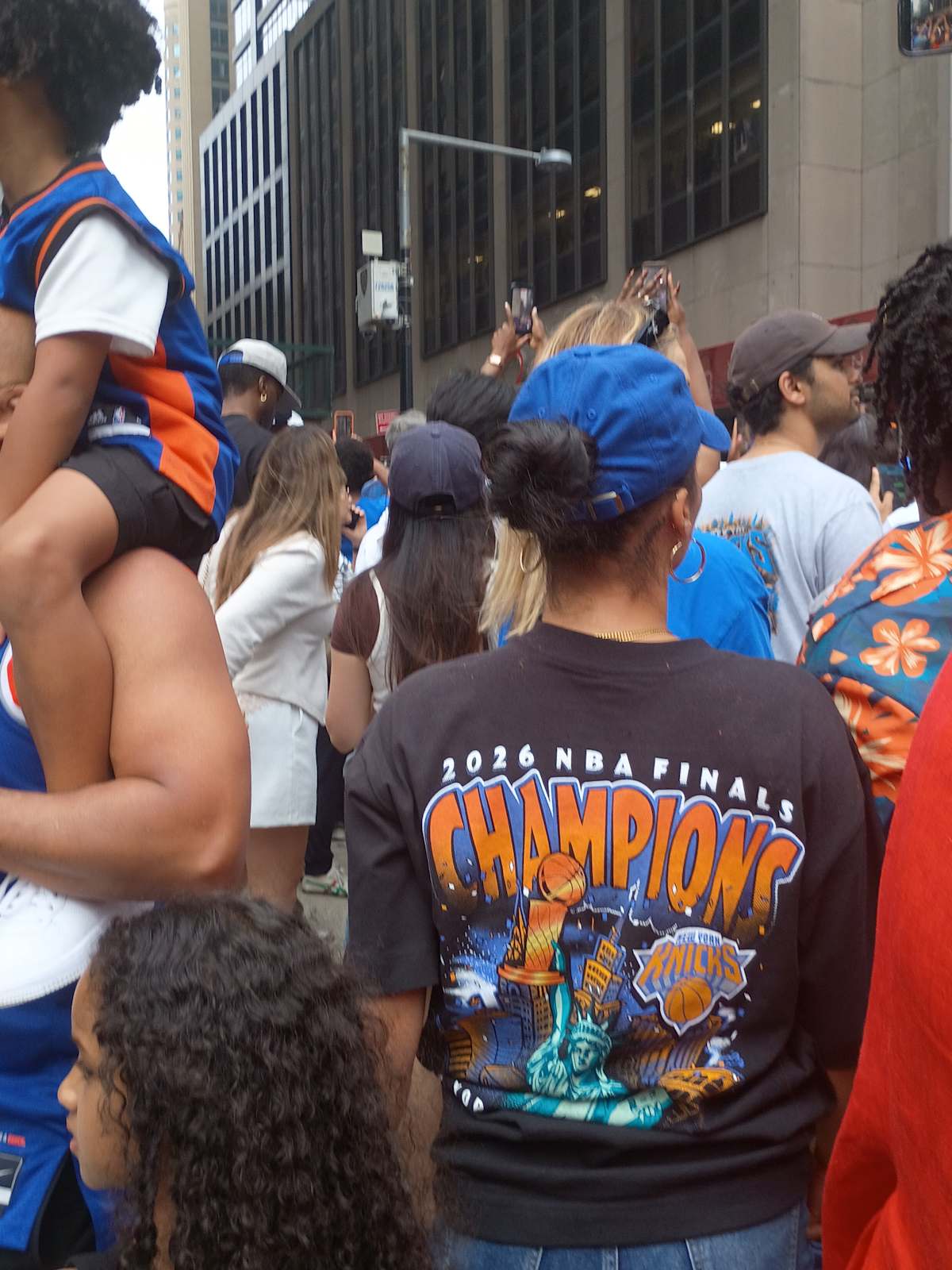
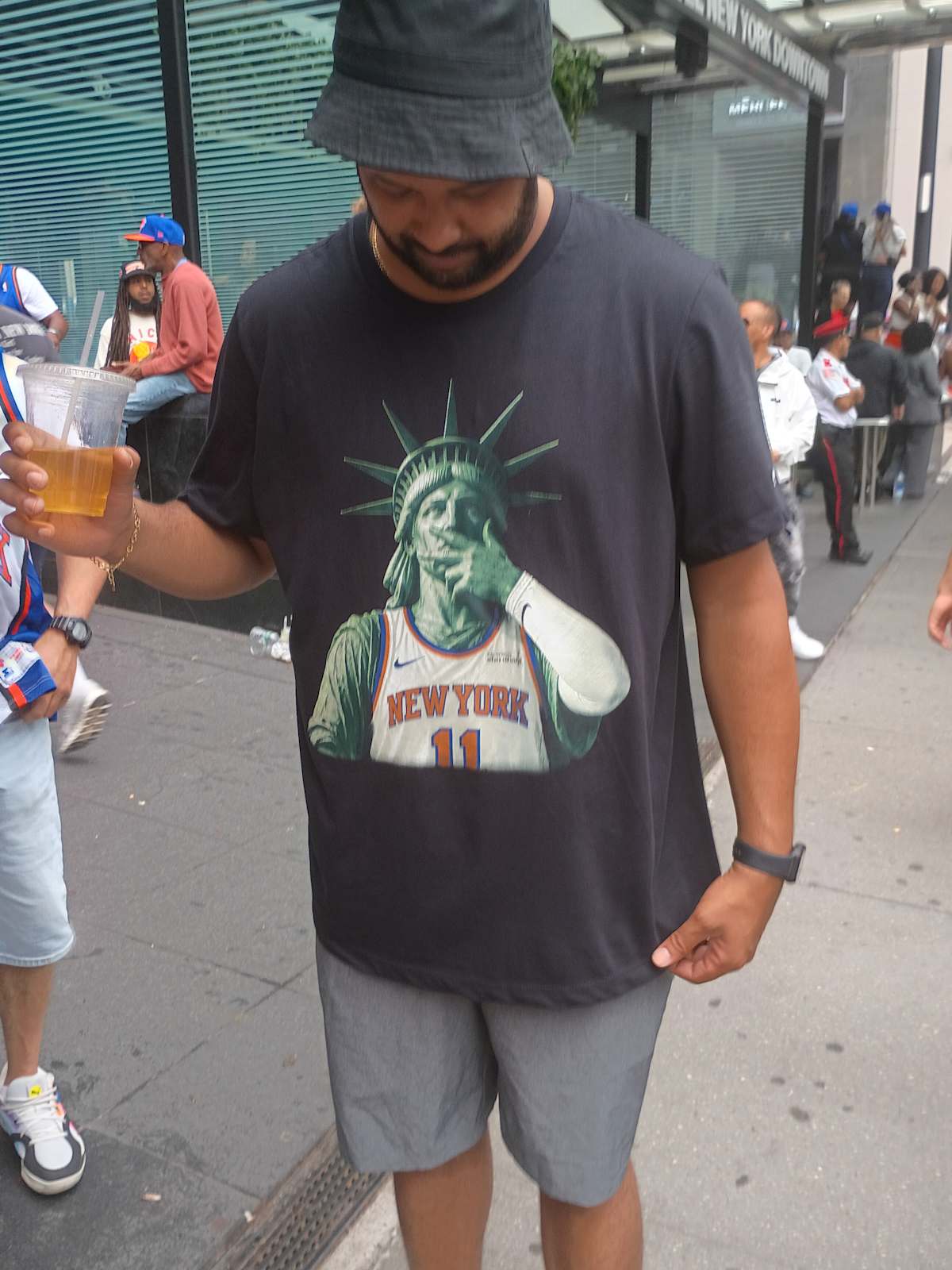
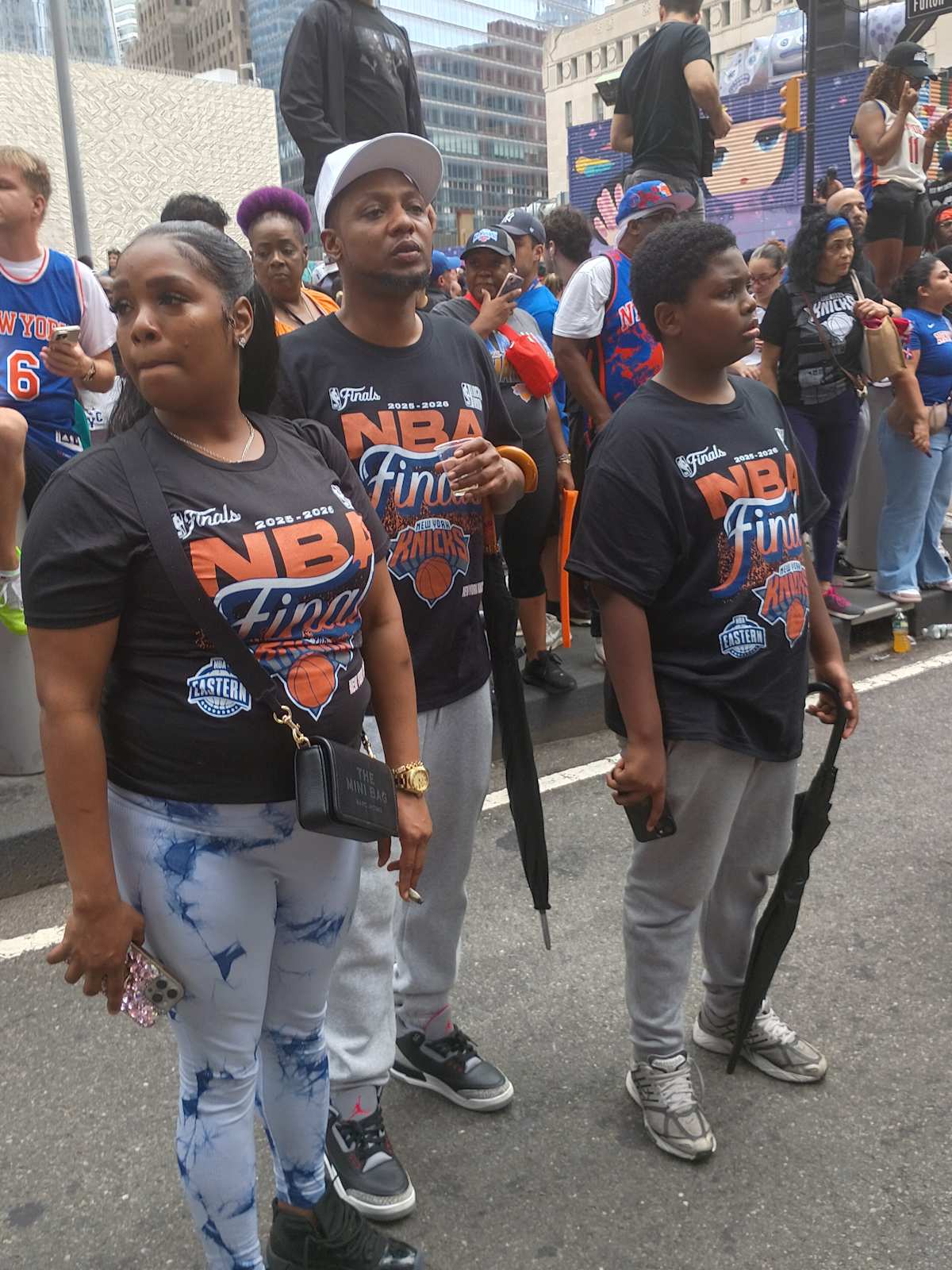
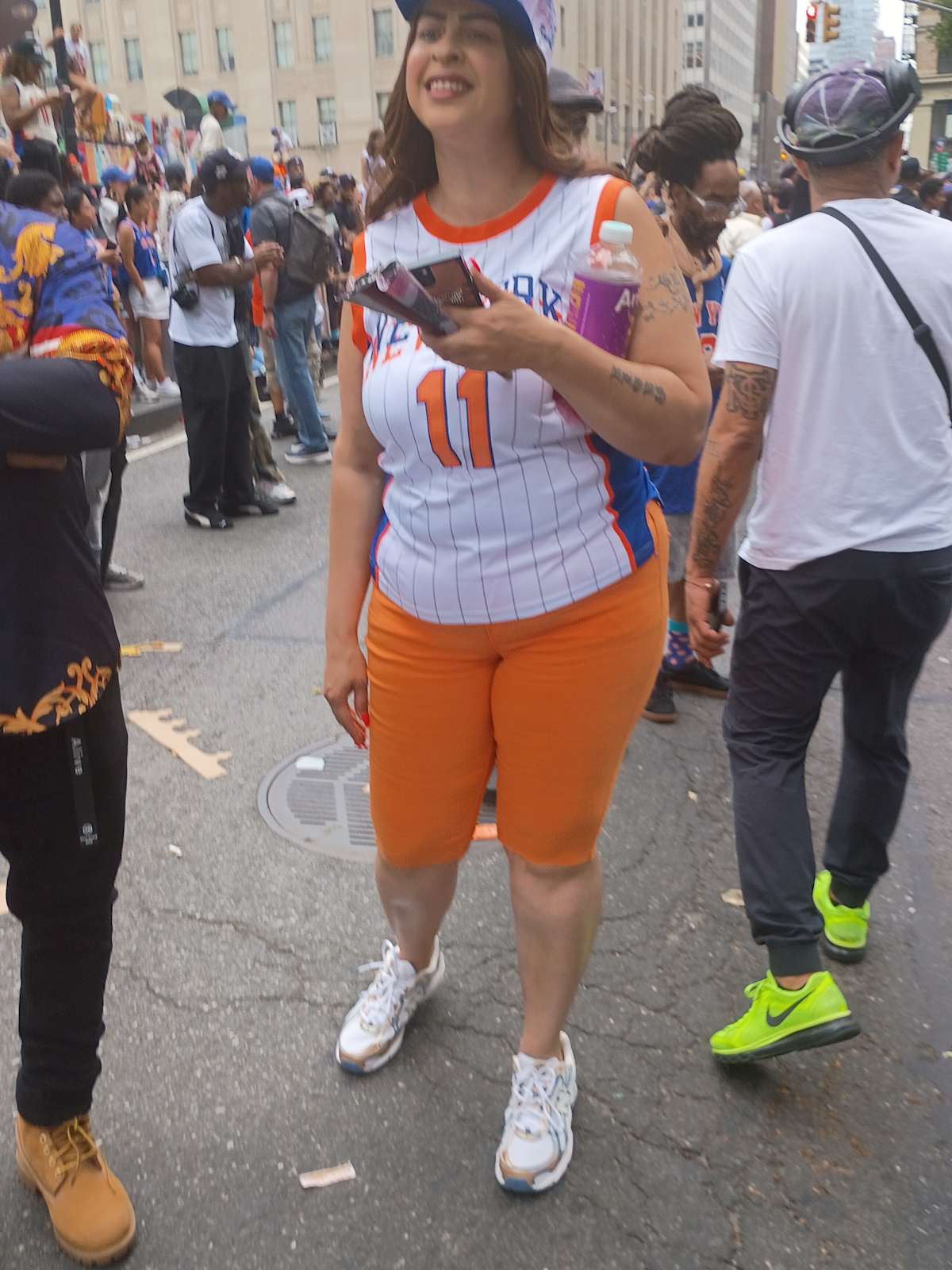
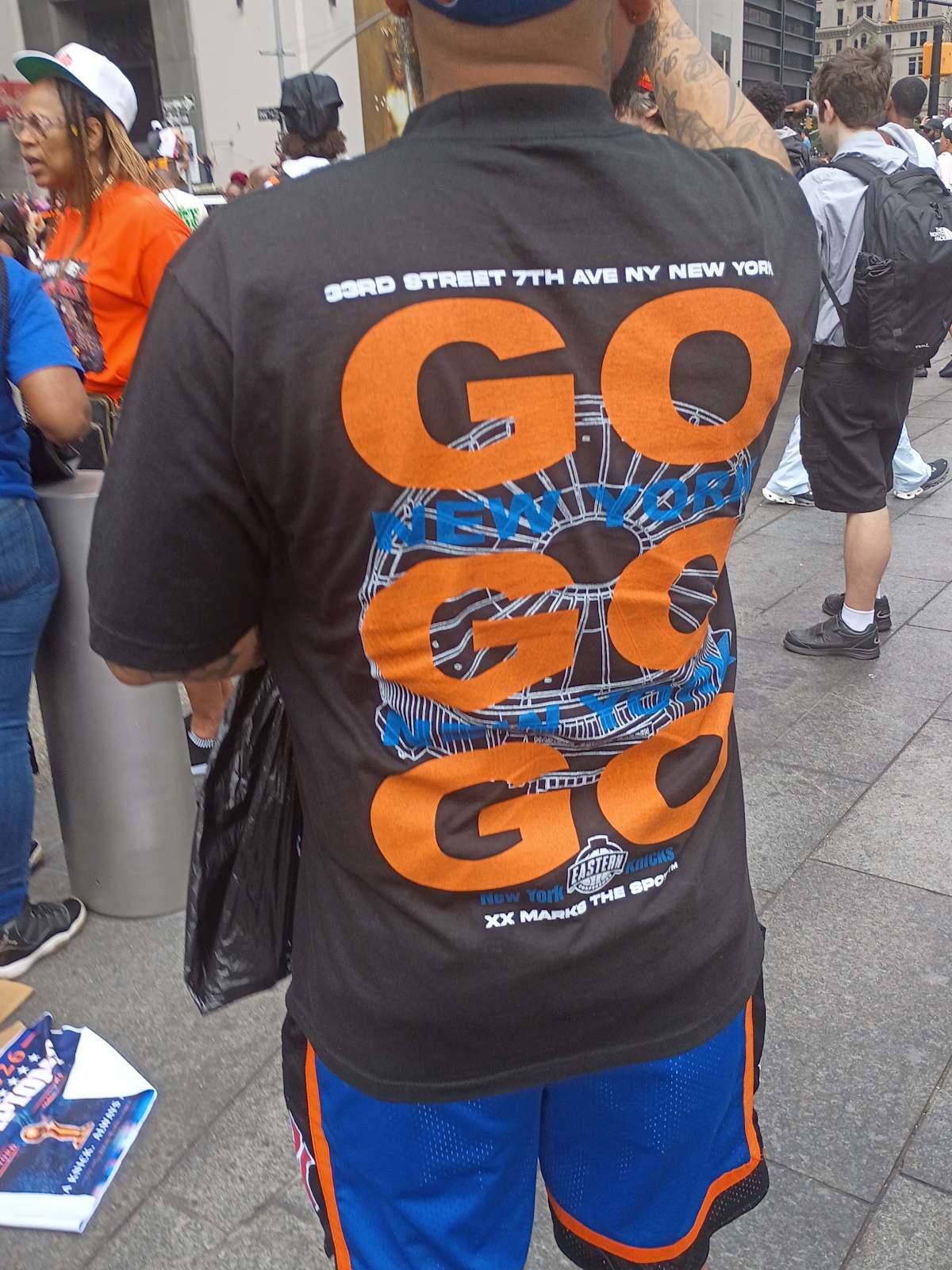
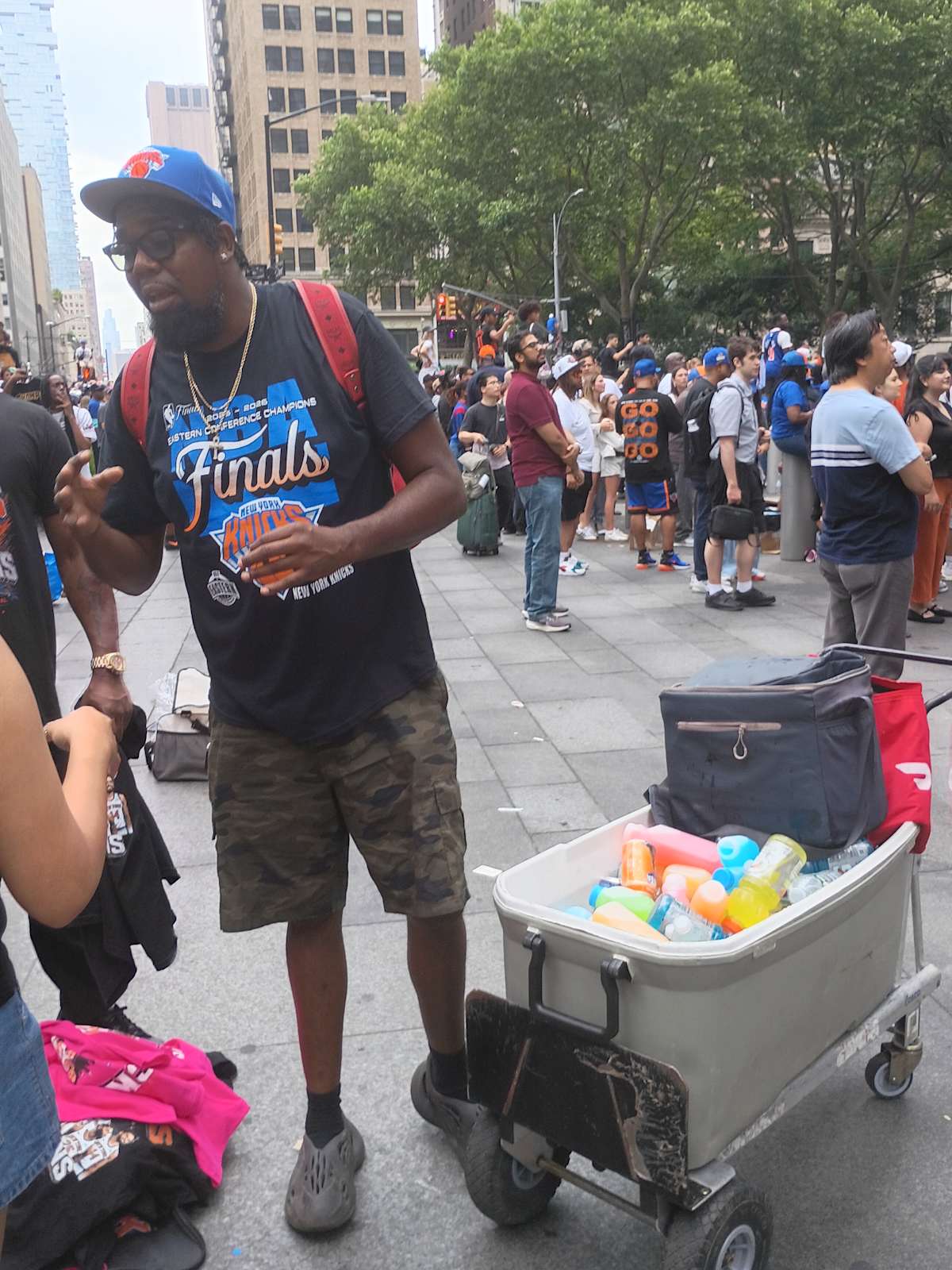
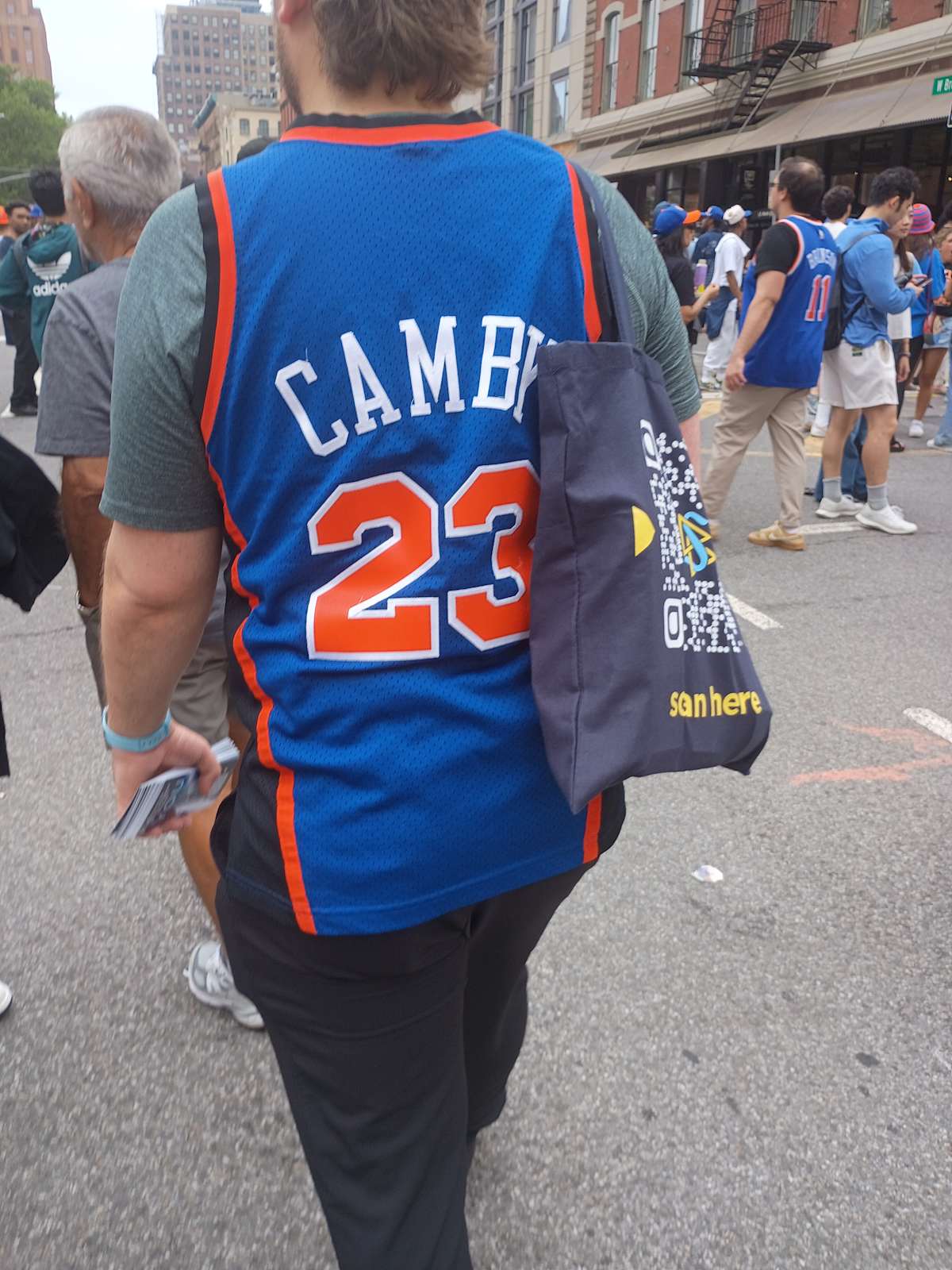
They came in jerseys, championship shirts, orange wigs, blue hats, face paint, handmade signs, and the emotional armor of people who had waited their whole lives for this. Some had never seen a Knicks title. Some remembered 1973. Some were there for their parents, their grandparents, their kids, or the version of themselves that never stopped believing.
One fan said, “I’ve waited my whole life for this.”
Another said, “This is craziest of crazy.”
A third, shut out of the official viewing areas but still standing in the middle of history, said, “We love it even though we didn’t get in.”
That became the unofficial thesis of the day.
A lot of people did not get in.
They still got the parade.
Police now estimate more than two million people packed the parade route, a crowd roughly equal to the entire population of Nebraska, Idaho or New Mexico pouring into Lower Manhattan for one celebration.
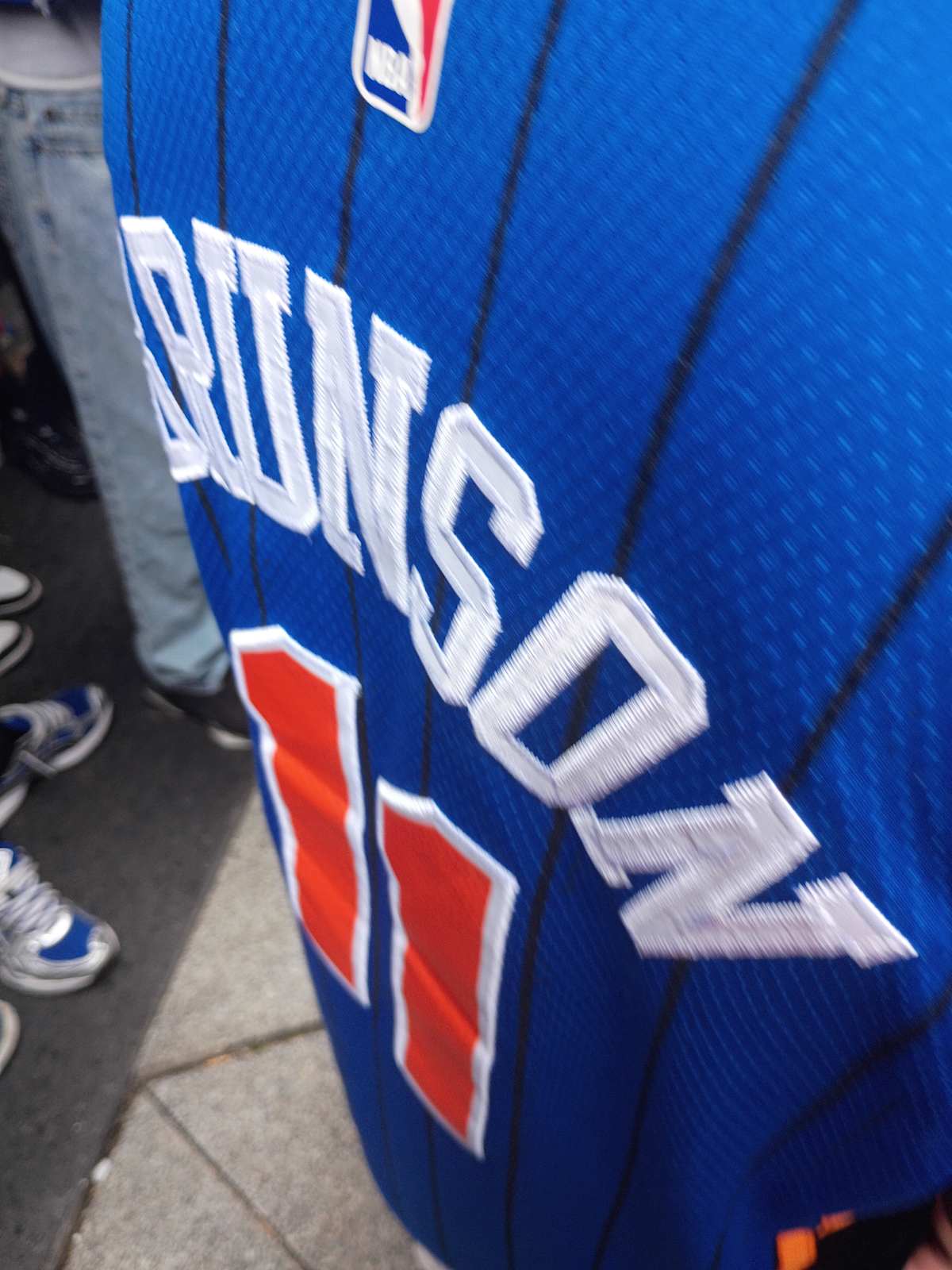
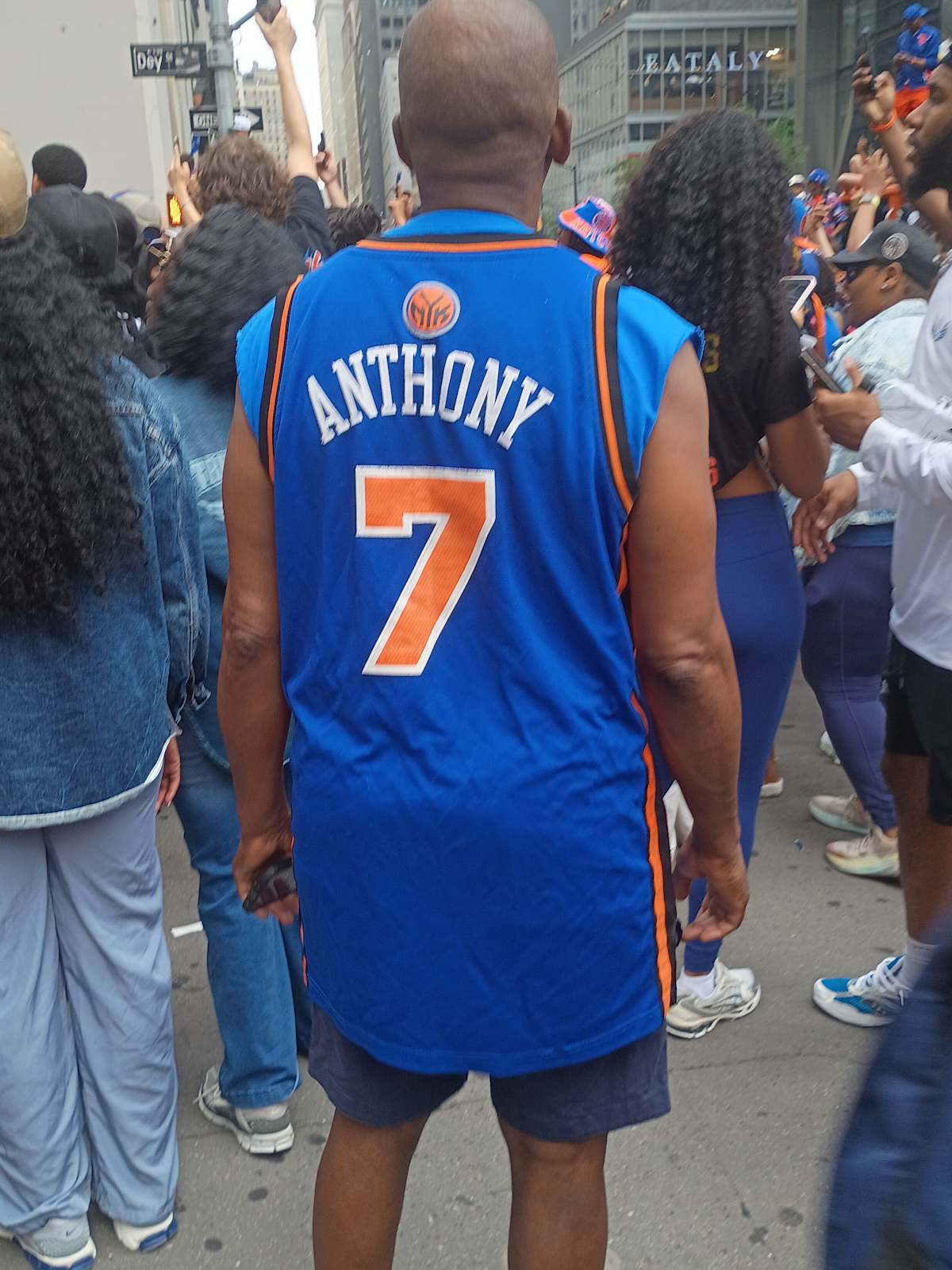
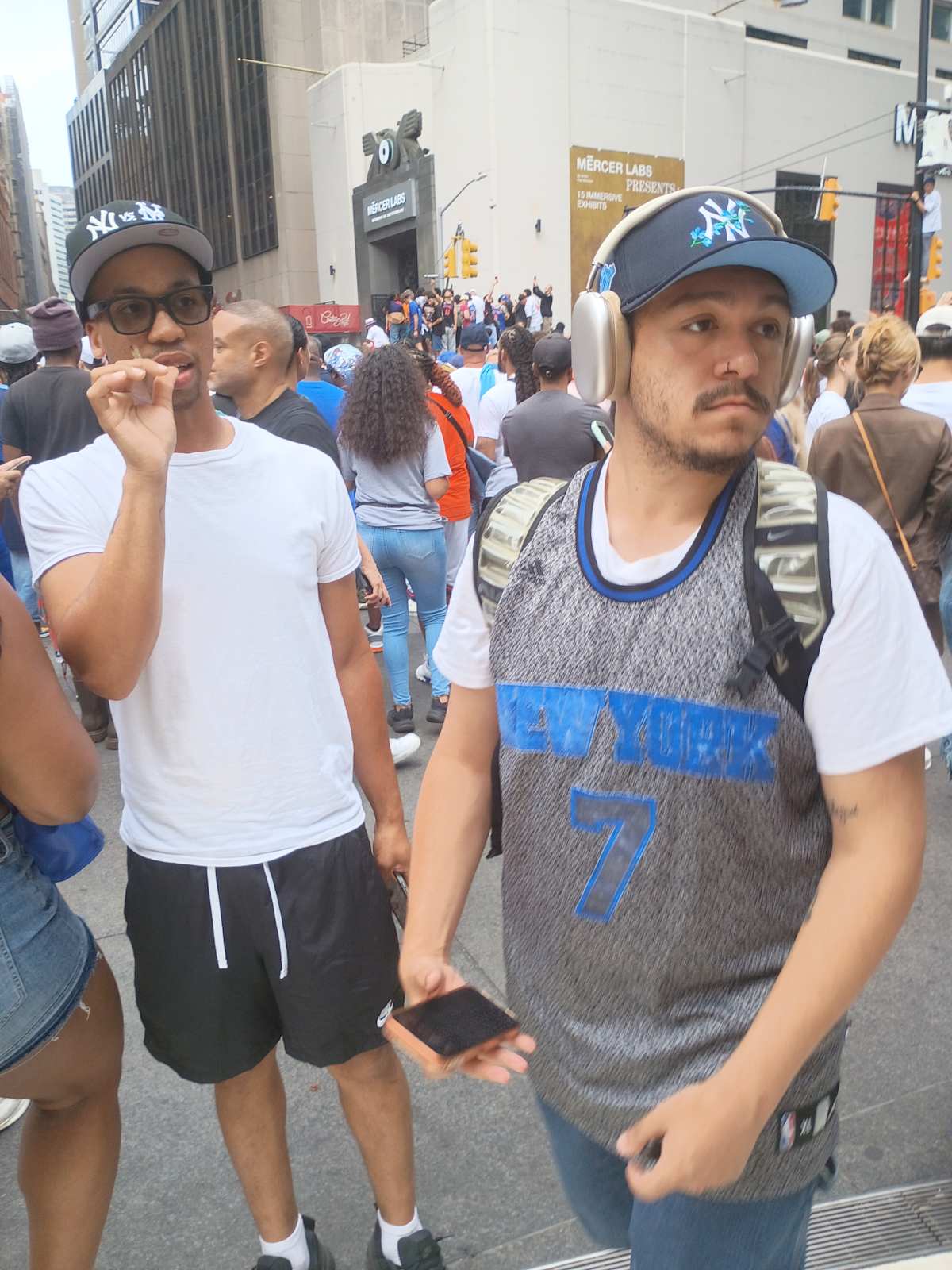
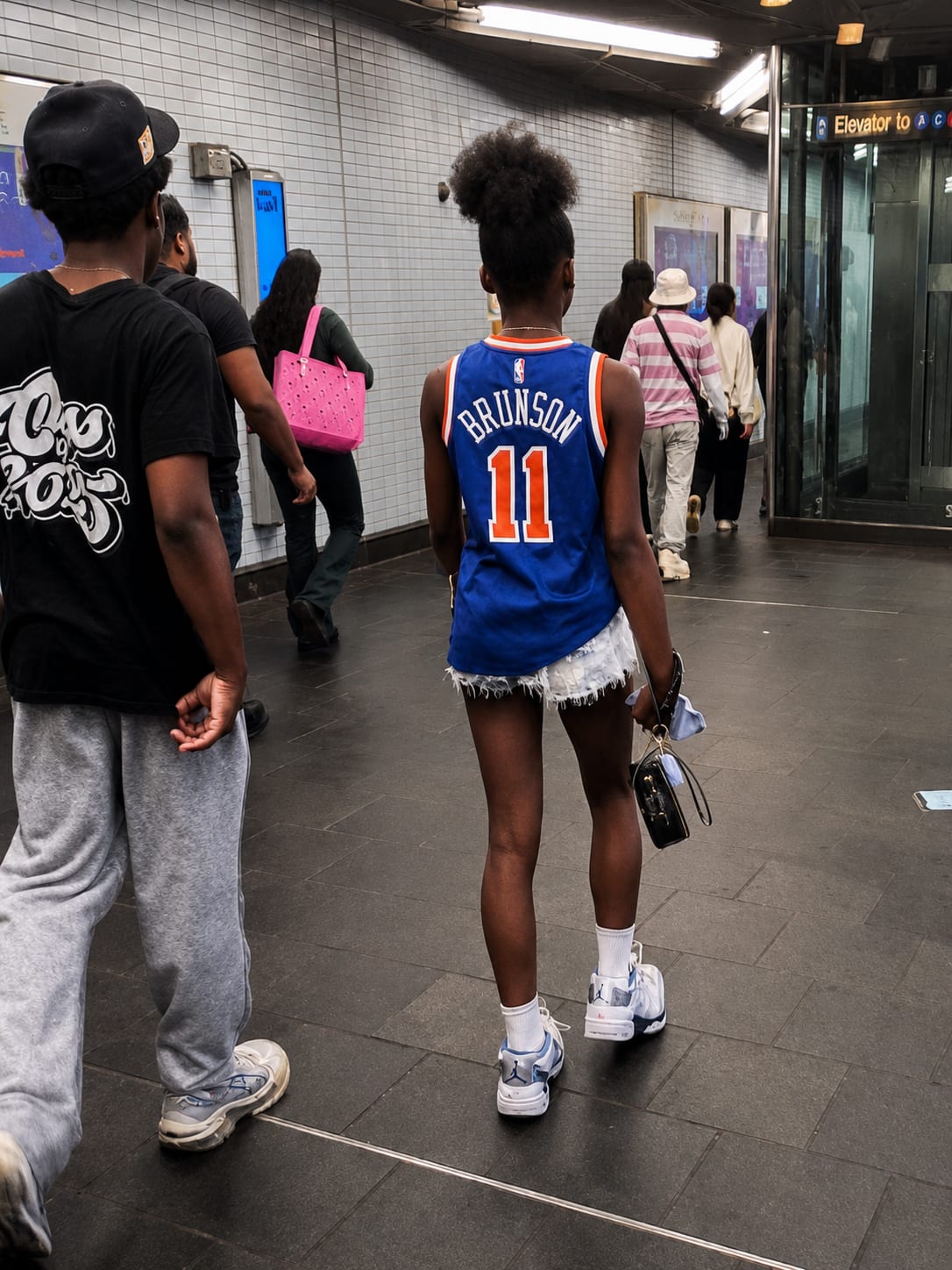
One of the clearest signs of the new Knicks era was walking through the crowd and seeing Brunson jerseys everywhere.
Jalen Brunson was not just the Finals MVP on the floats. He was the name on the backs of the people. His jersey was easily the most visible one in the crowd, which made sense. Brunson is the face of this championship team, the captain of the resurrection, and the player who finally delivered what generations of Knicks fans had been waiting for.
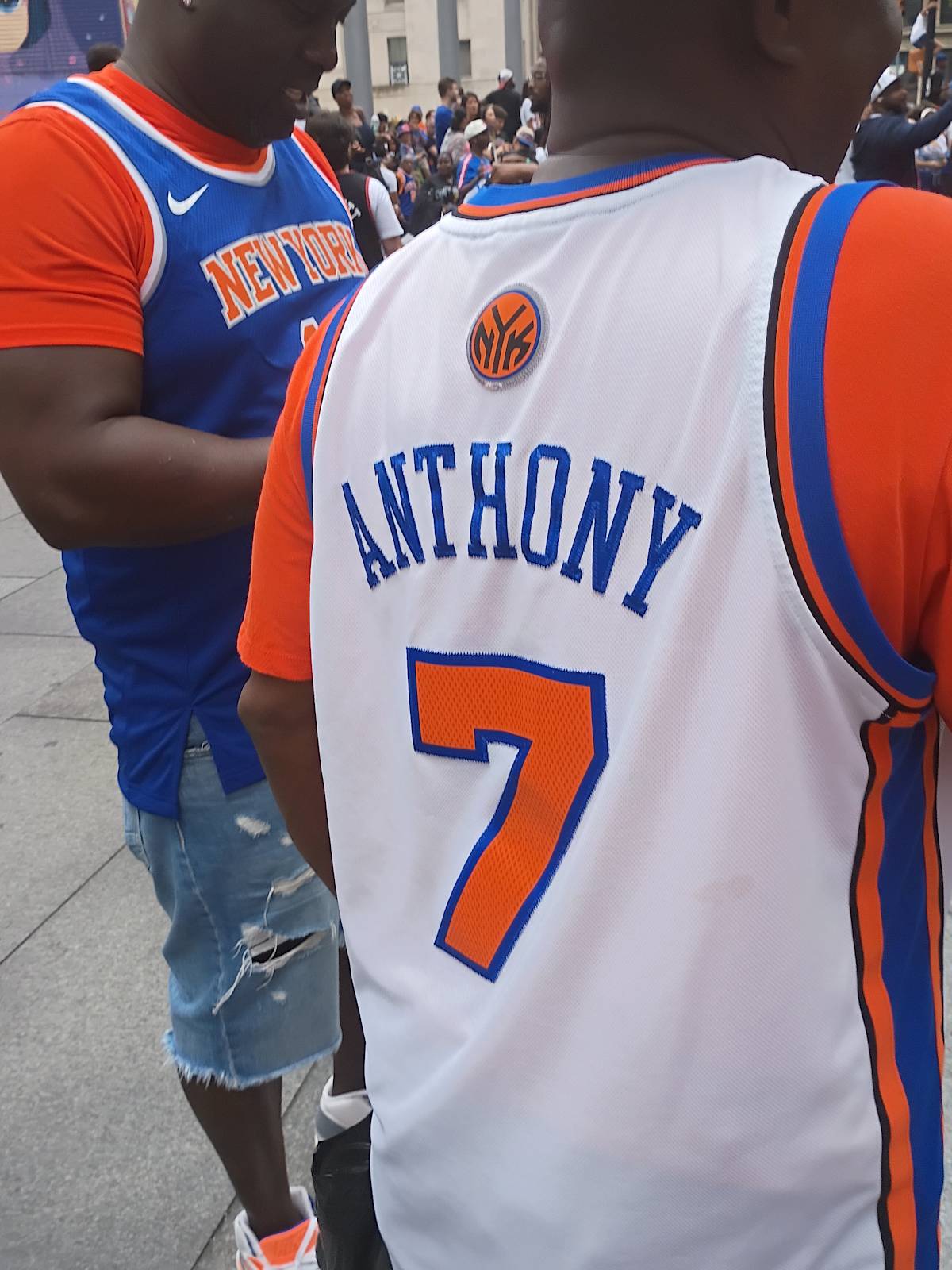
But the surprising close second was Carmelo Anthony.
Melo jerseys were everywhere too, and that felt meaningful. This was Brunson’s parade, but Melo’s presence in the crowd proved how deeply Knicks fans remember the players who carried the city even when the ending did not come with confetti. Anthony never got this parade as a player, but his jersey was still right there in the middle of it, woven into the orange-and-blue celebration like unfinished business finally getting a little peace.
It said something about Knicks fans. They do not forget who gave them hope.
Brunson was the present.
Melo was the memory.
And for one wild day downtown, both were everywhere.
By early morning, NYPD said the viewing pens were full. Fans who had arrived downtown expecting access instead found barricades, closed checkpoints, conflicting directions, rerouted foot traffic, and officers repeatedly telling people to keep moving even when nobody seemed entirely clear where the crowd was supposed to go.
The city had prepared for millions and deployed more than 10,000 officers, but the reality on the ground was still pure Lower Manhattan mayhem. The access plan tightened quickly. The crowds kept coming. The streets filled. The sidewalks filled. The subway stations filled. The bridges, corners, plazas, and side streets filled.
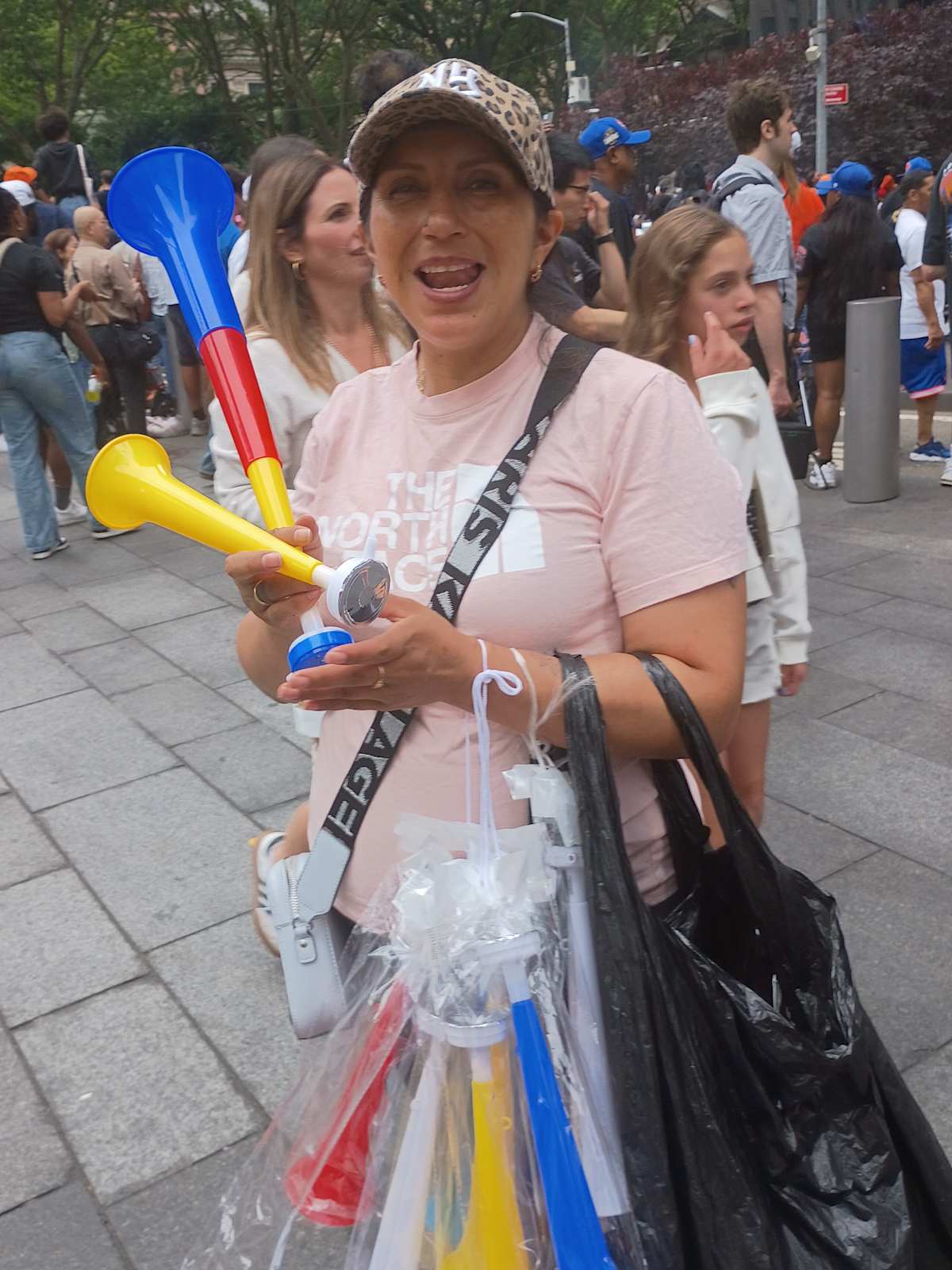
Merch sales were everywhere. Shirts, towels, hats, flags, and championship gear appeared block after block like orange-and-blue mushrooms after rain. Every few feet, someone had something to sell. Every few feet, someone had something to scream.
“Knicks forever!”
That chant carried through the streets like a civic prayer.
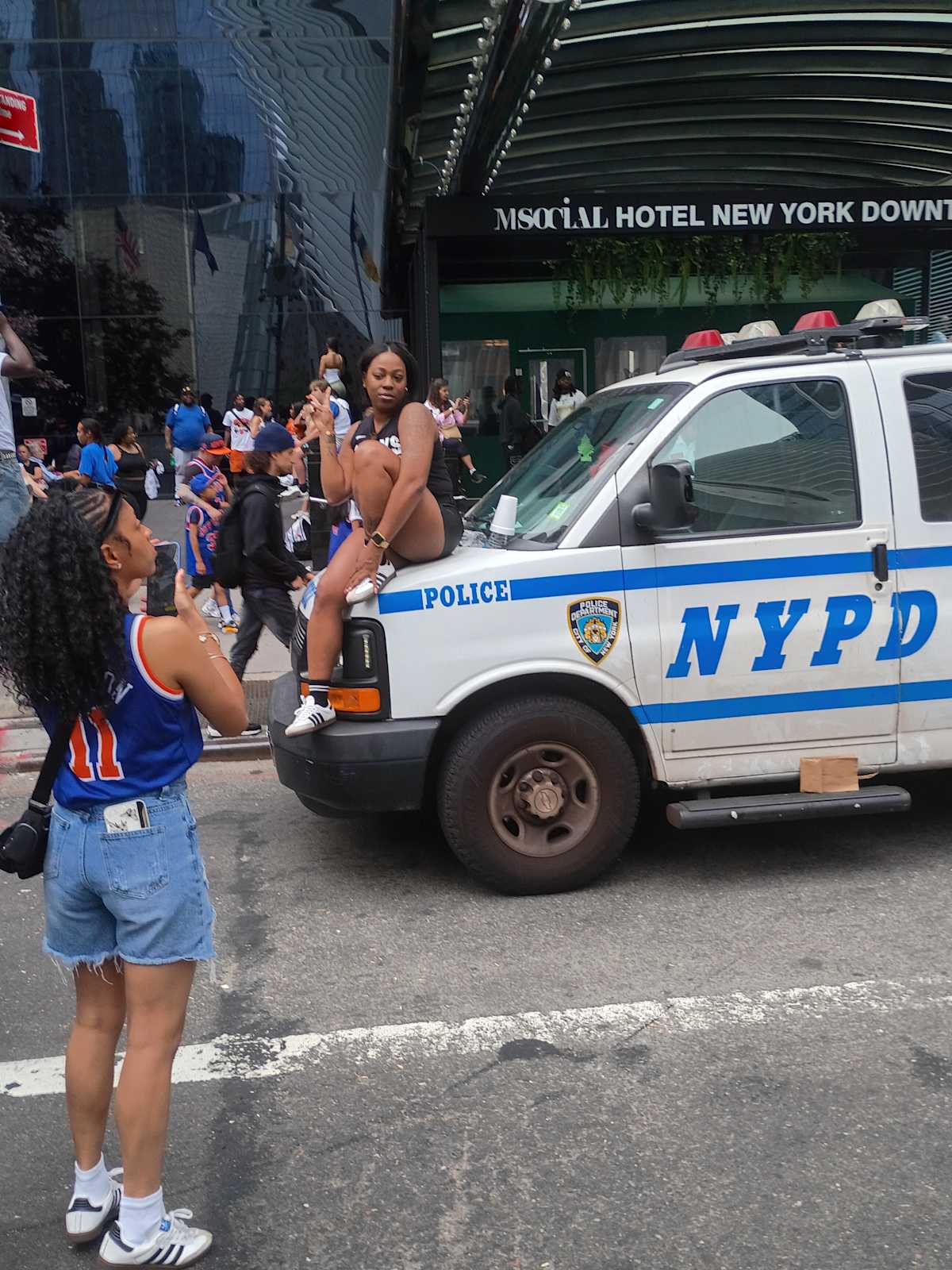
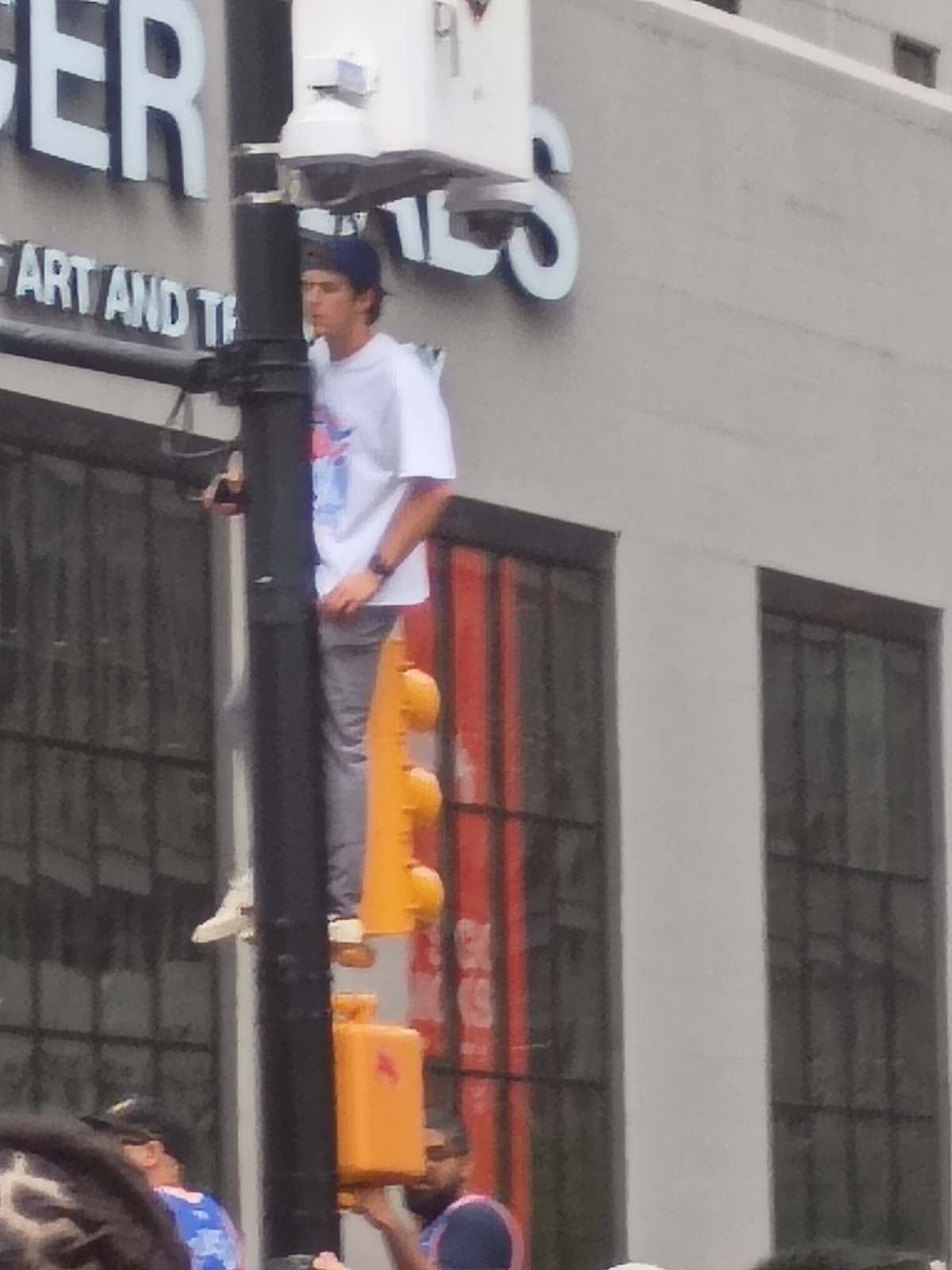
Fans climbed poles. Fans climbed structures. Fans posed on NYPD vehicles. Fans held phones in the air, trying to record through crowds so thick the actual parade sometimes became a rumor passing above everyone’s heads.
The chaos was chaosing.
And then there was Fulton Street.
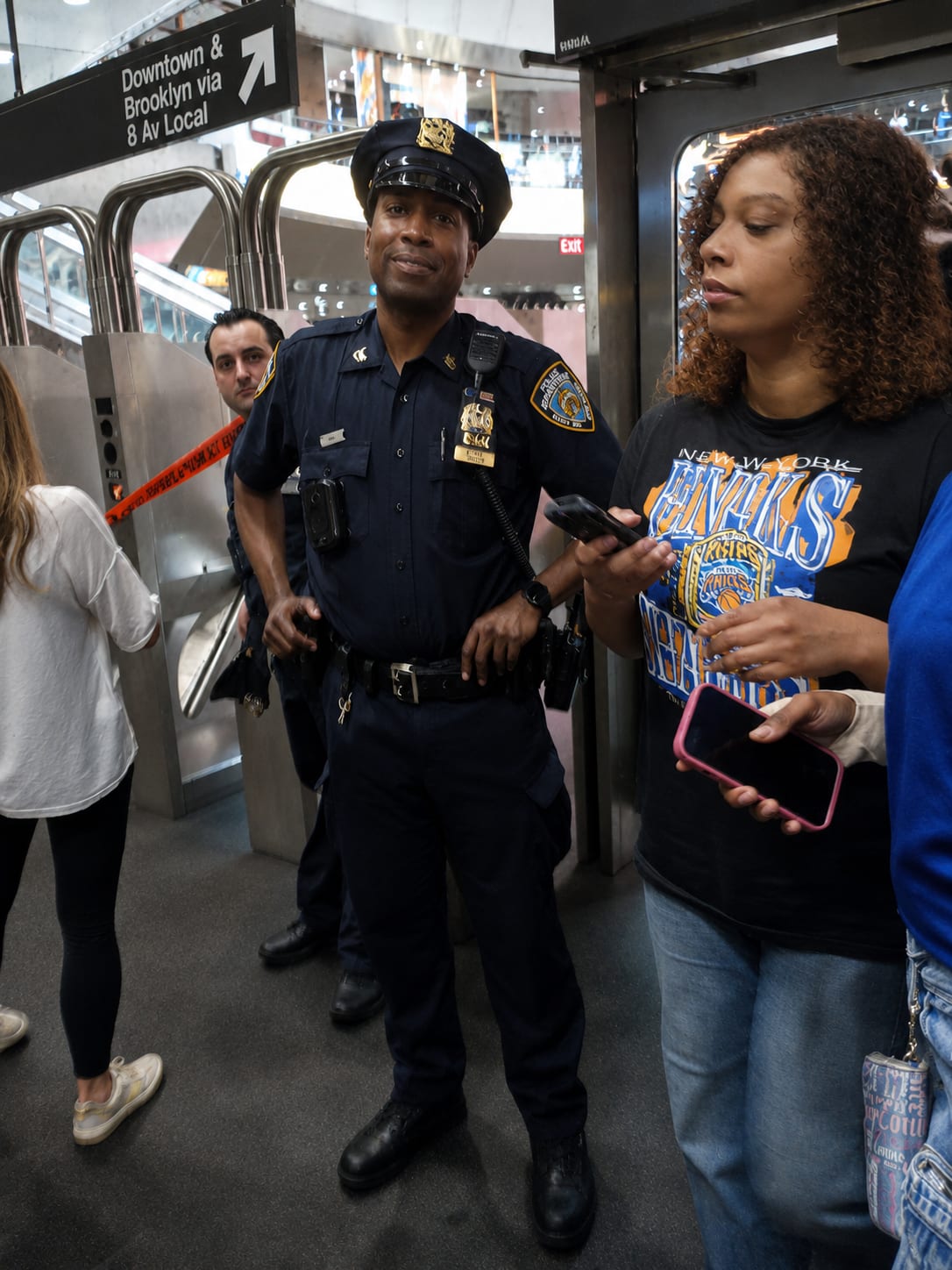
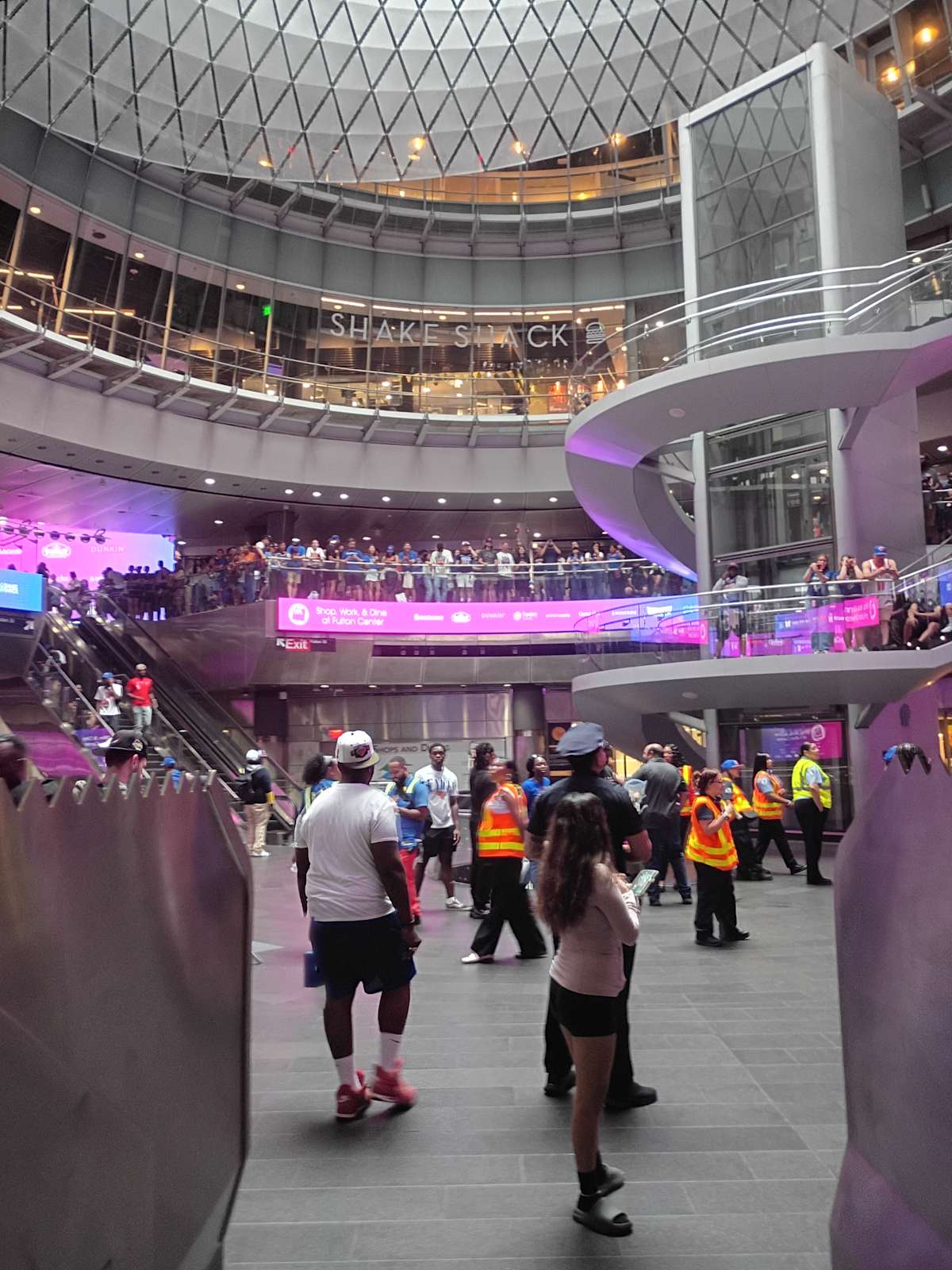
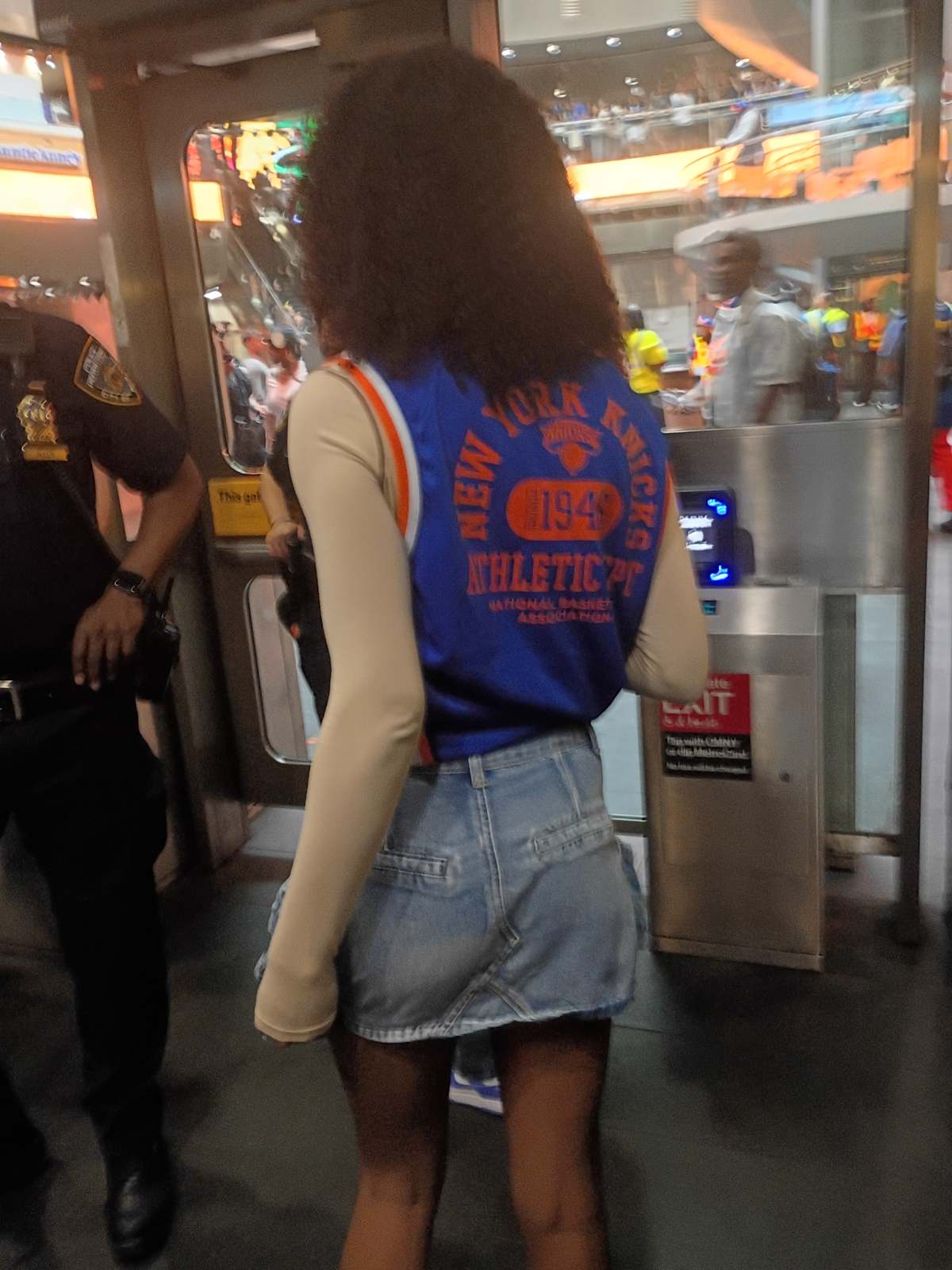
The real parade may have been above ground, but one of the most New York chapters of the day happened underneath Fulton, where fans found themselves trapped inside the station, unable to get out, unable to move cleanly through, and unsure which staircase, escalator, exit, or elevator would actually lead back to civilization.
At that point, it was no longer simply a Knicks celebration.
It was Escape from New York: Orange and Blue Edition.
Fans were packed underground and pushed through a maze of blocked exits, redirected stairways, police instructions, and station confusion. What should have been a transportation hub became a municipal escape room. People were trying to reach the parade, leave the parade, find another line, find fresh air, find a bathroom, find cell service, or find the version of New York City where signs meant what they said.
At one point, an officer told me there were five million people outside and I could not get through.
Five million.
In Lower Manhattan.
For a Knicks parade.
I said, “Oh really?” and hit record.
He was not happy.
Suddenly, the crowd estimate dropped from five million to four million, which was still, mathematically speaking, a deeply ambitious head count for a few blocks of downtown Manhattan.
Exaggerating much, officer?
I reminded him he was a public servant.
He switched from dramatic crowd scientist to “keep it moving” mode real fast.
That was Fulton Street in miniature: fans trying to celebrate, officers trying to manage a crowd that had clearly overwhelmed the access plan, and New York City turning a joyous public event into a live-action obstacle course with bad signage, blocked exits, packed platforms, and at least one sketchy piss elevator at the end of the platform waiting like the final challenge on Survivor.
By then, I was no longer simply covering the Knicks parade.
I was cosplaying my lawyer, playing transit chess, documenting crowd-control nonsense, and trying to find a way home through three subways and a downtown maze that felt like Kurt Russell should have been smoking in the corner with an eye patch.
There are days when journalism requires sources, notes, quotes, photos, and patience.
Then there are days when journalism requires figuring out which subway platform smells the least like urine while an officer revises his crowd estimate by one million people because a camera came out.
This was both.
And still, somehow, the joy held.
That is the real story.
Fans underground were frustrated, confused, sweaty, trapped, and boxed in, but they were still Knicks fans on championship parade day. People laughed. People complained. People filmed. People chanted. People tried to help each other figure out which way to go. People kept moving because New Yorkers always keep moving, even when nobody in charge seems to know where movement is supposed to lead.
Above ground, the city roared.
Below ground, it improvised.
This was not a clean parade. It was not a polite parade. It was not one of those corporate fan-zone experiences where everything is branded, sanitized, and easy to navigate.
This was New York joy.
Messy joy.
Loud joy.
Overcrowded joy.
Orange-and-blue chaos joy.
The kind of joy where a fan who never got past a barricade still says, “We love it even though we didn’t get in.”
The kind of joy where someone screams “Knicks forever!” and strangers scream it back like they have known each other for years.
The kind of joy where merch vendors, lifelong fans, celebrities, cops, sanitation workers, reporters, tourists, kids, grandparents, and trapped subway riders all become part of the same ridiculous, historic, unforgettable citywide episode.
Earlier championship celebrations near Madison Square Garden had already shown how intense the moment could get, with dozens of arrests after the title-clinching win. That history hung over the parade. The police presence was massive. The barricades were serious. The closures were aggressive.
But the overwhelming feeling downtown was still celebration.
Not perfection.
Celebration.
The Knicks waited 53 years for this. New York waited with them. And when the moment finally came, the city did not simply host a parade. It staged a full-scale orange-and-blue civic uprising with championship floats, celebrities, confetti, sidewalk merch, police barricades, blocked exits, trapped fans, pole climbers, subway survival routes, and one officer whose crowd estimate lost a million people the second the recording started.
*Michele Evansis an independent journalist, author, and former ESPN technical producer whose work has appeared in The New York Times.
Michele got her start in 2001 covering the NBA and NFL.
She now covers New York City courts, criminal-justice procedure, NYPD, FDNY, domestic-violence systems, media accountability, public safety, advocacy efforts, and New York civic life through courthouse observation, public records, legal analysis, and lived-experience reporting.