Judge Carro’s Mangione Ruling Shows Why Courtroom Procedure Matters
Judge Carro’s Mangione Ruling Shows Why Courtroom Procedure Matters
By Michele Evans
New York City, New York
5/18/2026
Category: Courts / Criminal Justice / Advocacy / Media Accountability
New York City, New York - On May 18, 2026, Justice Gregory Carro issued one of the most important pretrial rulings yet in the New York murder case against Luigi Mangione, the man accused of killing UnitedHealthcare CEO Brian Thompson outside a Midtown Manhattan hotel in December 2024.
The ruling was not a clean win for either side. It was something more complicated - and more revealing.
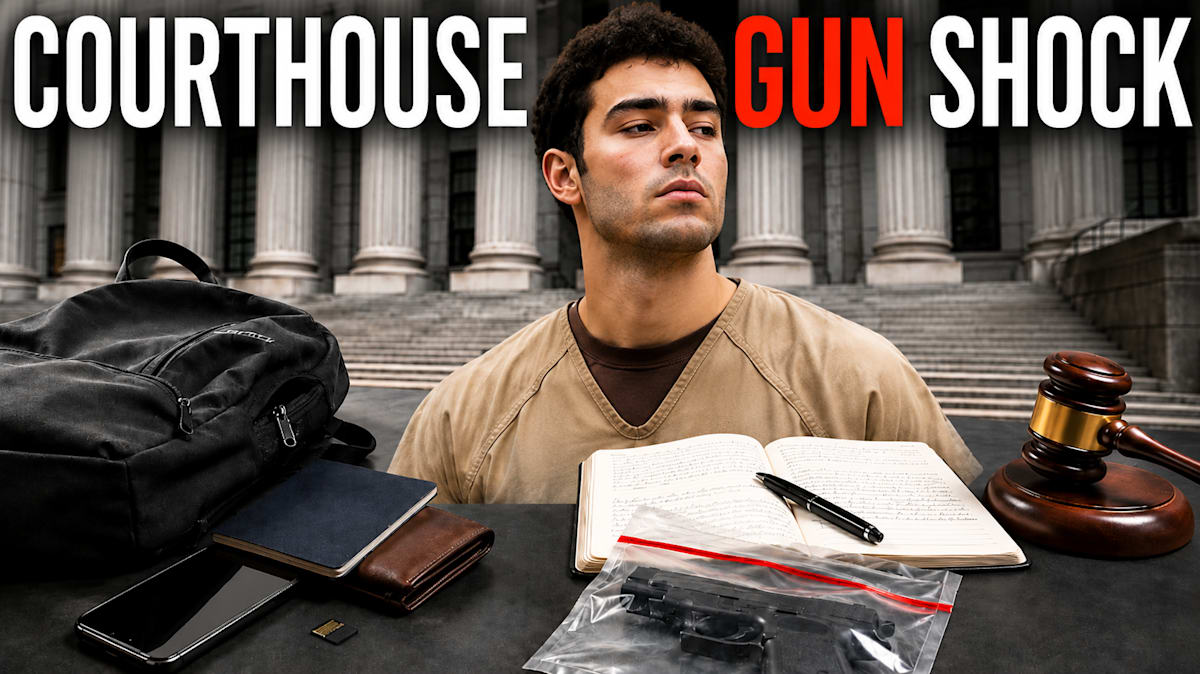
Judge Carro ruled that some evidence from Mangione’s backpack must be suppressed because the initial search at the McDonald’s in Altoona, Pennsylvania, was an improper warrantless search. But he also allowed prosecutors to use the alleged 3D-printed gun, notebook, and related writings because those items were found during a later inventory search at the police station, which he deemed lawful.
That split decision is exactly why this case matters beyond the headlines.
The public conversation around Mangione is loud, emotional, and politically charged. Some see the case through the lens of health-care outrage. Others see only an alleged assassination of a corporate executive and father. Outside the courthouse, the case has already become a cultural battleground, with supporters, critics, activists, journalists, influencers, and political voices all trying to define what it means.
But inside the courtroom, the question is narrower and more important:
Did the police follow the Constitution?
That is the part of the case I am watching closely.
I have personal experience with Judge Gregory Carro’s courtroom and decision-making from January 16, 2019 through February 15, 2022, and that history gives me a keen interest in how he handles this prosecution. Not because this case is mine - it is not. But because high-profile criminal cases often reveal how the justice system operates when the whole world is watching.
And in the Mangione case, Judge Carro is being forced to do something every criminal-court judge should be expected to do: separate public pressure from constitutional procedure.
The May 18 ruling shows that evidence law is not a slogan. A judge can find that one police search violated the law and still allow other evidence if it came through a later lawful process.
That distinction may frustrate people on both sides, but it is the heart of criminal procedure. Courts are supposed to examine how evidence was obtained, not simply whether the evidence is dramatic, damning, or politically useful.
This is especially important in a case where the alleged evidence is explosive. Prosecutors say the gun connects Mangione to the killing and that the notebook speaks to motive. The defense argued that police conduct tainted the evidence. Judge Carro’s ruling allows the prosecution to present its most powerful physical evidence while also acknowledging that law enforcement crossed a constitutional line during the initial search.
That is not a minor procedural footnote. It is the system in action.
A fair trial does not require pretending the allegations are not serious. It requires making sure that even the most serious allegations are prosecuted within constitutional limits. That principle becomes most important when the defendant is unpopular, the victim is high-profile, and the public has already started arguing over what the case represents.
Mangione has pleaded not guilty. His state trial is scheduled to begin September 8, 2026, and the case is expected to draw intense public attention.
Between now and then, the case will likely become even more public, even more politicized, and even more difficult to separate from the cultural fight surrounding it. But Judge Carro’s May 18 decision is a reminder that trials are not supposed to be conducted by public mood.
They are supposed to be conducted by rules.
And in this case, those rules may determine not only what the jury hears, but how the public understands the difference between evidence, outrage, advocacy, and due process.
*Michele Evans is an independent journalist, author, and former ESPN technical producer whose work has appeared in The New York Times.
Michele got her start in 2001 covering the NBA and NFL.
She now covers New York City courts, criminal-justice procedure, NYPD, FDNY, domestic-violence systems, media accountability, public safety, advocacy efforts, and New York civic life through courthouse observation, public records, legal analysis, and lived-experience reporting.
Read more independent journalism by Michele Evans.
Follow Michele Evans on Facebook and Substack for new reporting, analysis, and updates.