Gladiator School: What 18 Months on Rikers Island Can Do to a Person! 🔒
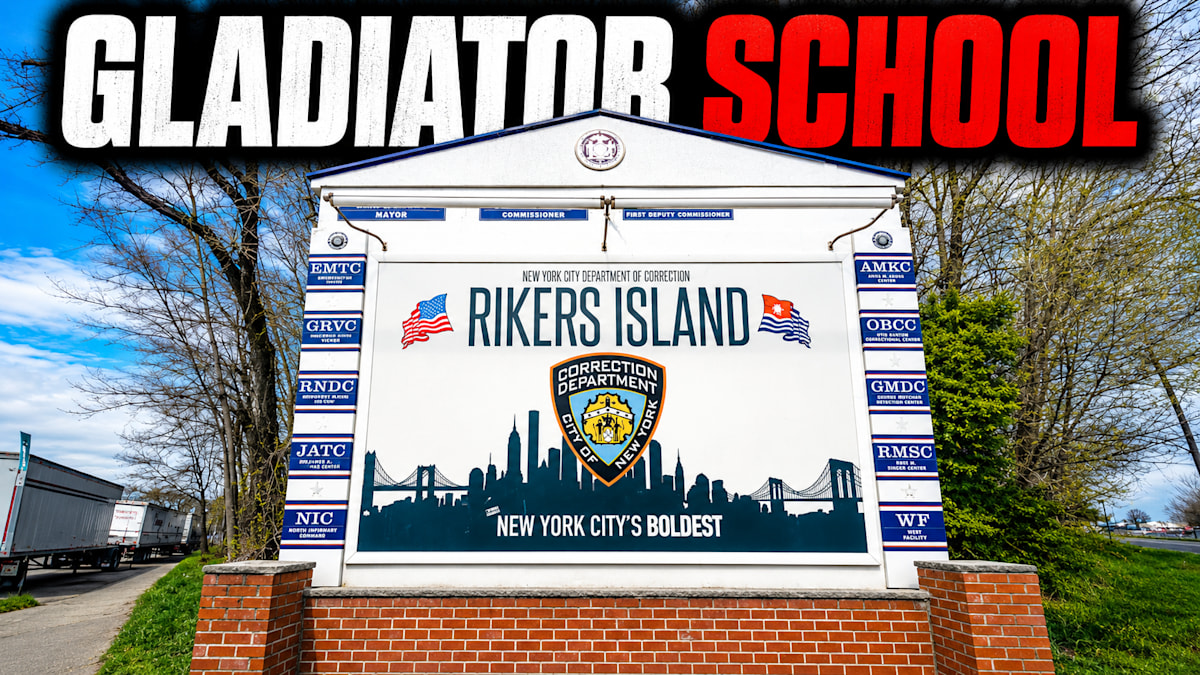
Gladiator School: What 18 Months on Rikers Island Can Do to a Person🔒
By Michele Evans
New York City, New York
5/12/2026
Category: Courts / Criminal Justice / Advocacy
New York, New York - Spending 18 months in a place like Rikers Island - often called a “gladiator school” because of its entrenched culture of violence, fear, and survival - is not merely a loss of freedom. It is a prolonged dismantling of privacy, safety, identity, dignity, and nervous-system stability.
For an average person, 18 months in that environment is not something they simply “get through.” It changes the way the brain works. It changes the way the body reacts. It changes how a person sleeps, walks, trusts, speaks, and survives.
A person does not just leave Rikers. They carry the architecture of the jail inside them long after the gates open.
1. Hyper-Vigilance: The “Prison Brain”
In an environment where violence can erupt without warning, the nervous system never fully turns off.
A person learns to scan every room within seconds. Who is standing too close? Who is watching? Where are the exits? Who looks angry? Who looks unstable? Who might be looking for weakness? Who is affiliated with whom? What tone did that officer use? Is the dorm about to erupt?
This is not paranoia. Inside Rikers, this kind of constant threat assessment can become necessary for survival.
But after 18 months, that survival mechanism does not simply shut off when a person comes home. Crowded trains, loud voices, sudden movements, slammed doors, arguments, sirens, fluorescent lights, or people standing too close can all trigger the same fight-or-flight response. The body remembers what the mind is trying to escape.
Sleep is also damaged. In jail, real rest is almost impossible. The lights, noise, yelling, doors, alarms, threats, tension, and unpredictability create a state where deep sleep can feel unsafe. Over time, chronic exhaustion can affect memory, focus, emotional regulation, decision-making, and physical health.
The person may be out of the cage, but the brain may still be living inside it.
2. Total Loss of Privacy and Bodily Autonomy
One of the most dehumanizing aspects of incarceration is the destruction of privacy.
In Rikers, privacy is not merely limited. It is taken.
A person may be required to strip naked, bend over, squat, cough, and expose the most intimate parts of their body during repeated strip searches. These searches are not experienced as routine administrative procedures by the person enduring them. They can be humiliating, invasive, and deeply traumatic, especially for people with histories of abuse, sexual violence, domestic violence, or prior trauma.
The body stops feeling like one’s own.
Then there are the living conditions. Open communal showers. Toilets with no doors. No private place to cry. No private place to use the bathroom. No private place to change clothes. No private place to sleep. No private place to be afraid.
Imagine 50 people crammed into one room, beds within arm’s reach of each other, every sound and bodily function exposed. People coughing, snoring, arguing, watching, posturing, breaking down. There is no true solitude. No quiet. No dignity. No escape.
For 18 months, even the most basic human boundaries are violated. The person learns to survive without privacy, without comfort, and often without the ability to feel safe inside their own skin.
3. Social Hardening and “The Mask”
To survive in a place like Rikers, many people develop a protective exterior.
They learn not to cry. Not to look scared. Not to seem confused. Not to appear too kind, too soft, too trusting, too vulnerable, or too emotionally available. They learn that visible fear can make them a target. They learn that hesitation can be dangerous. They learn that the wrong facial expression, the wrong words, or the wrong silence can have consequences.
So they build a mask.
That mask may help them survive inside, but it can become very difficult to remove outside.
After release, loved ones may not understand why the person seems distant, defensive, irritable, numb, or emotionally unreachable. But that emotional hardening may not be coldness. It may be armor.
For 18 months, softness was not safe. Vulnerability was not safe. Trust was not safe.
Coming home does not instantly teach the body that safety has returned.
4. Dehumanization and Loss of Identity
Rikers does not merely confine people. It strips away personhood.
A person becomes a body in a bed. A number. A movement on a schedule. A person told when to eat, when to stand, when to wait, when to move, when to be searched, when to sleep, when to wake, when to speak, and when to be silent.
The small choices that make someone feel human disappear.
What to wear. When to shower. What to eat. Whether to close a bathroom door. Whether to walk away from conflict. Whether to sleep in darkness. Whether to be alone. Whether to be touched. Whether to be seen.
After enough time, the loss of choice becomes its own psychological injury.
It is hard to walk back into society and immediately feel like a full citizen when the last 18 months trained you to feel powerless, watched, exposed, and disposable.
5. Institutionalization and Fear of Freedom
Even 18 months is long enough for the brain to adapt to captivity.
This can create a strange and painful contradiction: a person may desperately want freedom, but still feel overwhelmed by it.
On the outside, ordinary choices can suddenly feel enormous. What should I eat? Where should I go? Who should I call? What should I wear? How do I explain where I have been? How do I sit in a quiet room? How do I walk down the street without scanning everyone around me? How do I sleep with the lights off? How do I make decisions after 18 months of having decisions made for me?
Some people experience what is often called “gate fever” — intense anxiety as release approaches or immediately after release. Freedom is wanted, but it can also feel terrifying because the person is returning to a world that moved on without them while they were trapped in survival mode.
6. Sensory Damage and Disorientation
Rikers is not just psychologically violent. It is sensorially violent.
The noise. The smells. The hard surfaces. The fluorescent lights. The grayness. The shouting. The keys. The metal doors. The industrial cleaner. The body odor. The sewage smell. The overcrowding. The lack of softness. The absence of beauty.
A person adapts to that environment because they have to.
Then, upon release, the outside world can feel almost unreal. Silence can feel suspicious. Softness can feel strange. Kindness can feel like a setup. Crowds can feel dangerous. Bright colors, open space, normal conversation, restaurants, stores, traffic, music, and even ordinary household noises can be overwhelming.
The senses do not immediately understand that the threat has passed.
7. The Biological Toll
The body pays for prolonged incarceration.
Eighteen months of chronic stress, poor sleep, limited sunlight, institutional food, restricted movement, constant anxiety, and fear-based living can age a person. Stress hormones remain elevated for long periods. The immune system can weaken. The heart and nervous system absorb the pressure. Existing medical conditions may worsen. New ones may emerge.
The body is not designed to live in constant survival mode.
Over time, the person may experience fatigue, headaches, stomach issues, high blood pressure, muscle tension, chronic pain, panic attacks, depression, emotional shutdown, or difficulty concentrating. These are not character flaws. They are the physical consequences of prolonged stress and trauma.
8. The Damage Does Not End at Release
One of the cruelest misconceptions is that incarceration ends when the person walks out.
It does not.
A person may leave Rikers, but still carry its habits: sleeping lightly, sitting with their back to a wall, flinching at sudden sounds, mistrusting authority, avoiding crowds, feeling ashamed of their body, struggling with intimacy, reacting strongly to disrespect, or becoming emotionally overwhelmed by things that seem ordinary to others.
They may also face stigma, judgment, employment barriers, housing instability, fractured relationships, and the burden of explaining an experience that many people do not want to understand.
The world expects the person to “move on.”
But 18 months in a place like Rikers is not something a person simply moves on from. It is something they have to recover from.
Conclusion: Survival at the Cost of Humanity
Spending 18 months on Rikers Island is not just confinement. It is prolonged exposure to humiliation, fear, overcrowding, surveillance, bodily invasion, sleep deprivation, violence, and the complete loss of privacy.
It teaches a person how to survive — but often at the cost of peace, trust, softness, and a stable sense of self.
The trauma is not only what happens in the headline moments. It is in the daily conditions. The strip searches. The open toilets. The communal showers. The noise. The crowding. The fear. The lack of sleep. The need to constantly watch everyone and everything.
That kind of environment changes people.
And when they come home, they deserve more than judgment. They deserve recognition of what they endured, what it took to survive, and how much strength it requires to become human again after being treated as less than human for so long. ⚖️ 🕊️ 🧠 🚨 🔒 🧱
*Michele Evans is an independent journalist, author, and former ESPN technical producer whose work has appeared in The New York Times.
Michele got her start in 2001 covering the NBA and NFL.
She now covers New York City courts, criminal-justice procedure, NYPD, FDNY, domestic-violence systems, media accountability, public safety, advocacy efforts, and New York civic life through courthouse observation, public records, legal analysis, and lived-experience reporting.
Read more independent journalism by Michele Evans.
Follow Michele Evans on Facebook and Substack for new reporting, analysis, and updates.