From Mr. Big Shot to Brooklyn Federal Court: Why the Chauncey Billups Gambling Case Matters Beyond Basketball
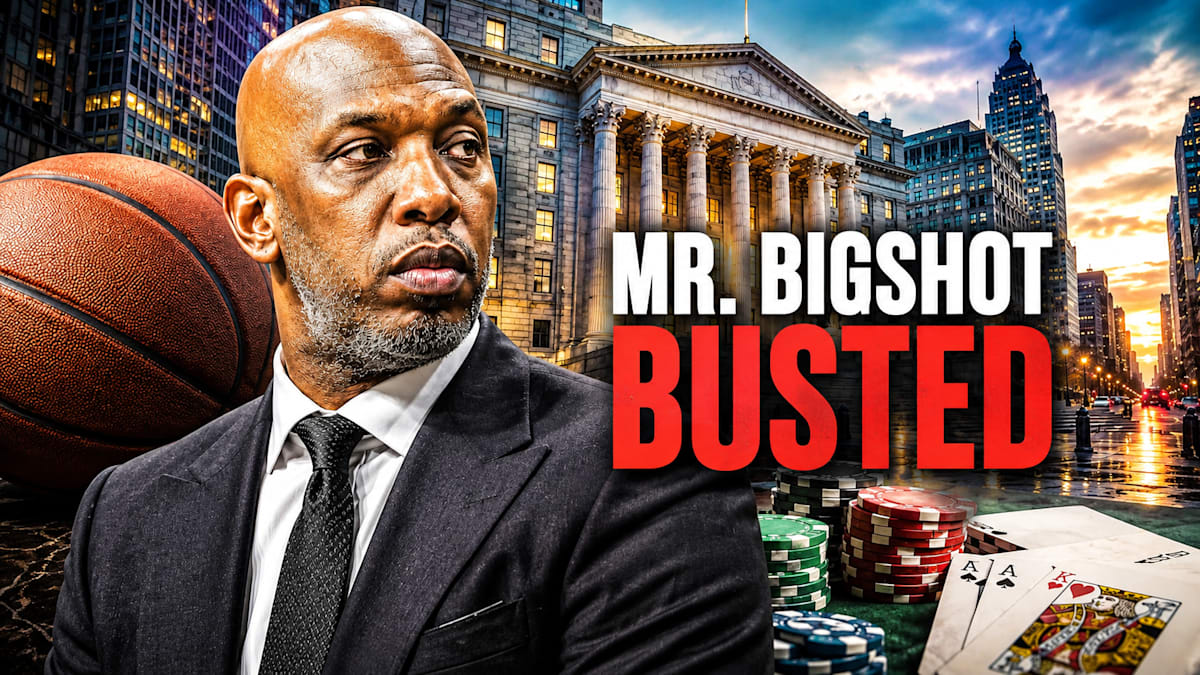
From Mr. Big Shot to Brooklyn Federal Court: Why the Chauncey Billups Gambling Case Matters Beyond Basketball
By Michele Evans
New York City, New York
5/24/2026
Category: Courts / Criminal Justice / Sports Gambling
Brooklyn, New York - Chauncey Billups was never just another NBA name to Denver.
He was Mr. Big Shot - the hometown legend, the Finals MVP, the point guard whose career carried the polish of discipline, leadership, and late-game nerve. In Denver, Billups was more than a player. He was a civic memory: the kind of athlete people felt they knew because his story was woven into the city’s sports identity long before he became a Hall of Famer and NBA head coach.
I was around that Denver sports scene.
Years before this case landed in Brooklyn federal court, I covered the Denver Nuggets and moved through the same local media ecosystem where Billups was a defining presence. My own media work from that period is archived on my video media hub, a reminder that this is not a distant sports headline to me. It is a case involving a figure from a basketball world I once covered up close - now reframed through the stark language of federal indictment, alleged organized-crime ties, money laundering, wire fraud, and rigged high-stakes poker games.
That proximity does not change the legal standard. Billups is presumed innocent. But it does sharpen the story.
Because for Denver, Chauncey Billups was not just an NBA name on a docket. He was part of the city’s sports identity.
That is what makes the federal case now pending in Brooklyn feel so jarring.
The name Chauncey Billups does not usually belong in the same sentence as La Cosa Nostra, rigged poker games, concealed technology, alleged money laundering, and federal wire-fraud conspiracy charges. But that is exactly where the U.S. Department of Justice has placed him - as one of 31 defendants charged in what prosecutors have branded Operation Royal Flush, a sweeping Eastern District of New York case alleging that organized crime figures and well-known former professional athletes helped stage illegal poker games designed to cheat victims out of millions.
Billups has pleaded not guilty and denied wrongdoing. Reuters reported that the Portland Trail Blazers head coach and NBA Hall of Famer entered a not-guilty plea in November 2025 to charges connected to the alleged rigged poker scheme.
But the case itself has already become bigger than one defendant.
It is a sports scandal, a mob case, a gambling story, and a cultural warning flare all at once.
According to prosecutors, the alleged scheme used the glamour of basketball fame as bait. Federal authorities claim that former NBA figures served as “face cards” - recognizable names who could lure wealthy players into high-stakes poker games that appeared glamorous, exclusive, and legitimate. Behind the velvet rope, prosecutors allege, the games were rigged with concealed technology, including altered shuffling machines, specially designed contact lenses and sunglasses, and other devices allegedly used to read cards and control outcomes.
That is the cinematic hook. But the legal story is even sharper.
Because this is not just about whether one NBA legend knew what prosecutors say he knew. It is about the collision between celebrity access, private gambling rooms, organized crime, and the modern sports economy - an economy that now swims in legalized betting while insisting it can still police the integrity of the game.
The NBA has spent years embracing the money and visibility of sports betting. Gambling odds are now part of the viewing experience. Betting language has moved from the shadows to the broadcast desk. The league, the networks, the apps, the advertisers, and the fans all live inside a marketplace where the line between entertainment and wagering has become increasingly thin.
Then comes a federal indictment alleging that fame itself was part of the machinery.
Not a side effect.
A tool.
That is why the Billups case matters even to people who have never sat at a poker table and never placed a prop bet.
It asks a hard question: when sports leagues monetize gambling culture, how surprised should anyone be when gambling culture starts reaching back into sports?
The case also sits beside a related sports-betting scandal involving other NBA figures. Former NBA player Damon Jones has already pleaded guilty in connection with the broader federal gambling investigation, becoming the first defendant among more than 30 people arrested in the sweep to enter a guilty plea, according to the Associated Press. His sentencing is scheduled for January 6, 2027.
That plea does not determine Billups’s guilt. It does, however, confirm that federal prosecutors are not merely waving around a sensational indictment. Parts of the broader case are already moving from allegation to admission.
For Billups, the stakes are different because his public image was built on composure. He was the veteran guard who slowed the game down. The stabilizer. The leader. The man who earned trust in pressure. In Denver, that reputation had roots. Billups was local before he was national, familiar before he was mythic.
That is what makes the Brooklyn case feel like a fall from a very specific kind of height.
Not the loud, chaotic collapse of a celebrity built on spectacle - but the quiet shock of seeing a respected sports figure pulled into a federal courtroom narrative that sounds more like a mafia film than a basketball story.
The next reported court date in the case is June 11, 2026, in Brooklyn federal court, with reporting earlier this year indicating that the court was looking toward a fall trial schedule.
That means the June hearing may become a key checkpoint: plea discussions, motion practice, trial posture, and the slow sorting of defendants in a sprawling federal prosecution.
For now, Billups remains presumed innocent. That matters. Federal indictments are accusations, not verdicts, and celebrity defendants are entitled to the same presumption of innocence as anyone else.
But the public-interest question is already ripe.
What happens when the culture around professional sports becomes so saturated with gambling that federal prosecutors begin describing athletes and coaches not merely as participants, but as promotional assets in alleged fraud schemes?
What happens when the same fame that sells sneakers, tickets, broadcasts, and betting apps is allegedly used to bring victims to a crooked table?
And what does it say about the post-legalization gambling era that one of the most intriguing sports stories of 2026 is not unfolding on a court, but in one?
For Denver, Chauncey Billups will always carry history. For Brooklyn federal court, he is now a defendant. For the NBA, this case is a stress test.
The league can suspend individuals. It can issue statements. It can say integrity matters.
But Operation Royal Flush is forcing a harder conversation: whether sports built a gambling machine it can no longer fully control.
And when the next hearing opens in Brooklyn, the question will not just be what prosecutors can prove.
It will be how much of modern sports culture ends up sitting at the defense table with him.
*Michele Evans is an independent journalist, author, and former ESPN technical producer whose work has appeared in The New York Times.
Michele got her start in 2001 covering the NBA and NFL.
She now covers New York City courts, criminal-justice procedure, NYPD, FDNY, domestic-violence systems, media accountability, public safety, advocacy efforts, and New York civic life through courthouse observation, public records, legal analysis, and lived-experience reporting.
Read more independent journalism by Michele Evans.
Follow Michele Evans on Facebook and Substack for new reporting, analysis, and updates.