Four Men Were Killed While Sleeping Outside. I Remember Why This Story Hit So Hard
Four Men Were Killed While Sleeping Outside. I Remember Why This Story Hit So Hard.
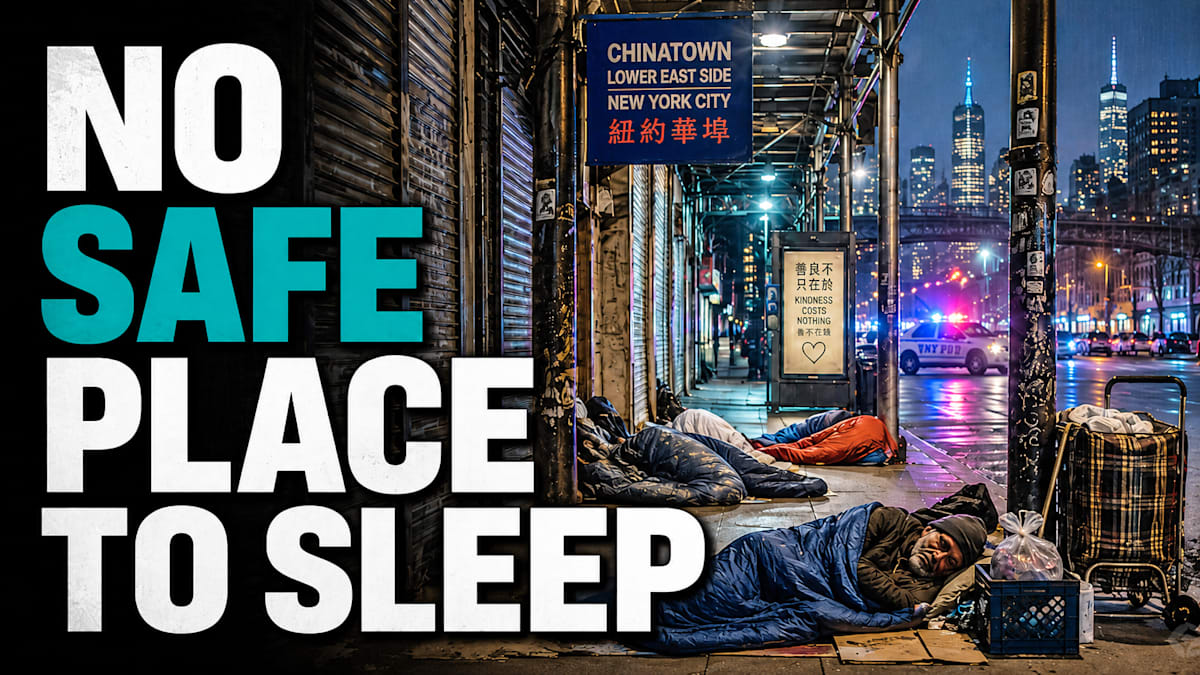
The Chinatown murders were not just a crime story. They were a reminder of how exposed a person becomes when the street is their bedroom.
By Michele Evans
New York City, New York
5/29/2026
Category: Courts / Criminal Justice / Advocacy
New York City, New York - When I read that Randy Santos had been sentenced to 40 years to life for the murders of four unhoused men in Manhattan, I did not process it as just another crime story.
I remembered where I was when the murders happened in 2019.
I was in Rikers.
Rikers is where I first read about it. And maybe that is why the story stayed with me in such a physical way. I was not sleeping on a sidewalk. I was not outside in Chinatown. I was behind walls, inside one of the most notorious jail complexes in the country. But I still understood what it meant to feel unsafe, exposed, and vulnerable in a place where your body did not fully belong to you.
That is the thing about institutional confinement and street homelessness. They are not the same experience, but both can strip a person of the ordinary protections other people take for granted.
Privacy.
Safety.
A locked door.
Control over who can reach you.
The ability to sleep without scanning for danger.
For people living outside, sleep itself becomes an act of exposure.
Santos was convicted of killing four unhoused men, Florencio Moran, Nazario Vásquez Villegas, Anthony Manson, and Chuen Kok, during a brutal 2019 rampage in Manhattan’s Chinatown. Prosecutors said the men were attacked while sleeping. Two other people were injured. On May 28, 2026, Santos was sentenced to 40 years to life. The Associated Press reported that no family or friends were present in court to give victim impact statements for the men who died.
That absence is its own indictment.
Because unhoused people have lives. They have stories. They have friendships, routines, jokes, loyalties, habits, favorite corners, favorite delis, favorite parks, favorite people who notice when they are gone.
I know that because I lived close to that world long before Rikers.
At one point, my husband and I were living in a van in the East Village. And with all its trials, it was fun.
That may sound strange to people who have never lived close to the street. But it was. It was hard, unstable, chaotic, and sometimes scary. But it was also alive. It was neighborhood. It was music, late nights, characters, jokes, stories, survival, and strange little rituals that only make sense when you are part of a place instead of just passing through it.
My husband and I were, in our own strange way, the mascots of the neighborhood. We knew everyone. The East Village was not just a backdrop. It was a living organism, a nonstop party, a community stitched together by artists, outsiders, bartenders, punks, strays, workers, wanderers, regulars, survivors, and people who had no neat category.
Tompkins Square Park was part of that world.
Just down the street from where this horror happened, the park held its own ecosystem. Every summer, waves of traveling homeless people came through. Some started out west, in Seattle and other cities along the route, riding trains, hopping boxcars, moving with the seasons, getting dropped near the Bronx rail yards, then making their way downtown toward Tompkins.
To outsiders, it may have looked like disorder.
To people who knew the scene, it was also a movement.
There were codes. Routes. Friendships. Warnings. Stories about where to sleep, where not to sleep, who could be trusted, where food might be found, where someone could rest without being harassed, robbed, swept, or worse.
It was rough, yes. It was unstable, absolutely. It could be dangerous, heartbreaking, and hard. But it was also human.
That is what gets lost when homelessness is reduced to policy language, sidewalk complaints, police sweeps, or neighborhood panic.
People talk about “the homeless” as if they are a condition, not a group of human beings. As if they are scenery. As if they are a problem to be moved along. As if their suffering only becomes visible when it interrupts someone else’s comfort.
But the murders in Chinatown force a different question:
What does safety mean when you have nowhere private to sleep?
The answer is not simple.
This case sits at the intersection of homelessness, mental illness, violence, public safety, social neglect, and the city’s long failure to build systems that protect people before catastrophe. Santos’ attorneys argued that he suffered from schizophrenia and was too mentally ill to be held criminally responsible. A jury rejected that defense and convicted him of first-degree murder.
The sentence now stands as punishment.
But punishment after death does not protect the next person sleeping under scaffolding.
It does not bring back Moran, Vásquez Villegas, Manson, or Kok.
It does not answer why men could be so vulnerable that another person could walk up while they slept and end their lives.
It does not answer why people can disappear from the city’s conscience until they appear in a murder count.
I remember the fear I felt when I read about it. Not a theatrical fear. A physical one. A recognition. A sense that New York had once again revealed how thin the line can be between surviving and being unprotected.
Rikers taught me one version of that vulnerability.
The van years taught me another.
Living in a van gave me a form of shelter, but it was still not the same as being housed. You feel the street differently. You hear noises differently. You measure people differently. You know who is nearby. You know who seems off. You know when the air changes.
And you understand, in a way housed people often do not, that people sleeping outside are not separate from the neighborhood.
They are the neighborhood.
They are part of the city’s memory. Part of its rhythm. Part of its warning system. Part of its shame.
Tompkins Square Park has always carried that tension. It has been a gathering place, a battleground, a refuge, a stage, a living archive of the city’s fights over space, poverty, policing, art, addiction, survival, and who gets to belong.
The traveling kids who came through every summer were not just “vagrants.” Many were part of a loose national migration of young outsiders, train riders, seasonal wanderers, and street communities moving from city to city. They carried stories from Seattle, Portland, New Orleans, Florida, the Bronx rail yards, downtown Manhattan, and everywhere in between.
Some were running from homes that failed them.
Some were chasing freedom.
Some were addicted.
Some were mentally ill.
Some were artists.
Some were just young and lost.
Some were older and tired.
Some were funny as hell.
Some were dangerous.
Some were gentle.
Most were more complicated than anyone wanted to admit.
That is the truth about street life: it is not one story.
But one thing is constant. When you are unhoused, your body is easier for the world to ignore until something terrible happens to it.
That should haunt New York.
The city cannot say unhoused people deserve dignity only after they are dead. It cannot treat them as nuisances on Monday, enforcement problems on Tuesday, shelter statistics on Wednesday, and victims worthy of compassion only after a murder conviction on Thursday.
Safety has to mean more than removing people from view.
It has to mean accessible shelter that people can actually use. It has to mean low-barrier options, mental-health care, outreach that builds trust over time, drop-in centers, medical help, bathrooms, showers, laundry, storage, case management, and real paths to housing.
It also means remembering that many people do not avoid shelters because they are stubborn. They avoid them because they have experienced violence, theft, instability, trauma, bureaucracy, humiliation, or rules that make shelter feel less safe than the street.
Anyone serious about homelessness has to be honest about that.
For anyone in New York who is unhoused, at risk of homelessness, or trying to help someone who is, there are resources available, but the intake system is currently in transition.
Call 311 for homeless outreach assistance, shelter information, directions to the correct intake center, or help finding a local Homebase office if you are at risk of becoming homeless. If someone appears to be in immediate danger, injured, severely ill, hypothermic, or at risk of harming themselves or others, call 911.
For single adult men, New York City announced plans to move men’s intake to 8 East 3rd Street in Manhattan and adult-family intake to 333 Bowery. But the city’s own HRA/DSS community update says that relocation has been delayed and that intake for single adult men and adult families will continue at 30th Street until further notice.
ACCESS NYC likewise says the 30th Street Intake Center for Men, at 400-430 East 30th Street at First Avenue, remains the location for single adult men “until further notice,” and that intake centers are open 24 hours a day, seven days a week, including holidays.
For adult families without minor children, New York City’s DHS page still lists the Adult Family Intake Center at 400-430 East 30th Street, open 24 hours a day. Because the relocation has been announced, challenged, delayed, and updated across multiple sources, anyone seeking shelter should call 311 before traveling to confirm the correct intake location that day.
For single adult women, intake is available at Franklin Shelter, 1122 Franklin Avenue in the Bronx. NYC’s DHS guidance lists Franklin as the intake location for women seeking temporary housing assistance.
For families with children under 21, pregnant people, or families that include a pregnant person, New York City directs families to its family shelter intake system, including PATH, the Prevention Assistance and Temporary Housing office, at 151 East 151st Street in the Bronx.
Drop-in centers are another option for people who are not ready for shelter placement or need immediate services. NYC 311 says drop-in centers are designed to reduce barriers for people living on the streets or subways and can provide immediate services. Coalition for the Homeless notes that drop-in centers can also give single adults a place to come indoors overnight, even when they are not ready for a shelter placement.
That is where the public-interest question begins, because the men killed in Chinatown were not abstractions.
They were not symbols.
They were human beings asleep in public because, for whatever combination of reasons, public space had become the place where their bodies rested.
That should never make someone disposable.
I am glad Santos was sentenced. I am glad there was accountability. But accountability after four men are dead is not enough.
The deeper question is whether New York can learn to see unhoused people before they become crime victims, before they become court exhibits, before their names appear in a sentencing story, before there is no one left in the courtroom to speak for them.
Florencio Moran.
Nazario Vásquez Villegas.
Anthony Manson.
Chuen Kok.
They were here.
They lived in this city.
And sleeping outside should never be a death sentence.
*Michele Evans is an independent journalist, author, and former ESPN technical producer whose work has appeared in The New York Times.
Michele got her start in 2001 covering the NBA and NFL.
She now covers New York City courts, criminal-justice procedure, NYPD, FDNY, domestic-violence systems, media accountability, public safety, advocacy efforts, and New York civic life through courthouse observation, public records, legal analysis, and lived-experience reporting.
Read more independent journalism by Michele Evans.
Follow Michele Evans on Facebook and Substack for new reporting, analysis, and updates.