Eric Adams Should Not Get a Pass Because He Helped Trump
Eric Adams Should Not Get a Pass Because He Helped Trump
By Michele Evans
New York City, New York
5/20/2026
Category: Courts / Criminal Justice / Advocacy
New York City, New York - When ordinary New Yorkers are accused of crimes, the justice system does not usually ask whether prosecution would interfere with their job, their family obligations, their housing, their immigration status, their health, or their ability to keep their lives from collapsing.
They are expected to show up.
They are expected to answer.
They are expected to endure the cost of being prosecuted, even before guilt has been proven.
That is why the dismissal of the federal corruption case against former New York City Mayor Eric Adams should not be treated as a closed chapter. It should be treated as an open wound in the rule of law.
According to reports, the government watchdog group Citizens Union has urged Manhattan District Attorney Alvin Bragg to open an independent state investigation into the allegations that were once pending against Adams in federal court. Adams had been indicted in 2024 on five counts involving bribery, wire fraud, conspiracy, and illegal foreign campaign contributions. He pleaded not guilty and has consistently denied wrongdoing.
But the reason the case disappeared is what makes this matter so troubling.
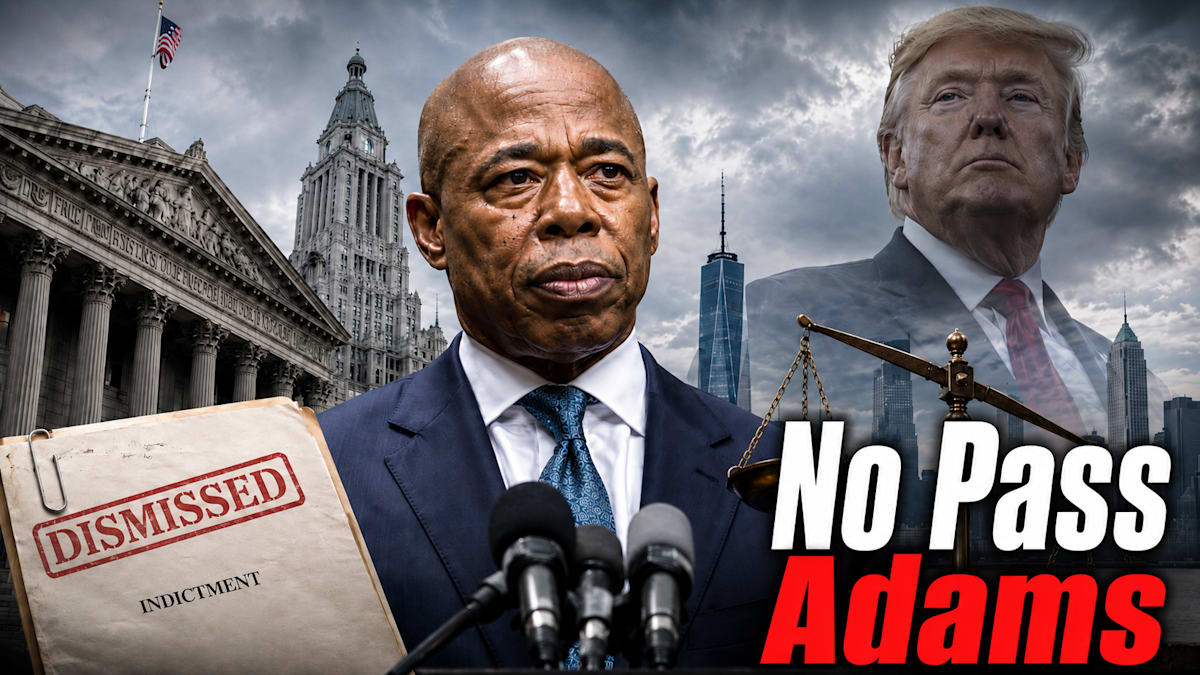
The Department of Justice did not tell the court that the evidence had collapsed. It did not say the indictment was unsupported. It did not say the investigation was improper. Instead, the Justice Department sought dismissal while citing Adams’ ability to assist President Donald Trump’s administration with immigration enforcement priorities.
That distinction matters.
A criminal case should not be dismissed because a powerful defendant becomes politically useful to the administration in power.
A mayor should not receive relief that ordinary people would never receive simply because his cooperation serves federal policy goals.
And New Yorkers should not be asked to accept that as justice.
The Dismissal Came at the Cost of Public Trust
Citizens Union’s April 20 letter to Bragg makes the central point plainly: the federal dismissal was not based on doubts about the sufficiency of the evidence, but on political judgment. The group urged the Manhattan District Attorney’s Office to investigate whether state law, New York election law, or city campaign finance law may have been violated.
The allegations were serious. The indictment accused Adams of accepting improper benefits, including luxury international travel, and alleged that illegal contributions were concealed through false paperwork connected to New York City’s public matching funds system.
That is not a private matter. If the allegations are true, the harm was not limited to the federal government. The harm reached New York voters, New York taxpayers, and the integrity of the city’s campaign finance system.
The public matching funds program exists to reduce the influence of wealthy donors and special interests. If that program was allegedly manipulated to obtain public money under false pretenses, then New York has its own independent interest in investigating what happened.
That interest does not disappear because the Trump Justice Department decided Adams was useful.
Judge Ho Saw the Problem
When U.S. District Judge Dale Ho dismissed the federal indictment with prejudice, he did so because courts cannot force the Department of Justice to prosecute a case it no longer wants to pursue. But his opinion was not an endorsement of what happened.
It was a warning.
Judge Ho wrote that dismissal without prejudice would create the “unavoidable perception” that Adams’ freedom depended on his ability to carry out the immigration enforcement priorities of the administration. He also wrote that “everything here smacks of a bargain: dismissal of the Indictment in exchange for immigration policy concessions.”
That is an extraordinary statement from a federal judge.
It should not be buried under political fatigue.
It should not be dismissed as old news.
It should not be treated as if Adams was vindicated.
Judge Ho expressly noted that the dismissal was not a decision about Adams’ guilt or innocence. The court could end the federal case, but it could not answer the larger public question: whether a sitting mayor received special treatment because he became valuable to the president’s immigration agenda.
That question still belongs to New York.
The Rikers Connection Makes This Even More Serious
The timeline only deepens the concern.
In February 2025, Adams met with Trump administration officials as the Justice Department moved to dismiss his case. Around the same period, Adams announced plans to allow federal immigration authorities back onto Rikers Island. The New York City Council later sued to stop the executive order, arguing that the action was tainted by a conflict of interest tied to the dismissal of Adams’ criminal case.
A New York court summarized the concern directly: Adams’ attorney had argued that the indictment complicated Adams’ ability to assist the Trump administration on immigration enforcement, including reopening an ICE office on Rikers Island. Days after the DOJ dismissal directive, Adams publicly announced his intention to bring ICE back to Rikers.
Adams denies any quid pro quo. He has said that neither he nor anyone acting on his behalf offered a trade of mayoral authority for dismissal of his case.
But denial is not the same as investigation.
And the public does not have to pretend the sequence of events is normal.
Ordinary People Do Not Get This Kind of Mercy
This is where the Adams dismissal becomes bigger than Adams.
Every day, ordinary people are prosecuted in New York despite complicated lives, trauma histories, family crises, medical issues, public responsibilities, and circumstances that make prosecution devastating.
They do not get their cases dismissed because prosecution interferes with their ability to work.
They do not get relief because prosecution damages their reputation.
They do not get a special escape hatch because they are useful to powerful people.
That is why this dismissal is so corrosive.
It tells New Yorkers that the justice system can be rigid with the powerless and flexible with the powerful. It tells survivors, defendants, families, voters, and taxpayers that ordinary people must submit to the machinery of prosecution, while public officials may be spared when their political usefulness outweighs accountability.
That is not equal justice.
That is selective mercy.
Bragg Should Not Let the Record Go Dormant
The Manhattan District Attorney’s Office told CBS New York that it had already considered “all available and feasible avenues” at the time of the federal dismissal.
That answer is not enough.
Citizens Union is not asking Bragg to rubber-stamp the federal indictment. It is asking for an independent state investigation. That is exactly what local prosecutors are supposed to do when local laws, local elections, and local public funds may have been implicated.
The federal government’s political decision should not control New York’s response.
If the evidence is insufficient, say so after an independent review.
If state charges are not viable, explain that in a way the public can understand.
But do not let the case disappear simply because the defendant was the mayor, the president wanted cooperation, and the Justice Department chose political utility over public accountability.
The public deserves more than silence.
New Yorkers deserve to know whether their campaign finance system was abused.
They deserve to know whether public office was leveraged for private benefit.
They deserve to know whether a mayor received a form of mercy that ordinary defendants would never receive.
Eric Adams should not get a pass because he helped Trump.
Justice should not depend on usefulness.
And when a criminal case disappears under the shadow of political exchange, dismissal is not closure.
It is the beginning of the next investigation.
*Michele Evans is an independent journalist, author, and former ESPN technical producer whose work has appeared in The New York Times.
Michele got her start in 2001 covering the NBA and NFL.
She now covers New York City courts, criminal-justice procedure, NYPD, FDNY, domestic-violence systems, media accountability, public safety, advocacy efforts, and New York civic life through courthouse observation, public records, legal analysis, and lived-experience reporting.
Read more independent journalism by Michele Evans:
Follow Michele Evans on Facebook and Substack for new reporting, analysis, and updates.