Dana Kaplan Has One Job: Close Rikers and Do It Right
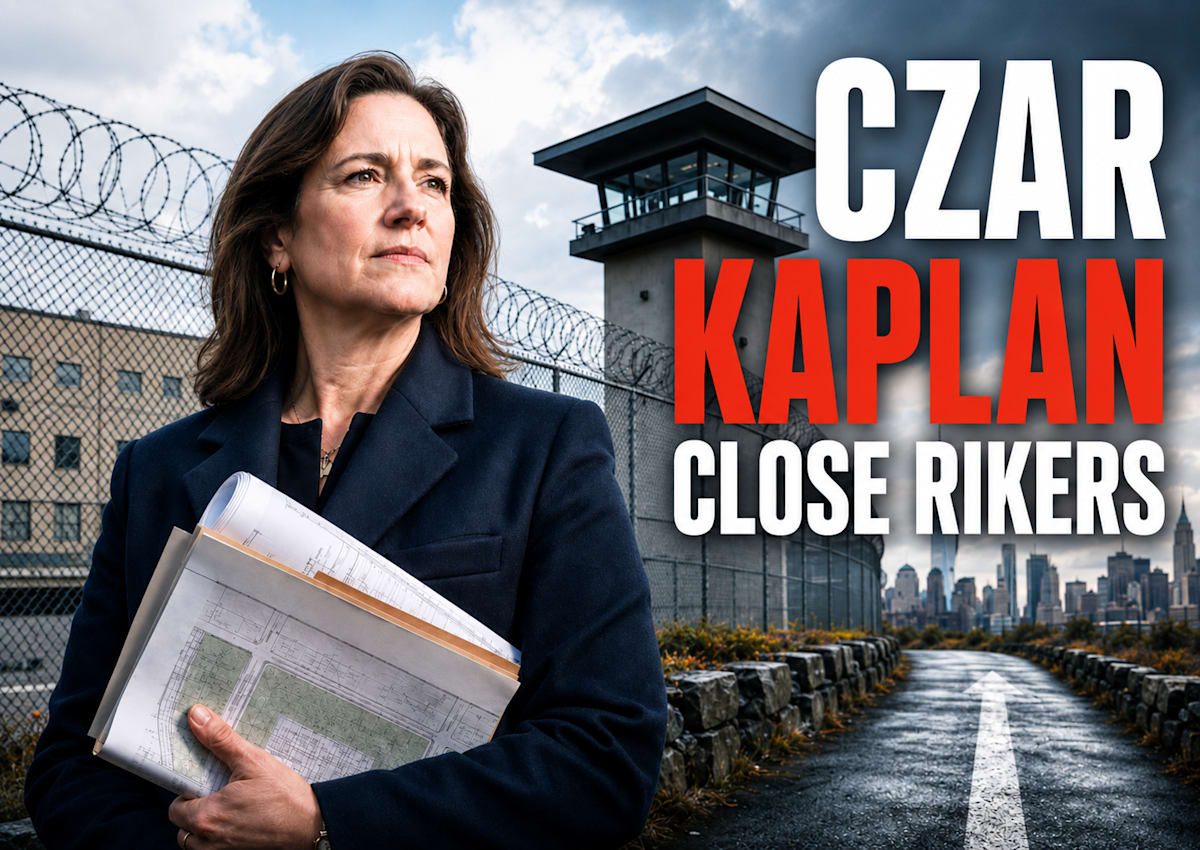
Dana Kaplan Has One Job: Close Rikers and Do It Right
By Michele Evans
New York City, New York
5/21/2026
Category: Courts / Criminal Justice / Advocacy
New York City, New York - On April 28, 2026, New York City appointed Dana Kaplan as its first “Close Rikers Czar.”
That date caught my attention for a personal reason. April 28 is my birthday. It is also a date I already associate with Rikers Island because the last major April 28 event I remember from being there was getting out of COVID quarantine.
So maybe this appointment is a good sign.
I hope it is.
Because if New York City is finally going to put one person in charge of getting Rikers Island closed, that person needs to do the job well. Not symbolically. Not rhetorically. Not with another round of committees, slogans, construction excuses, or sanitized press releases.
She needs to help close one of the most notorious jail complexes in America in a way that actually protects the human beings still trapped inside it.
Mayor Zohran Mamdani announced Kaplan’s appointment on April 28, calling the new role part of the city’s latest step toward shutting down Rikers Island. According to City Hall, Kaplan will oversee the closure process, reduce the jail population, advance construction of borough-based facilities, ensure the safe transfer of people in custody off the island, and help plan for Rikers Island’s future.
That is a massive assignment.
It is also one that should not be treated as another government job title. “Close Rikers Czar” sounds powerful. But for the people inside Rikers, power only matters if it changes conditions, saves lives, and gets people out of a jail system that has been condemned, studied, litigated, investigated, and mourned for years.
Kaplan is not new to this issue.
City Hall described her as having more than two decades of criminal justice reform experience and noted that she previously served as a senior advisor to the Independent Rikers Commission, where she helped shape the blueprint to close Rikers and replace it with a borough-based jail system.
That background matters.
It means Kaplan is not walking into this blind. She knows the plan. She knows the politics. She knows the delays. She knows the public resistance to borough-based jails. She knows how many times New York has promised a more humane system while people inside Rikers continued to live through the opposite.
In an interview with Amsterdam News, Kaplan described her mission directly: “My job is to move heaven and earth to close Rikers Island as quickly as possible.” The article reported that her work includes coordinating agencies and partners, reducing the jail population, advancing borough-based facilities, ensuring a safe transition, and improving conditions on Rikers now.
That last part is critical.
Closing Rikers cannot become an excuse to ignore Rikers.
The city cannot say, “We are closing it,” while people continue to die, deteriorate, suffer medical neglect, endure violence, or sit in decaying facilities waiting for some future promise to arrive. The people currently detained there are not placeholders in a construction timeline. They are human beings living inside the emergency that Kaplan has now been assigned to help end.
That is why this appointment matters. Not because it creates a new title, but because it creates a new point of accountability.
The public now has a name.
Dana Kaplan is the person tasked with helping coordinate the city’s promise to close Rikers.
She is not solely responsible for every failure that came before her, but she has accepted responsibility for helping determine what happens next. That means her performance should be measured by results, not press conferences.
How many people are moved safely off the island?
How quickly does the jail population come down?
Are people with serious mental illness being treated instead of warehoused?
Are medical failures being addressed now, not after another death?
Are borough-based facilities actually moving forward?
Are survivors, formerly incarcerated people, detainees’ families, public defenders, advocates, and people who lived through Rikers being heard?
Those questions matter because Rikers Island is not an abstraction to me.
I was there.
I know what it feels like to be inside that system while officials, lawyers, agencies, and institutions talk about people like files, numbers, charges, beds, and deadlines. I know what it feels like to be reduced to a population management problem instead of treated like a person.
That is why I do not want another symbolic reform announcement.
I want follow-through.
Rikers Island is a public record of New York City’s failures.
It is where Layleen Polanco died. It is where Kalief Browder was held before his name became synonymous with the cruelty of pretrial detention. Kalief was accused at 16 of stealing a backpack and spent three years at Rikers without trial, much of it in solitary confinement, before the case was dismissed.
He died by suicide in 2015. His mother, Venida Brodnax Browder, became an advocate for justice after what happened to her son.
I have also seen the pain his case left behind.
At the Tribeca Festival premiere of For Venida, For Kalief, the documentary about Kalief Browder and his mother, Venida Brodnax Browder, I met and spoke with Kalief’s brother Deion Browder.
The film, directed by Sisa Bueno, uses Venida’s poetry, archival discovery, and contemporary movements to honor the Browders’ legacy and connect their story to the ongoing fight over Rikers Island.
His brother was still carrying the wound of what Rikers did to his family. What stayed with me most was his pain over the city’s cruelty toward his mother, including the way officials told her, “Rikers did not kill your son.”
That is ruthless.
And that is why closing Rikers cannot be reduced to construction schedules, population charts, and new official titles. The people harmed by that island are not statistics. Their families are still living with the consequences. A real closure plan has to reckon with the human wreckage Rikers left behind.
Rikers is where people with addiction, trauma, poverty, mental illness, and open cases have been caged in conditions that officials have condemned for years while still allowing them to continue.
The city’s legal mandate to close Rikers has been in place for years, but the plan has repeatedly run into the same wall: population numbers, construction delays, political resistance, and the enormous gap between what New York promises and what New York actually builds.
City & State reported that Kaplan’s job is to get the notorious jail complex shut down “ASAP,” while also noting that the city is not expected to meet the legally mandated 2027 deadline because of high jail population numbers and delays in building the four borough-based jails intended to replace Rikers.
That is the hard truth.
The deadline is approaching. The replacement facilities are delayed. The jail population remains too high. Federal oversight has intensified. In 2025, U.S. District Judge Laura Taylor Swain stripped New York City of full control over Rikers-related reforms and ordered the appointment of an independent remediation manager after years of violence and dysfunction.
So Kaplan is stepping into a crisis that is already legally, politically, and morally charged.
That may be exactly why her appointment matters.
A real Close Rikers Czar cannot simply coordinate agencies. She has to confront a system that knows how to delay itself into permanence. She has to push past the bureaucratic reflex to study what has already been studied. She has to insist that reducing the jail population is not optional.
She has to ensure that “safe transfer” does not become another phrase that sounds humane while people are shuffled through trauma.
And she has to remember that closure is not success if the same abuse is simply relocated.
The promise of borough-based jails has always been that smaller facilities closer to courts, attorneys, families, and services could be safer and more humane than the isolated island jail complex. NY1 reported that Kaplan’s role is to orchestrate the closure of Rikers and oversee construction of four new borough-based jails near courthouses.
But smaller buildings do not automatically create justice.
Culture moves. Neglect moves. Violence moves. Medical indifference moves. Bad leadership moves.
If the city closes Rikers but exports Rikers’ culture into new buildings, it will not have solved the problem. It will have renovated the address.
That is why Kaplan’s job must be judged on both closure and transformation.
She needs to close the island. She also needs to help make sure the city does not reproduce the island.
The people most harmed by Rikers have heard the right words before.
Now they need the right results.
For me, the April 28 appointment feels almost too symbolic to ignore. My birthday. My Rikers quarantine memory. A new official assigned to close the place where I saw firsthand how casually New York can warehouse people and then speak about reform as if reform is something always arriving tomorrow.
Maybe April 28 will become a better date in the Rikers story.
Maybe it will mark the moment the city finally put someone in place with the authority, experience, and urgency to force the closure effort forward.
But hope is not enough.
Dana Kaplan has one job: close Rikers and do it right.
That means reducing the number of people detained there. It means improving conditions immediately. It means moving people safely. It means building a system that is actually smaller and more humane. It means listening to the people who survived Rikers, not only the officials who tour it.
And it means understanding that the world is watching.
Because Rikers is not just a New York City problem. It is a national symbol of what happens when a jail becomes so infamous that everyone agrees it should close, yet somehow it remains open year after year.
So yes, I hope Dana Kaplan’s April 28 appointment is a good sign.
But signs are not enough.
Now she has to do the work.
For Venida. For Kalief.
*Michele Evans is an independent journalist, author, and former ESPN technical producer whose work has appeared in The New York Times.
Michele got her start in 2001 covering the NBA and NFL.
She now covers New York City courts, criminal-justice procedure, NYPD, FDNY, domestic-violence systems, media accountability, public safety, advocacy efforts, and New York civic life through courthouse observation, public records, legal analysis, and lived-experience reporting.
Read more independent journalism by Michele Evans.
Follow Michele Evans on Facebook and Substack for new reporting, analysis, and updates.