Closing Rikers Should Not Become Another Real Estate Gold Rush
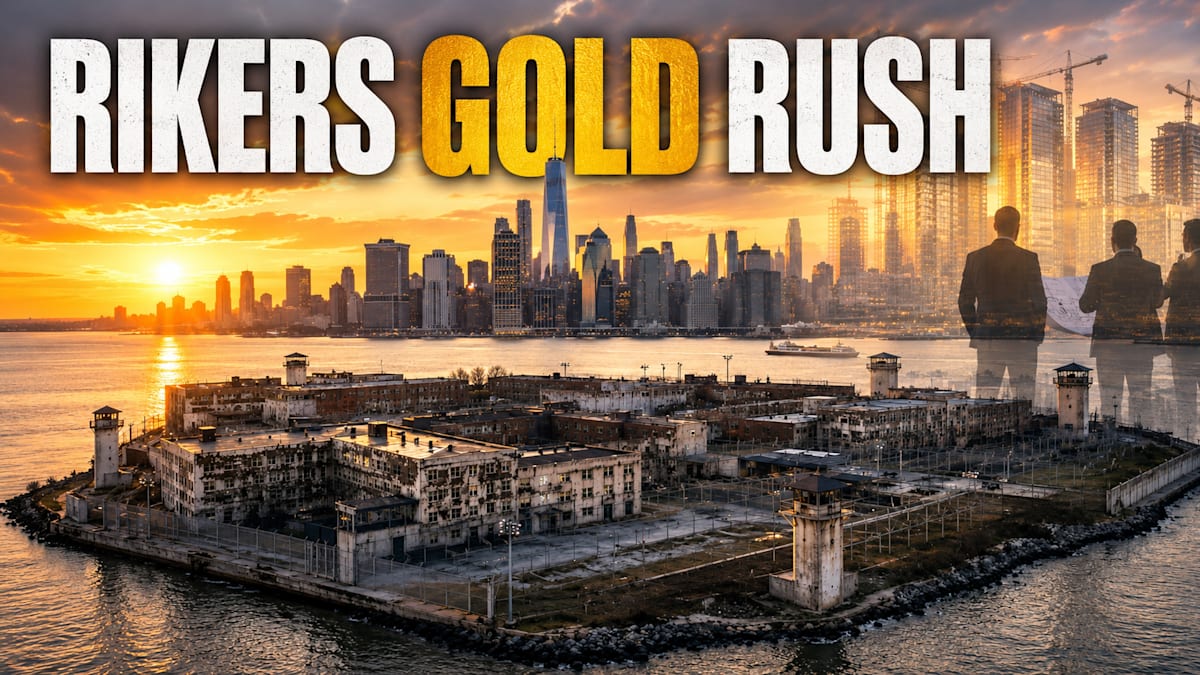
Closing Rikers Should Not Become Another Real Estate Gold Rush
By Michele Evans
New York City, New York
5/20/2026
Category: Courts / Criminal Justice / Advocacy
New York City, New York - The question is not only whether Rikers should close. The question is who benefits when it does?
Rikers Island should close. That much should not be controversial anymore.
It is a jail complex that has become synonymous with death, neglect, violence, delay, decay, and official failure. A federal judge has already taken extraordinary action, appointing an outside remediation manager after years of court oversight failed to make the jail system safe. Reuters reported that Judge Laura Taylor Swain cited “extraordinarily high” rates of force, stabbings, slashings, fights, staff assaults, and in-custody deaths when she moved power away from city officials and toward court-supervised intervention.
And yet, as New York continues to debate Rikers’ future, one uncomfortable question deserves more public attention:
Are city leaders closing Rikers because they finally care about the people trapped inside it, or because the land has become too valuable to ignore?
That question may sound cynical. But anyone who has spent real time on Rikers knows the island tells two stories at once.
One story is horror: cages, rotting infrastructure, human beings warehoused in a place the city has allowed to deteriorate for generations.
The other story is land: 413 acres in New York City, surrounded by water, sitting in the shadow of Manhattan, with skyline views that developers would kill for.
I was on Rikers when people were brought in to assess the property. We were not told exactly who they were or what the full purpose of the assessment was. But the general understanding among those of us watching was clear: they were looking at the island because Rikers was going to close, and the land was valuable.
At the time, I was housed on a top floor with what can only be described as a penthouse view. Those people were brought into my dorm specifically to see that view. That was not about renewable energy, wastewater treatment, or any public reimagining of Rikers. They were being shown the skyline, the water, the sunsets, and the value of the land.
That impression was not hard to understand. Rikers has phenomenal views of the Manhattan skyline. The sunsets over the water can be breathtaking. For all the suffering contained inside the jail complex, the land itself is extraordinary. Standing there, it was obvious why powerful interests would see something other than a humanitarian crisis. They would see opportunity. They would see waterfront land. They would see money.
They would see dollar signs.
The official explanation for closing Rikers has always centered on justice. The City Council voted in 2019 to replace Rikers with a smaller borough-based jail system, describing the plan as a move toward a safer, more humane justice system. The city’s current closure website still frames the plan as a historic decarceration effort that would replace Rikers with smaller, safer, modern jails.
But the reality is messier.
The plan is years behind schedule. The Brooklyn borough-based jail recently reached a construction milestone, but it is not expected to be completed until 2029. City officials have admitted that the legally mandated 2027 deadline is no longer feasible, and the city is still discussing what a new path to closure should look like.
Meanwhile, people continue to die.
This week, two detainees died on Rikers within roughly 24 hours: Rajpattie Ramkellawan, 41, at the women’s jail, and Umais Khan, 40, the following morning. Their deaths brought the number of Rikers deaths in 2026 to at least four, following the March deaths of Barry Cozart and John Price. The Gothamist reported that Khan’s death came less than 24 hours after Ramkellawan’s and noted that federal monitors have continued to cite failures in supervision, emergency response, and medical care.
This is the part that should outrage everyone.
If the city knew Rikers was inhumane, why did it take this long? If the conditions were unacceptable, why were generations of detainees, mostly poor, mostly Black and brown, mostly legally presumed innocent, forced to endure them year after year?
And if Rikers is finally closing, why should the public automatically trust that the same power structure that tolerated its cruelty is now acting from pure moral clarity?
The city has tried to answer some of those concerns through the “Renewable Rikers” framework. In 2021, the City Council passed legislation to transfer the land, buildings, and facilities of Rikers Island away from the Department of Correction and toward the Department of Citywide Administrative Services, with future use focused on sustainability and resiliency. The law also created a Rikers Island Advisory Committee and called for studies into renewable energy and other public-benefit uses.
The Department of Environmental Protection has since studied whether Rikers could host a new Wastewater Resource Recovery Facility. DEP says such a facility could consolidate operations from existing wastewater plants and help the city meet energy, air quality, and water quality goals. The city’s official “Reimagining Rikers” page says the Renewable Rikers laws focus on “broad public benefit, renewable energy, and critical environmental infrastructure.”
That sounds better than luxury condos. It sounds better than handing the island to private developers. It sounds better than pretending the land has no value.
But New Yorkers should not be naive.
The moment a jail island becomes available in New York City, the land question becomes political, financial, and moral. Even if current public proposals emphasize renewable energy, wastewater treatment, and environmental justice, the public has every reason to demand transparency. Who gets contracts? Who gets access? Who gets influence? Who profits from remediation, demolition, construction, infrastructure, planning, consulting, and redevelopment?
Rikers should not become another case where suffering people are used as the moral justification for a project that ultimately benefits the powerful.
That is especially important because closure itself is now tangled in political conflict. The Marshall Project reported earlier this year that estimates for completing the borough-based jail replacement plan now stretch to 2032, years past the legal deadline, while the cost has ballooned from the original $8 billion estimate to at least $15 billion. The Associated Press reported that Andrew Cuomo, while running for mayor, proposed scrapping the current closure plan and rebuilding jails on Rikers instead, while Zohran Mamdani condemned that idea as a betrayal of both the law and New Yorkers’ demand for closure.
So the debate is no longer simple.
Some want Rikers closed and replaced with borough-based jails. Some want fewer jails altogether. Some want Rikers rebuilt. Some want the island converted into green infrastructure. Some want housing or mixed-use development on land connected to the broader jail replacement fight. And some, undoubtedly, are watching the island the way powerful people always watch valuable land: quietly, strategically, and with plans the public may not fully see until much later.
That is why the public must insist on two truths at the same time.
First, Rikers must close because it is inhumane.
Second, closing Rikers must not become a backdoor real estate windfall dressed up as reform.
The people who suffered on that island cannot be erased from the story the moment the land becomes useful. The detainees who died there cannot become footnotes to a development plan. The people who were caged there pretrial, before conviction, before resolution, before anyone could fairly call them guilty, cannot be reduced to obstacles that once stood between the city and valuable waterfront acreage.
If New York is serious about justice, then Rikers’ future must be shaped by transparency, public benefit, survivor and detainee voices, environmental repair, and real accountability. Not private whispers. Not insider deals. Not vague promises. Not a polished rendering that turns a place of suffering into a branding opportunity.
Rikers Island has always revealed what New York is willing to tolerate when the people suffering are poor, criminalized, mentally ill, addicted, Black, brown, female, transgender, disabled, or forgotten.
The test now is whether New York will finally treat that land as a site of repair, or simply as another asset to be monetized.
Because if Rikers closes only after the land becomes more valuable than the people inside it, then the city has not learned from its cruelty.
It has only found a more profitable way to move on.
*Michele Evans is an independent journalist, author, and former ESPN technical producer whose work has appeared in The New York Times.
Michele got her start in 2001 covering the NBA and NFL.
She now covers New York City courts, criminal-justice procedure, NYPD, FDNY, domestic-violence systems, media accountability, public safety, advocacy efforts, and New York civic life through courthouse observation, public records, legal analysis, and lived-experience reporting.
Read more independent journalism by Michele Evans.
Follow Michele Evans on Facebook and Substack for new reporting, analysis, and updates.