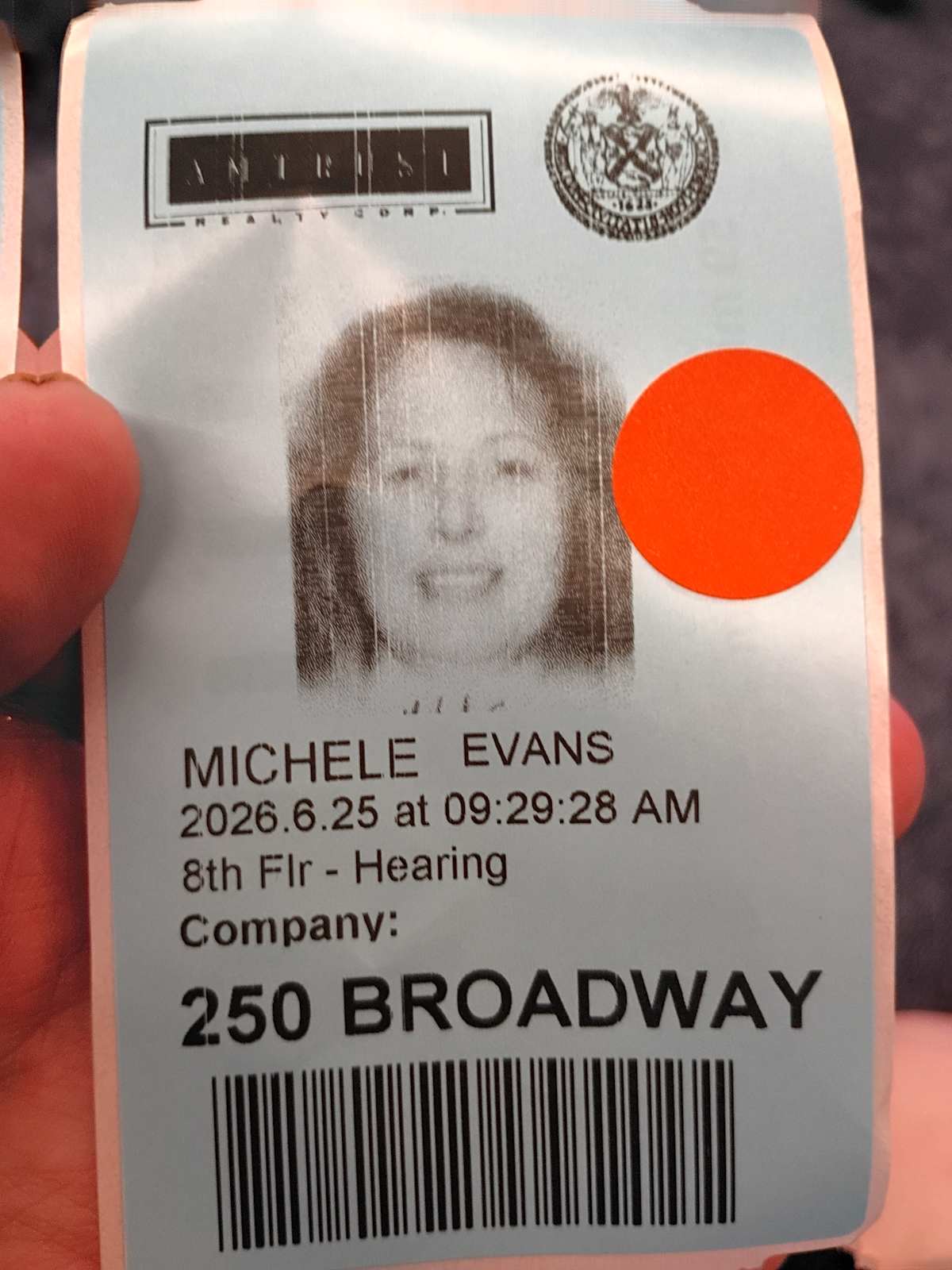
City Council Hearing on Court Delays Exposes the Human Cost of a System Moving Too Slowly
rlfoijd3jrh6j264a9hpki059icq2.48 MBCity Council Hearing on Court Delays Exposes the Human Cost of a System Moving Too Slowly
By Michele Evans New York City, New York 6/25/2026
Category: Courts / Criminal Justice / Rikers Island / Advocacy
NEW YORK CITY, NY - Notably, the District Attorney’s Office and the Department of Correction were no-shows at a hearing centered on their roles in court delays—raising immediate questions about accountability and how agencies can fail to appear when the issue at hand is their own impact on people’s lives.
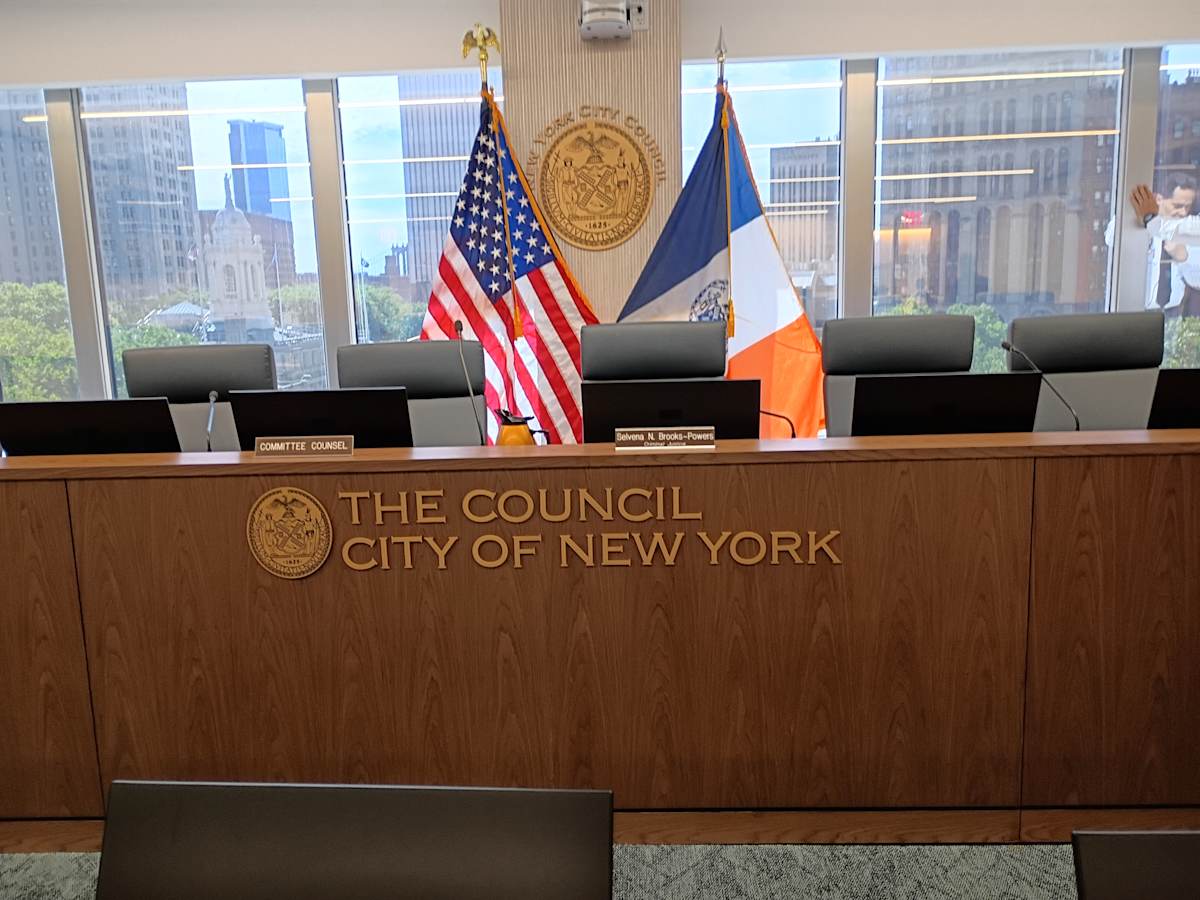
The hearing opened with Chief Administrative Judge Joseph A. Zayas, who gave the court system’s official view of New York City’s criminal court delays before lawmakers turned to the agencies, advocates, attorneys, and people living with the consequences of those delays.
But what followed made one thing painfully clear.
Court delays are not paperwork.
Court delays are jail time.
Court delays are people sitting on Rikers Island while agencies point at each other, data does not move, treatment beds do not exist, discovery access breaks down, and cases drag on for months or years while real lives are left hanging underneath the machinery of the system.
At Wednesday’s New York City Council Committee on Criminal Justice hearing, the official topic was improving court operations to reduce the jail population. But the real issue was bigger than calendars, technology, staffing, or agency coordination.
It was whether New York City is willing to admit that court delay has become one of the engines keeping Rikers full.
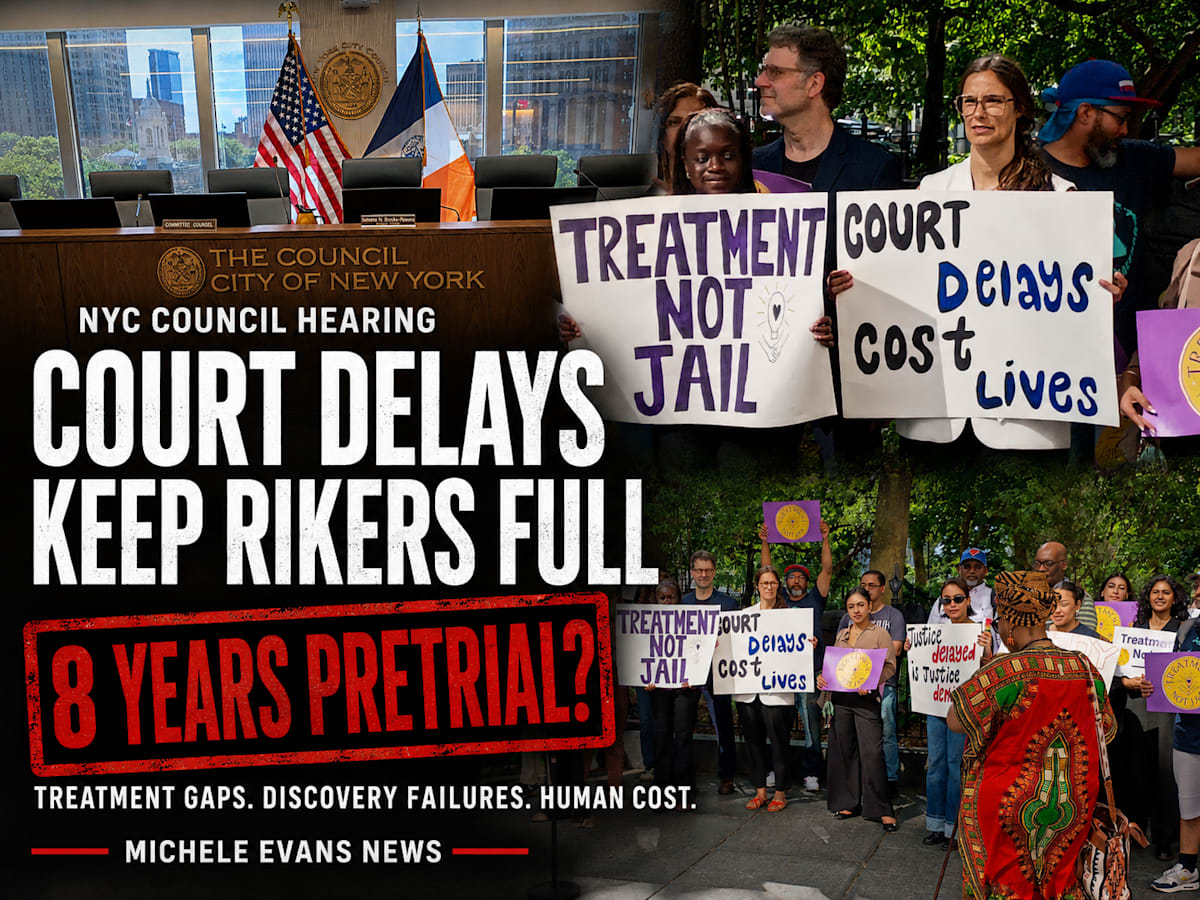
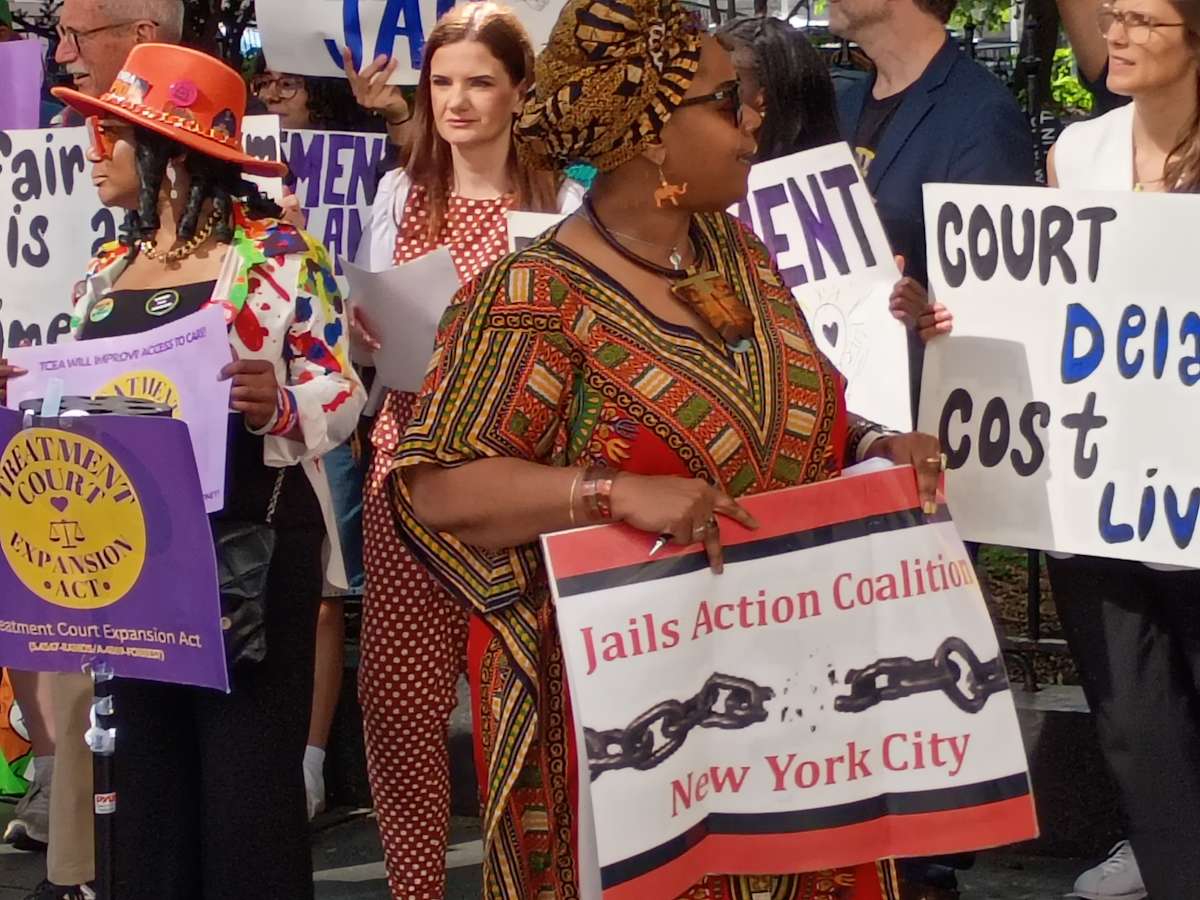
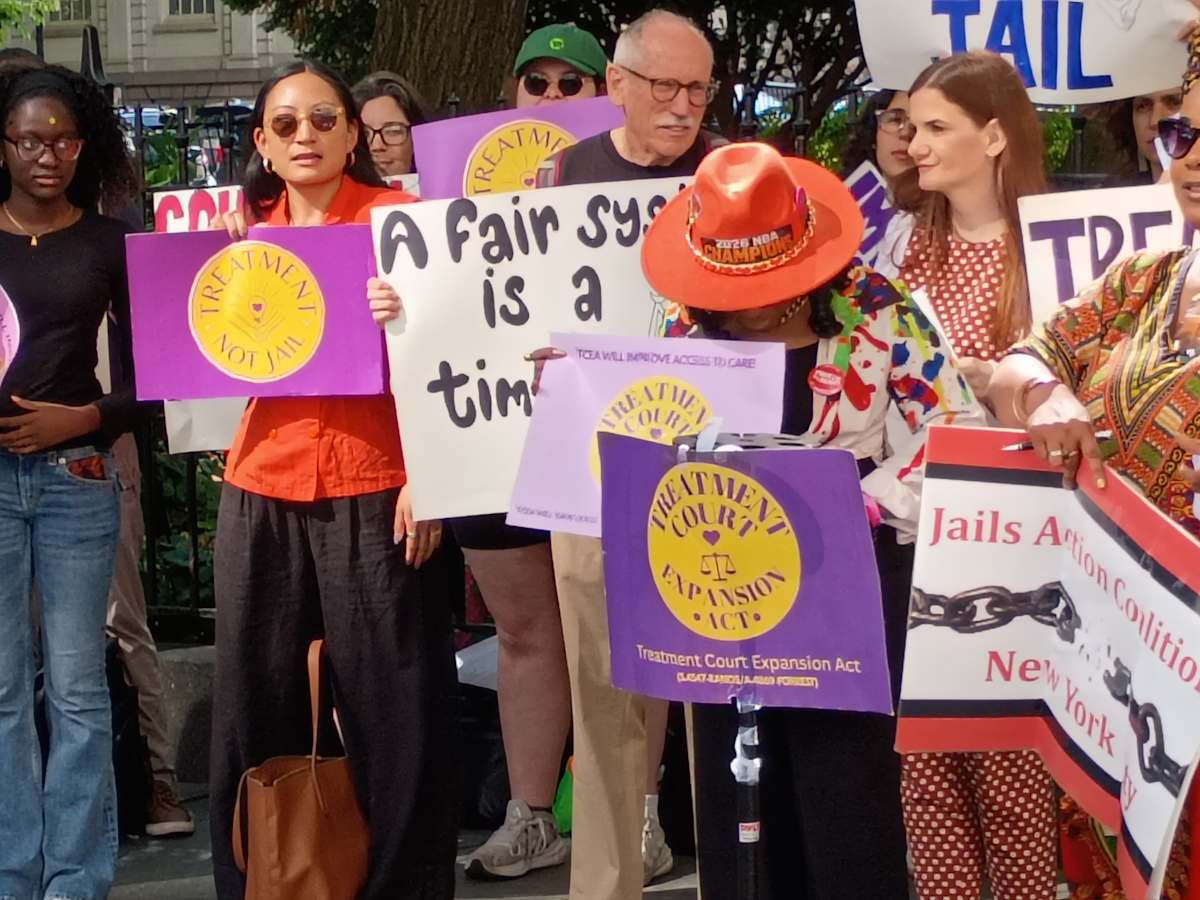
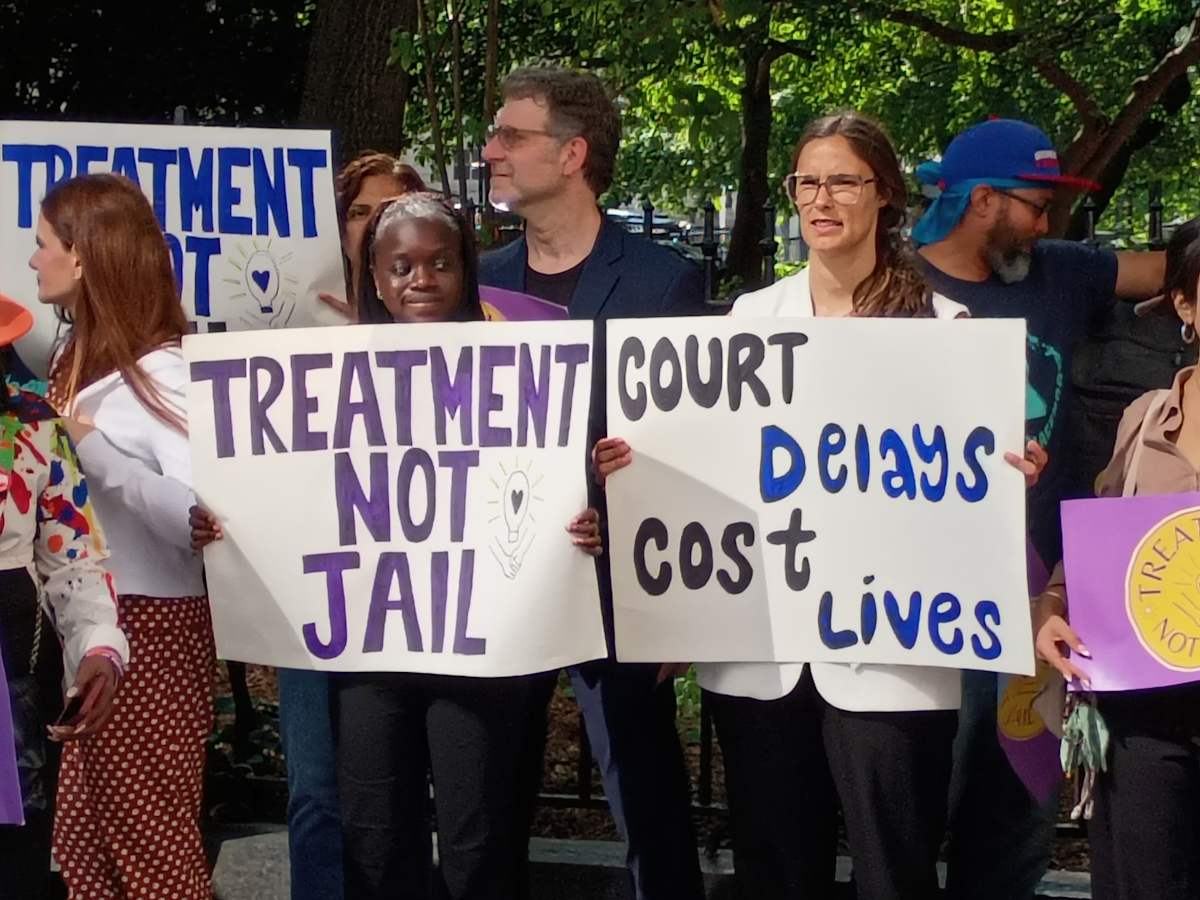
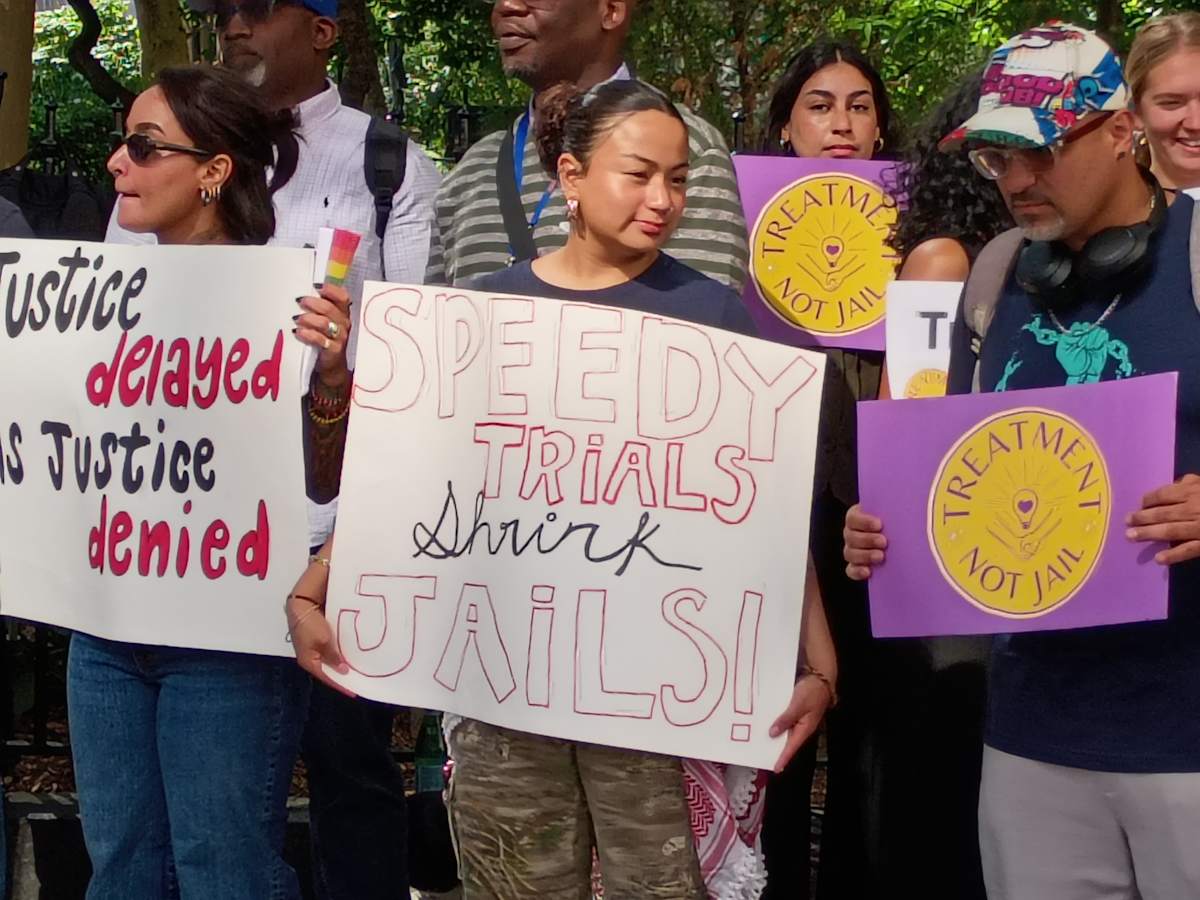
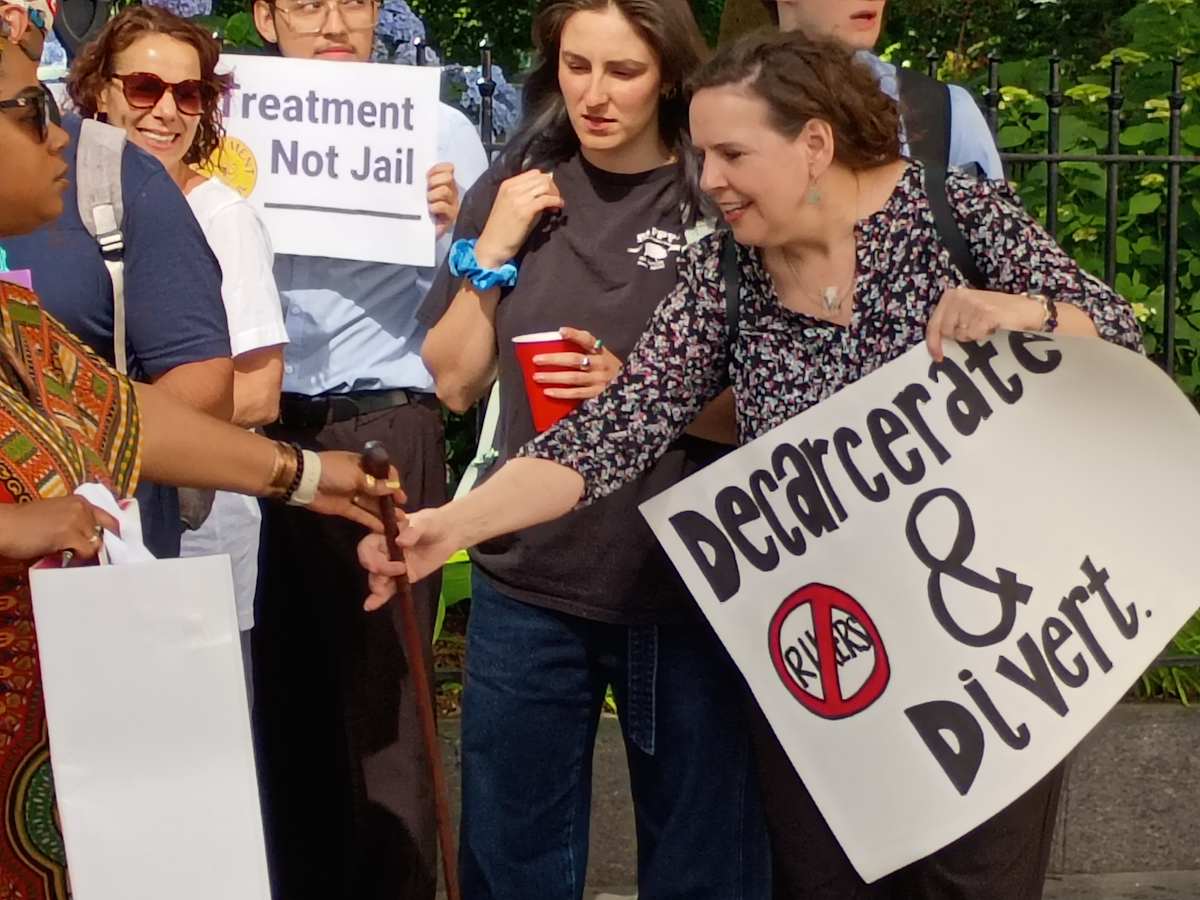
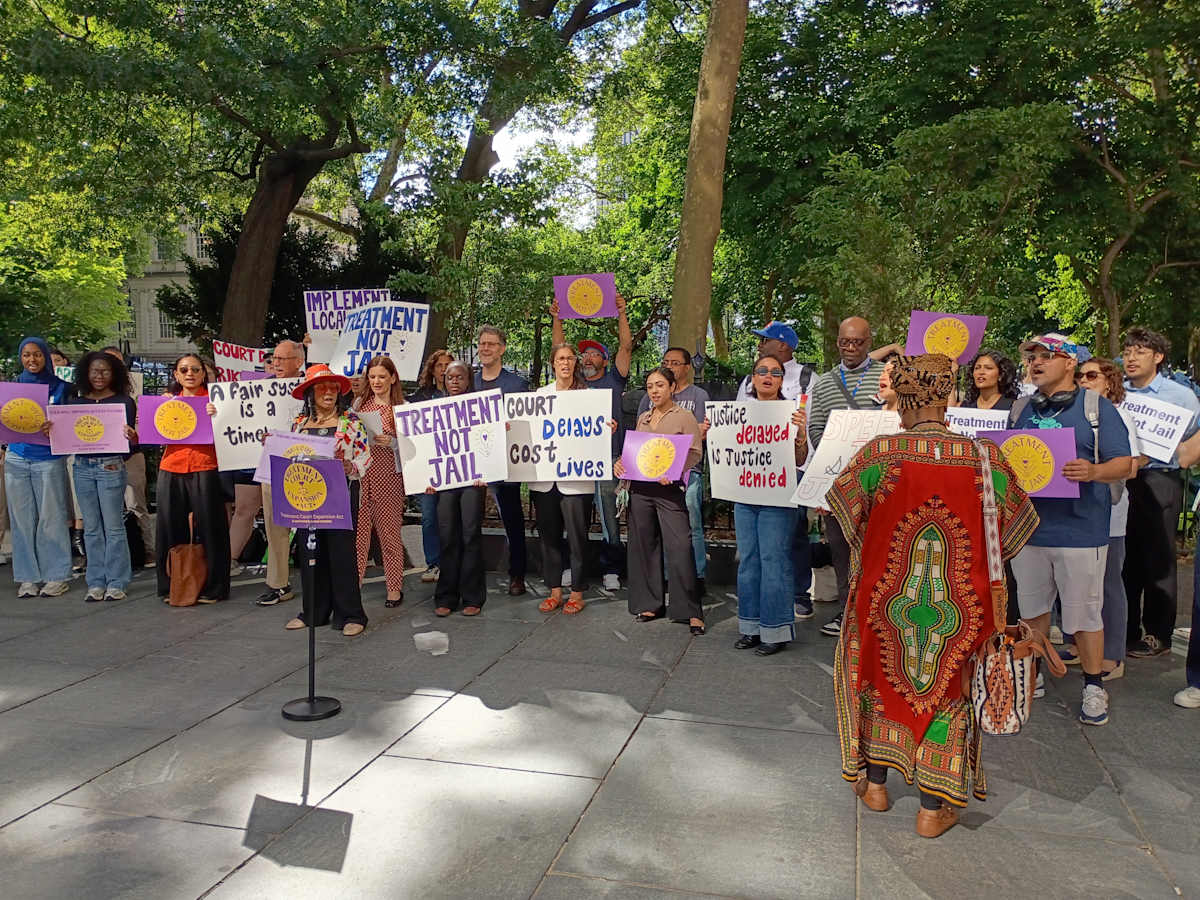
Outside City Hall, advocates rallied under a clear message: treatment, not jail. Signs warned that court delays cost lives. Inside the hearing room, the same message kept coming through in testimony, questions, and frustration from people who have seen the system fail from the inside.
Everyone says they want fewer people on Rikers.
But the system is still built to keep people there.
One of the most striking moments came when Council Member Cabán aggressively pressed the NYPD representative over the department’s role in court delays and data-sharing failures. Cabán challenged the agency’s lack of preparation and pushed back against vague explanations about technology, coordination, and why the department could not answer key questions directly.
The exchange mattered because it captured the central frustration of the hearing. Agencies keep saying they are working on the problem. But people are still sitting in jail while excuses move faster than evidence.
One explanation raised during the hearing involved outside vendors and data-sharing delays. But blaming vendors does not solve the problem. It does not explain why liberty is being affected by systems that still cannot communicate properly. It does not explain why discovery access still fails in real life. It does not explain why the government controls the evidence, the timeline, and the consequences while defendants are left waiting.
I testified because I know what delay feels like from the other side of the bench.
My own case began in 2019 and did not fully resolve until 2022. That is too long. That is years of uncertainty, court dates, pressure, fear, and a life placed on hold while the system moved at its own pace.
I testified that there is no reason for the City to hide behind outside vendors when data-sharing failures directly affect people’s freedom. These are not abstract tech problems. These are human problems.
In my case, my request for a laptop to review discovery was denied. That matters. How is a person supposed to meaningfully participate in their own defense when they cannot even properly review the evidence being used against them?
The hearing also exposed another truth that rarely gets said plainly enough: the pressure created by extreme sentencing ranges drives pleas.
When the minimums and maximums are so severe, people do not always plead guilty because the system found truth. They plead because they are terrified. They plead because the risk of going to trial can mean decades in prison. They plead because sitting in jail while a case drags on becomes its own form of pressure.
If someone is told they could face 25 years in prison, the decision to take a plea is not always a free choice.
Sometimes it is survival.
That is not justice.
That is coercion by timeline, threat, and exhaustion.
For people sitting pretrial, every delay increases the pressure to take a deal. Jail becomes punishment before conviction. The possible sentence becomes the weapon. The longer the delay, the stronger the pressure becomes.
Then the hearing took a heartbreaking pivot.
The Council was asked to investigate a situation involving a man who has reportedly been held pretrial on Rikers Island for eight years.
Eight years.
Pretrial.
On Rikers.
That is insane.
If a person has not been convicted, there is no moral or civic universe where eight years of pretrial detention should be treated like a case-management problem. That is a human rights crisis. That is a constitutional crisis. That is a blinking red warning sign about what happens when delay becomes normalized inside a system with the power to cage people.
Eight years pretrial is not delay.
It is devastation.
It is a life swallowed by process.
And it should shake every person in City Hall.
Legal Aid and public defense advocates raised serious concerns about funding, staffing, and imbalance. The contrast was impossible to miss. Public defenders and district attorney offices need resources. Courts need staffing. Treatment providers need beds. Meanwhile, NYPD overtime continues to consume enormous public resources while agencies still appear unable to answer basic questions about their role in the bottleneck.
There was also testimony about the shortage of beds for people found unfit to proceed under mental health law. A person can be deemed unfit and still wait months before transfer to an Office of Mental Health facility. That means Rikers continues functioning as a mental health holding facility even though everyone in the room knows it is not one.
Rikers is not a hospital.
Rikers is not treatment.
Rikers is not where people in psychiatric crisis should be waiting for the state to find a bed.
The Mayor’s Office of Criminal Justice was also part of the discussion around bottlenecks, data, and coordination. But again, the question is not whether the City can describe the logjam.
The question is whether anyone is going to clear it.
Advocates pushed for expansion of treatment courts and alternatives to incarceration, including the Treatment Court Expansion Act. The message was simple. People with mental health needs, substance use issues, trauma histories, poverty, or instability should not have to deteriorate in jail before the system decides treatment might have been the better answer from the beginning.
But treatment court cannot just be a slogan.
It cannot be a narrow door guarded by prosecutors.
If district attorneys function as gatekeepers, treatment becomes a privilege instead of a public health response. People who need care should not be forced to beg their way into treatment while jail remains the default.
Several speakers also pointed to bail as part of the problem. Families trying to post bail face confusion, judgment, and barriers. Partially secured bonds are not always approved. Families report feeling mocked or dismissed when trying to bring loved ones home. DOC’s removal of credit card options for bail payments adds yet another obstacle, especially for families who are out of state or already financially strained.
The City cannot claim it wants to reduce the jail population while making it harder for families to post bail.
The City cannot claim it wants treatment while people wait months for services.
The City cannot claim it wants court efficiency while basic data-sharing failures are blamed on vendors.
And the City cannot claim it wants to close Rikers while court delays continue feeding people into it.
One of the clearest points raised during the hearing was that many people in jail are not facing the kind of cases politicians use when they sell fear to the public. Many are facing misdemeanors or nonviolent charges. Yet they remain trapped in a system where delay itself becomes punishment.
More judges may help.
Better technology may help.
More treatment beds may help.
More funding for defense and alternatives to incarceration may help.
But none of it matters if the City keeps treating delay as normal.
Delay is not normal.
Delay is policy.
Delay is pressure.
Delay is punishment.
My case took from 2019 to 2022. I lived through what it means when the system takes years to resolve a case while a person’s life hangs underneath it. I also lived through Rikers. I know what happens when trauma is processed as criminality and care comes too late, if it comes at all.
That is why this hearing matters.
Because the debate is not just about court operations.
It is about whether New York City is willing to stop using Rikers as the default answer to mental health, poverty, addiction, trauma, poverty, administrative failure, and delay.
The signs outside City Hall said it plainly.
Treatment not jail.
Court delays cost lives.
Inside the hearing room, the City had every opportunity to hear why those words are not slogans.
They are warnings.
And if someone can sit on Rikers for eight years pretrial, the warning light is already flashing.
*Michele Evansis an independent journalist, author, and former ESPN technical producer whose work has appeared in The New York Times.
Michele got her start in 2001 covering the NBA and NFL.
She now covers New York City courts, criminal-justice procedure, NYPD, FDNY, domestic-violence systems, media accountability, public safety, advocacy efforts, and New York civic life through courthouse observation, public records, legal analysis, and lived-experience reporting.