Another Woman Dies at Rikers. I Was There When Layleen Polanco Died. How Many Times Must This Pattern Repeat?
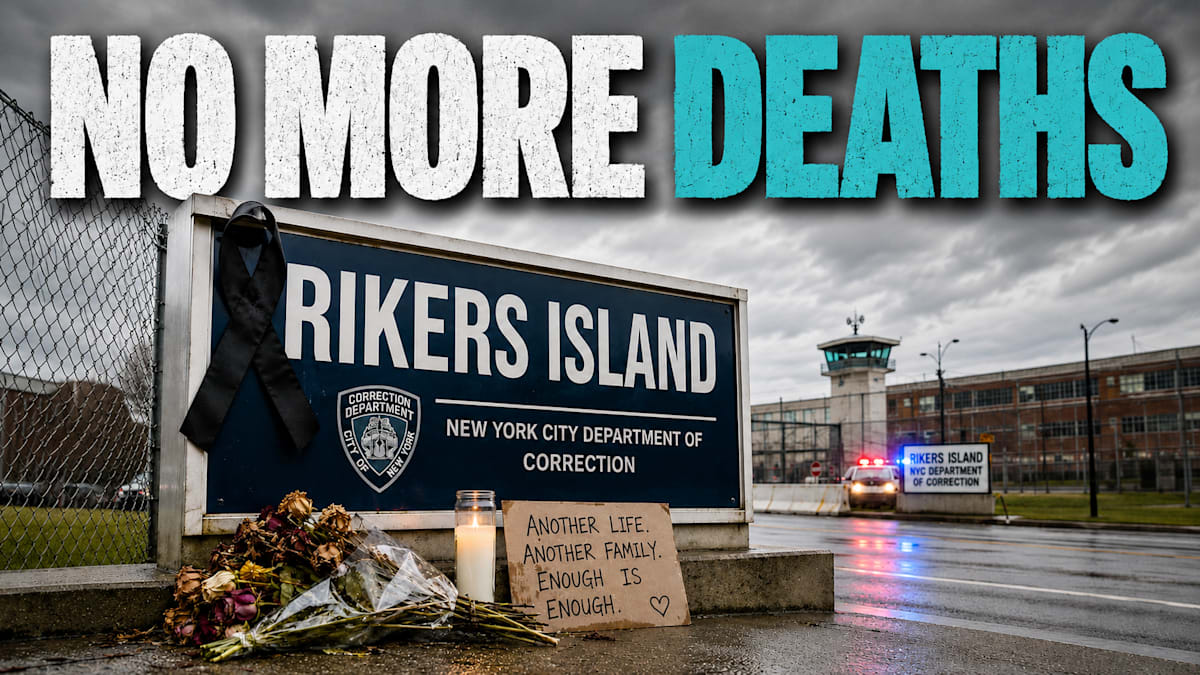
Another Woman Dies at Rikers. I Was There When Layleen Polanco Died. How Many Times Must This Pattern Repeat?
By Michele Evans
New York City, New York
5/19/2026
Category: Courts / Criminal Justice / Advocacy
Bronx, New York - Rajpattie Ramkellawan was 41 years old.
On Monday morning, she died in custody at the Rose M. Singer Center, the women’s facility on Rikers Island, after what officials described as a medical emergency. She was pronounced dead at 11:13 a.m. Her cause of death has not yet been determined and remains under investigation.
She was not a headline.
She was a human being.
According to Gothamist, court records showed prior Manhattan arrests in 2023 on misdemeanor theft-related charges, including allegations of shoplifting and package theft. The outlet also reported that records indicated she later missed court appearances and was arrested in March on a warrant.
That context matters.
Because if the reporting is accurate, Rajpattie Ramkellawan was not sitting in Rikers after being convicted of some violent act. She appears to have been another legally vulnerable woman caught in the machinery of poverty, low-level allegations, missed court dates, warrants, confinement, and medical risk.
And now she is dead.
Mental Health Attorney Specialist Katherine LeGeros Bajuk, who represented Ramkellawan, described her as gentle and kind, someone who retained innocence despite trauma and adversity.
That detail stopped me cold.
Because I know what it means for women at Rikers to carry trauma into a place that is already traumatizing. I know what it means for vulnerability to be processed as inconvenience. I know what it means for a woman’s distress to be minimized until it becomes a death notice.
Ramkellawan’s death has been reported as at least the third death in New York City jail custody this year.
For most people, that is a tragic statistic.
For me, it is a body memory.
I was incarcerated at Rikers Island when Layleen Polanco died.
I remember the day because I was supposed to go to my barbershop class competition. That class mattered. In a place designed to strip people of dignity, structure, hope, and personhood, even something as simple as going to class could feel like a tiny piece of normal life.
But we were locked down.
At the time, we did not know why.
Later, we learned Layleen Polanco was dead.
Layleen had gone to the medical clinic earlier that day. According to the Bronx District Attorney’s report, she left her cell at approximately 10:45 a.m. to go to the clinic and was escorted back at approximately 11:20 a.m. She was later found unresponsive in her cell at the Rose M. Singer Center.
She had been held in restrictive housing, a form of solitary confinement. The Board of Correction later reported that Layleen Xtravaganza Cubilette-Polanco died in a Restrictive Housing Unit cell on June 7, 2019. The medical examiner determined she died from complications of epilepsy.
She was sent back.
She was left alone.
And then she was gone.
That is the part that never leaves me.
People outside jail hear words like “medical emergency” and imagine something sudden, unpredictable, unavoidable. But inside Rikers, those words land differently. They raise questions.
Did she ask for help?
Was she believed?
Was she seen?
Was she monitored?
Was she dismissed?
Was she sent back to a cell when she should have been under medical observation?
Those questions are not abstract to anyone who has lived there.
Rikers is a place where people learn quickly that medical distress does not always mean medical urgency. Pain can be minimized. Symptoms can be doubted. Vulnerability can be punished. A person can go to medical, return to housing, and still not be safe.
That is why the death of Rajpattie Ramkellawan cannot be treated as just another line in another jail custody report.
It demands scrutiny.
It demands transparency.
It demands an investigation into Rikers medical practices, especially at the Rose M. Singer Center, where women, trans women, and medically vulnerable people have too often been placed in circumstances where their lives depend on whether the system chooses to take them seriously in time.
I dedicated my book, Rikers Island: Criminalized Survivor, to Layleen Polanco because I was there when her death shook the women’s facility. I knew what it felt like to be locked down without answers and then learn that a woman had died in custody. I knew what it felt like to understand, in real time, that the jail could swallow a person whole and then reduce her life to a press release.
Now, years later, another woman has died.
Another family is grieving.
Another set of unanswered questions sits between official language and lived reality.
And the pattern is heartbreaking.
Layleen’s death became a symbol of everything that can go wrong when medical vulnerability, solitary confinement, correctional control, and institutional indifference collide. Her death led to outrage, reports, lawsuits, discipline, and promises.
But discipline after death is not the same as prevention.
Settlements after death are not the same as safety.
Reports after death are not the same as medical care when a person is still breathing.
That is why Rajpattie Ramkellawan’s death must be investigated fully, publicly, and independently.
Her family deserves answers.
The public deserves answers.
Every woman currently detained at Rikers deserves answers.
New York City must account for what happened before, during, and after Ramkellawan’s medical emergency. Officials should explain when symptoms were first observed, what care she received, whether she had recently sought medical attention, what monitoring was in place, and whether medical staff, correction staff, or supervisory staff failed to recognize or respond to warning signs.
This is not about rushing to conclusions.
It is about refusing to accept silence.
It is about refusing to let another woman die behind jail walls while the public receives only sterile language and delayed accountability.
My prayers are with the Ramkellawan family.
No family should have to wonder whether their loved one would still be alive if someone had listened sooner.
No woman should go into custody and come out as a headline.
And no one who remembers Layleen Polanco’s death should be able to look at another death at the Rose M. Singer Center and say this is just the way it is.
It is not.
It is a warning.
And it is long past time New York listened.
*Michele Evans is an independent journalist, author, and former ESPN technical producer whose work has appeared in The New York Times.
Michele got her start in 2001 covering the NBA and NFL.
She now covers New York City courts, criminal-justice procedure, NYPD, FDNY, domestic-violence systems, media accountability, public safety, advocacy efforts, and New York civic life through courthouse observation, public records, legal analysis, and lived-experience reporting.
Read more independent journalism by Michele Evans.
Follow Michele Evans on Facebook and Substack for new reporting, analysis, and updates.